
PM Interfaces Between User Space and the Kernel
Exploring power management interfaces between user space and kernel, focusing on improving communication for optimized performance and energy efficiency in Linux systems.
Copy Offloading
Exploring efficient data copying methods in file systems and storage stacks, including btrfs, ocfs2, NFSv4.2, and SCSI, with a focus on developing a generic system call interface for common features.
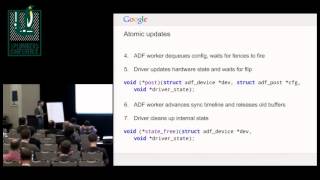
Atomic Display Framework
Explore the Atomic Display Framework and its potential to address KMS limitations in Android, featuring insights from Google and Linaro experts.
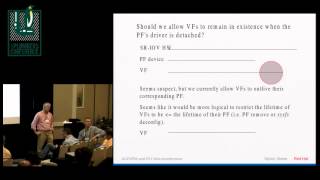
SR-IOV Virtual Function Lifetimes
Explores challenges and potential solutions for managing SR-IOV Virtual Function lifecycles, focusing on removal processes and interactions with Physical Functions in Linux systems.
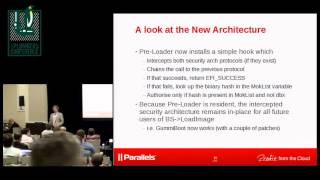
Unifying Secure Boot Code and Getting Additions into UEFI
Explore unification of UEFI loaders, security protocol overrides, and manual loading approaches for secure boot, discussing potential UEFI standard revisions and improvements.
Safety Critical Software - Would You Let Linux Drive Your Car
Exploring Linux's potential in safety-critical systems, discussing reliability, traditional approaches, and the challenges of using open-source software in life-dependent applications.
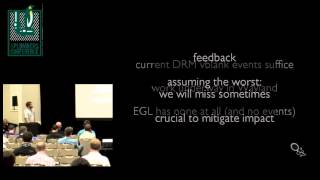
Media Decode and Composition - Bridging the Gap
Exploring dedicated hardware for media decoding and 2D composition in non-desktop devices, discussing current limitations and potential improvements for zerocopy media pipelines.
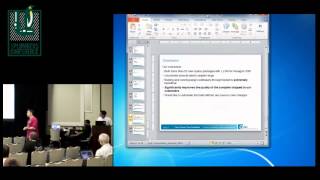
Linux Kernel and User Space for Hexagon DSP with LLVM
Exploring LLVM adoption for Hexagon DSP, covering Linux kernel and user space compilation challenges, solutions, and ongoing issues in replacing GCC with LLVM toolchain.
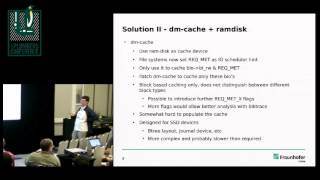
A Dedicated Cache for Metadata
Exploring the need for a dedicated metadata cache in file systems to optimize performance, especially for distributed systems like FhGFS, Lustre, and Cephfs.
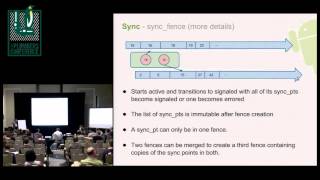
Dma-buf Fences vs Android Sync Driver
Exploring semantic differences between dma-buf fences and Android sync driver, discussing use cases, and evaluating potential common ground or hybrid approaches for file storage systems.
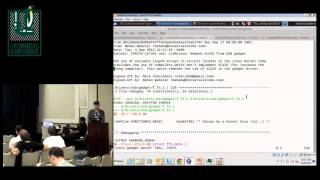
Variable Length Arrays in Structs
Explore gcc extension VLAIS in Linux Kernel, its issues, alternatives, and plans for removal. Discuss compatibility challenges with clang and C standard compliance.
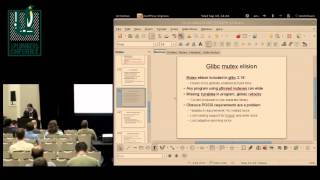
Current Status of Lock Elision in Linux
Explore Intel TSX implementation for lock elision in Linux, covering kernel, glibc, and other components to address lock scaling challenges in multi-CPU systems.
Unified in-Kernel IPC - KDBUS/Binder
Exploring the potential consolidation of KDBUS and Binder for unified in-kernel IPC, discussing Android compatibility and upstream integration challenges.
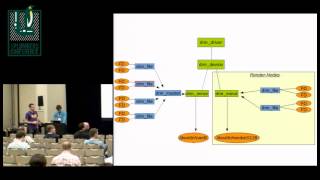
Splitting DRM - KMS Device Nodes
Explore the proposal to split DRM and KMS device nodes in GPUs, discussing benefits like fine-grained access control and shared nodes across multiple GPUs, and its implications for device functionality.
Intel DPDK - Data Plane Development Kit
Overview of Intel's Data Plane Development Kit (DPDK), exploring its capabilities, applications, and limitations in high-performance packet processing for network infrastructure.
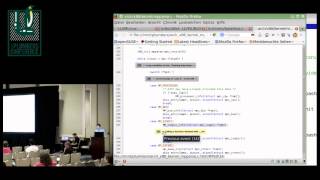
Clang Static Analyzer
Explore Clang Static Analyzer's capabilities for finding semantic errors, its integration with LLVM, and potential applications in Linux kernel development.
Virtually Thin - Tuning XFS on Top of Device Mapper dm-thin
Optimizing XFS performance on dm-thin: configuration tips, data block sizing, and addressing challenges like data loss, snapshots, fragmentation, and journaling for improved efficiency.
ACPI vs DT
Comparison of ACPI and Device Tree firmware approaches for hardware enumeration and configuration, discussing challenges and potential solutions for Linux kernel development.
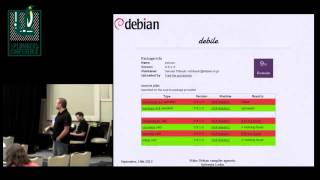
Rebuilding Debian with LLVM - Clang
Explore the challenges and progress of rebuilding Debian using LLVM/Clang compiler, discussing issues faced, future steps, and potential collaboration among distributions to improve software compatibility.
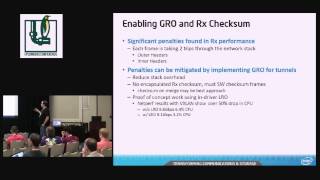
Improving Overlay Network Performance on Existing Hardware
Explore performance improvements for VXLAN and NVGRE tunnel protocols, including checksum offload and GRO optimizations, to enhance overlay network efficiency on existing hardware.
Android Gadget Driver vs ConfigFS Gadget Driver
Comparison of Android and ConfigFS Gadget drivers, exploring their features, performance, and implications for Linux-based systems and device development.