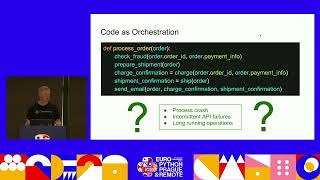
Temporal Python - A Durable, Distributed Asyncio Event Loop
Explore Temporal.io, an open-source platform enhancing asyncio with durability and distributed capabilities. Learn how it transforms fault-tolerant system design and implementation.
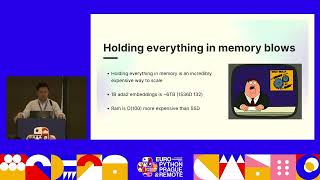
Serverless Billion-Scale Vector Search for AI Applications
Explore low-latency vector search on billion-scale datasets using LanceDB, an open-source solution for modern AI workflows like recommendation systems and LLM-based applications.
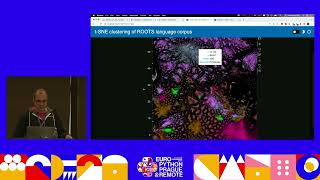
The Needle and the Haystack - Visualizing Single Datapoints Out of Billions
Explore techniques for visualizing and interactively inspecting billions of datapoints using HoloViz ecosystem, overcoming limitations of traditional web-based tools for large datasets.
BDD - How to Make It Work
Discover effective strategies for implementing Behaviour-Driven Development, moving beyond basic tool installation to achieve evergreen documentation and executable specifications.
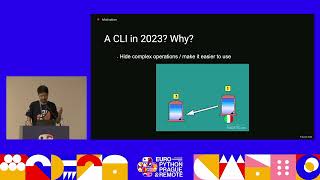
CLI Application Development Made Easier with Typer
Discover Typer: the easiest way to create user-friendly command-line applications. Learn key features, structuring techniques, and effortless packaging for publishing your CLI tools.
Large Language Models - From Prototype to Production
Explore practical approaches for leveraging Large Language Models in NLP projects, from initial prototypes to successful production deployments, with insights on their impact and future potential.
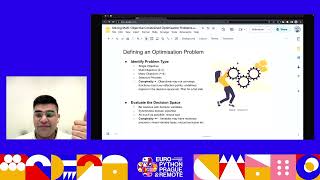
Solving Multi-Objective Constrained Optimisation Problems Using Pymoo
Explore Pymoo, an open-source Python framework for solving complex optimization problems with multiple objectives and constraints, featuring state-of-the-art algorithms and post-performance analysis tools.
Polars vs Pandas - What's the Difference?
Explore the differences, pros, and cons of Polars and Pandas data manipulation libraries. Gain insights into their unique features and understand when to use each for optimal data analysis.
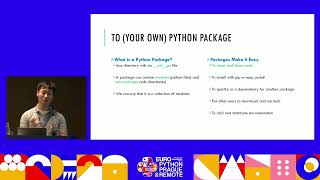
From Jupyter Notebooks to a Python Package - The Best of Both Worlds
Learn to transform Jupyter notebooks into a Python package, enhancing code sharing, refactoring, and version control while retaining notebook benefits. Gain practical skills for improved data science workflows.
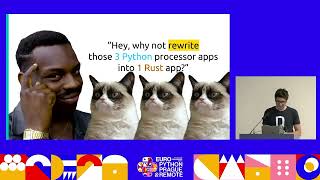
Would Rust Make You a Better Pythonista?
Discover how learning Rust can enhance your Python skills, with real-world examples and insights on improving code performance, safety, and design patterns in both languages.
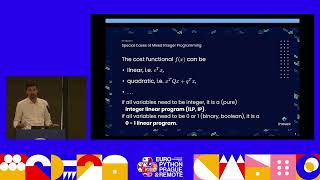
From Algorithms to Agendas - A Beginner's Guide to Integer Programming
Discover how Integer Programming optimizes conference scheduling, maximizing attendee satisfaction through efficient talk allocation to time slots and rooms.
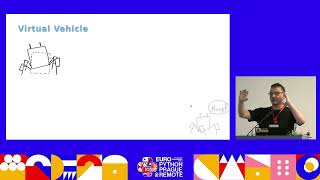
Async Robots
Explore parallel programming for interactive robot control using Python's async features. Learn from experiences with the Fluffbug robot, addressing challenges and solutions in CircuitPython.
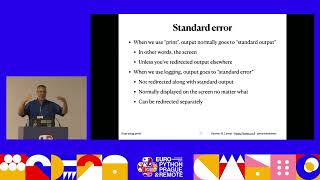
Stop Using Print - Understanding and Using the Logging Module
Discover the power of Python's logging module for flexible and sophisticated output management, moving beyond simple print statements for more effective debugging and monitoring.
Apache Arrow and Substrait - The Secret Foundations of Data Engineering
Explore Apache Arrow and Substrait's impact on data engineering, including their role in interoperability, query planning, and building efficient database systems with minimal code.
An Unbiased Evaluation of Environment Management and Packaging Tools
Comprehensive comparison of Python packaging and environment management tools, offering structured insights to help developers choose the right solution for their projects.
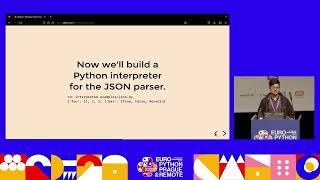
Writing a Python Interpreter from Scratch in Half an Hour
Discover the inner workings of Python interpreters by building one from scratch, exploring syntax checking, module importing, and code execution processes.
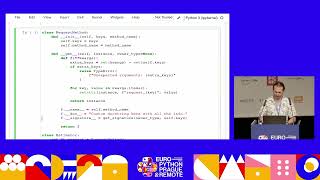
Dynamically Generated Methods with a Non-Generic Signature
Explore dynamic method generation in Python using Descriptors, PEP-362, and PEP-487. Learn scikit-learn's approach to attaching generated methods to classes, understanding use-cases and challenges.
Unlocking the Power of What-If Analysis for BI, Data, and AI with Taipy
Explore practical implementation of what-if analysis using Taipy for data exploration and decision-making. Learn to assess outcomes by varying input parameters in datasets.
Interactive, Animated Reports and Dashboards in Streamlit with Ipyvizzu
Create interactive, animated reports and dashboards using Streamlit and ipyvizzu. Learn to build data apps that non-data scientists can explore, enabling them to apply business expertise and find insights.
The Challenges of Doing Infra-As-Code Without "The Cloud"
Explore challenges and solutions for implementing Infrastructure-as-Code in non-cloud environments, focusing on unique aspects and practical approaches.
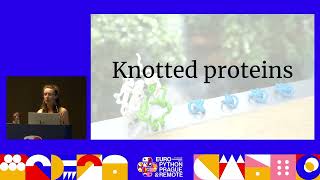
Using NLP to Detect Knots in Protein Structures
Explore how NLP and machine learning detect protein knots from amino acid sequences, uncovering their impact on function and stability using Python-based tools like Biopython and Hugging Face.