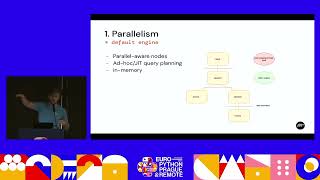
What Polars Does for You
Explore Polars, a fast and efficient DataFrame library built in Rust. Learn about its design, features, and advantages for modern data processing and analysis.
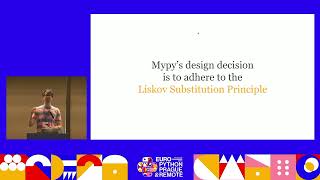
Learning the Ropes - Understanding Python Generics
Explore Python generics, Liskov Substitution Principle, and contravariance. Gain insights into generic types and understand complex Mypy errors.
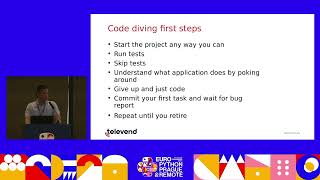
Dive into Codebase Like a Pro
Learn strategies to efficiently navigate and maintain inherited codebases, minimizing frustration and maximizing productivity. Gain insights on improving code handover for smoother transitions in software development projects.
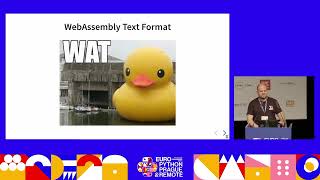
The CPU in Your Browser - WebAssembly Demystified
Explore WebAssembly's role in enabling Python in browsers, understanding its function as a virtual CPU and its impact on web development and Python's expanding capabilities.
Packaging Python Apps with Briefcase
Discover how to distribute Python apps across desktop, mobile, and web platforms using Briefcase, enabling end-user application development from a single codebase.

Lessons from Prague
Explore Prague's influence on programming and technology through its historic architecture, literature, and art, drawing parallels to modern software challenges and future possibilities.
PEP 458 - A Solution Not Only for PyPI
Explore PEP 458's cryptographic signing for PyPI and its broader applications in securing software supply chains, including the Repository Service for TUF project and its potential benefits.
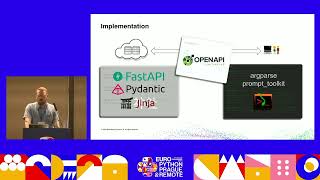
Designing a Human-Friendly CLI for API-Driven Infrastructure
Learn to design a dynamic CLI that generates commands from OpenAPI documentation, improving infrastructure management through a unified interface for both programmatic and human interaction.

Games of Life - Generative Art in Python
Explore algorithms for creating unique, cohesive graphics using Python. Learn about Clifford attractors, slime mold simulation, and geometric primitives to generate impressive 2D and 3D visualizations.
From Idea to Production
Comprehensive journey of website development, from conception to production deployment, covering best practices for local setup, testing, and deployment strategies.
Python Linters at Scale
Discover strategies for efficiently scaling Python linters across large codebases and teams, including automated updates, consistent configurations, and performance optimizations.

Optimizing Your CI Pipelines
Discover techniques to enhance CI pipelines: parallelization, caching, early failure detection, and conditional runs for faster, more efficient builds and improved development workflows.
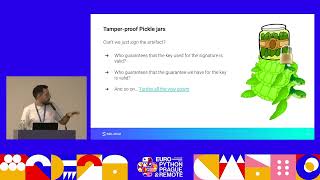
Poisoned Pickles Make You Ill
Explore the risks of using pickle for ML model serialization and learn effective strategies to protect against potential attacks and vulnerabilities in data science pipelines.

Robot Holmes and The MLington Murder Mysteries
Explore the world of Vision-Language AI through a detective story, uncovering recent developments and key players in this rapidly growing field of machine learning.
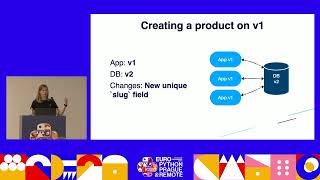
Adding Zero-Downtime Migrations Strategy in a SaaS Project
Learn techniques for implementing zero-downtime database migrations in SaaS projects, ensuring smooth updates without service interruptions while handling large-scale client databases.
Rust for Python Data Engineers
Explore how Rust can enhance data engineering workflows, offering improved performance and safety. Learn about Rust's ecosystem for data processing, databases, and scientific computing to build scalable systems.
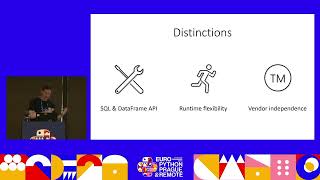
Apache Spark vs Cloud-Native SQL Engines
Opinionated comparison of Apache Spark and cloud-native SQL engines, exploring their strengths, use cases, and complementary nature for data processing and business intelligence tasks.
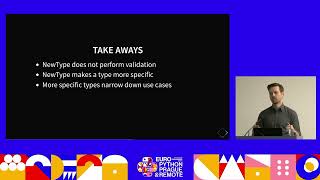
Bulletproof Python - Writing Fewer Tests with a Typed Code Base
Explore how a fully typed Python codebase can reduce the need for extensive testing, leveraging dependent types and exhaustiveness checking to enhance code reliability and efficiency.
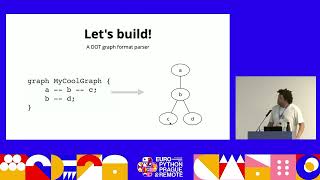
Building Native Rust Modules for Python
Learn to create high-performance Rust modules for Python, exploring the basics of Rust and its integration with Python to enhance your code's efficiency and speed.
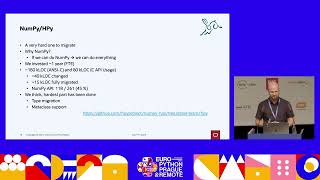
HPy - The Future of Python Native Extensions
Explore HPy, a new C extension API for Python that ensures compatibility across versions and implementations, with insights from porting NumPy to HPy.
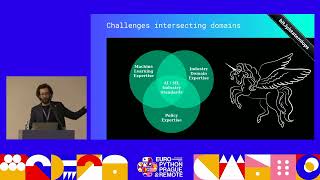
The State of Production Machine Learning in 2023
Explore challenges and solutions in production machine learning, focusing on reliability and scalability. Learn key concepts and recommended tools to tackle the increasing complexity of ML pipelines.