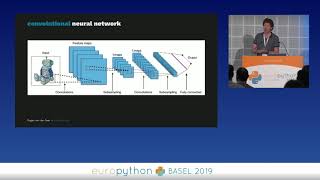
How to Train an Image Classifier Using PyTorch
Learn to build an image classifier using PyTorch in this hands-on tutorial. Covers data preparation, model selection, training techniques, and evaluation, with practical tips and code examples for immediate implementation.

Why You Should Pursue Public Speaking and How to Get There
Overcome public speaking fears and gain confidence with practical tips and strategies for presenting effectively, from team meetings to conferences.
Extracting Tabular Data from PDFs with Camelot and Excalibur
Learn to extract tabular data from PDFs using open-source Python tools Camelot and Excalibur. Discover installation, usage, and automation techniques for efficient data extraction and processing.
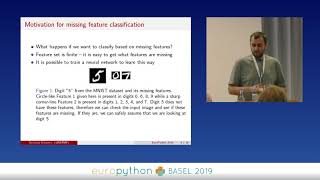
Classification Based on Missing Features in Deep Convolutional Neural Networks
Explore a novel approach to enhance neural network accuracy and robustness in adversarial situations, focusing on classification based on missing features in deep convolutional models.
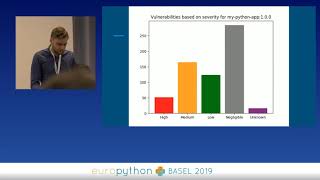
Securely Executing Python Machine Learning Models with Distroless Images at ING
Explore secure execution of Python ML models using distroless images at ING. Learn about security risks, minimal Docker images, and practical implementation in a banking environment.
Supercharge Your Deep Learning Algorithms with Optimized Software
Optimize deep learning algorithms on Intel architecture using Intel® MKL for training and Intel® nGraph and OpenVINO™ for inferencing, enhancing runtime performance.
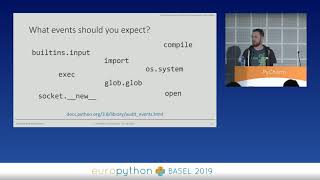
Auditing Hooks and Security Transparency for CPython
Explore CPython's new security features: auditing hooks and verified open call. Learn how to detect and prevent malicious use of Python, integrating with OS security frameworks.
Modern Data Science with Vaex - A New Approach to DataFrames and Pipelines
Explore efficient data processing for large datasets using Vaex, combining computational graphs and lazy evaluations with memory-mapped storage and out-of-core algorithms.
Dissecting tf.function to Discover AutoGraph Strengths and Subtleties
Explore AutoGraph and tf.function in TensorFlow 2.0, learning key concepts for efficient graph-convertible code and improved performance in deep learning applications.
Writing a Python Autoreloader
Explore the complexities of Python autoreloaders, their inner workings, and challenges in implementation. Learn from Django 2.2's refactoring process and discover a new library for simplifying autoreloader development.
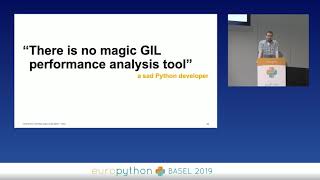
Is It Me, or the GIL
Explore methods and tools for analyzing Python's Global Interpreter Lock impact on application performance, helping developers focus on actual problematic areas needing improvement.
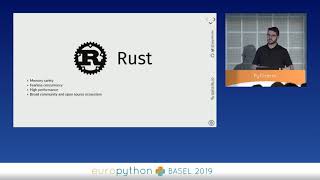
Build Your Python Extensions with Rust
Explore writing Python extension modules in Rust using pyo3 and milksnake libraries. Learn about performance, safety, and maintainability compared to C and Cython extensions.
How to Ship a Python App to a Hundred Million Desktops
Discover best practices for building and shipping high-quality desktop applications using Python, drawing from Dropbox's decade-long experience in developing cross-platform software for millions of users.
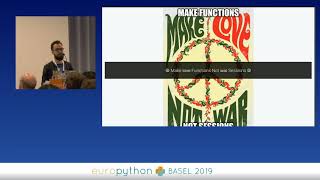
TensorFlow 2.0 - TensorFlow Strikes Back
Explore TensorFlow 2.0's new features, including Keras API, eager execution, and improved production pipeline, enhancing usability while maintaining performance and scalability.
Refactoring in Python
Discover strategies for improving Python code quality, from easy wins to advanced techniques. Learn to identify and replace problematic patterns, write maintainable code, and prevent future issues.

Building Industry 4.0 Logistics Applications with MicroPython and ESP32 MCUs
Explore how MicroPython and ESP32 MCUs can create innovative Industry 4.0 logistics solutions, focusing on a forklift hailing application. Learn about prototyping, deployment, and live demonstration.
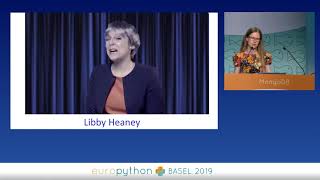
AI in Contemporary Art
Explore AI's impact on contemporary art, from creative applications like DeepDream to critical examinations of facial recognition and deep fakes. Discover how artists and technologists are pushing boundaries and addressing societal implications.
Introduction to Python and MongoDB
Learn to build database applications using PyMongo for MongoDB. Live coding demonstration showcases the simplicity and power of integrating Python with this popular NoSQL database.
Deploy Python to the Cloud Faster with Azure Serverless
Learn to deploy and scale Python workloads using Azure Functions, with seamless integration in Visual Studio Code for local development, debugging, and cloud deployment. Explore serverless computing benefits and management tools.
The World's Cheapest, Simplest Plotter
Learn to build an ultra-cheap plotter using a Raspberry Pi Zero, servo motors, and everyday materials. Explore Python-driven robotics with minimal resources and skills, ideal for education and introducing young people to programming.
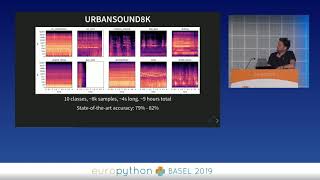
Audio Classification with Machine Learning
Learn to build practical machine learning models for audio classification using spectrograms, CNNs, and techniques like transfer learning and data augmentation with Keras and TensorFlow.