Everyone Can Do Data Science in Python
Learn essential data science techniques using Python, numpy, pandas, and sklearn. Explore real-world use cases with code snippets and live demos in IPython notebooks.
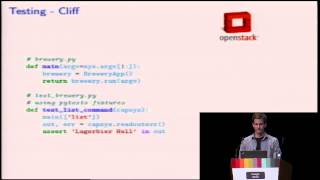
Building Nice Command Line Interfaces - A Look Beyond the Stdlib
Explore popular Python libraries for creating user-friendly command-line interfaces, comparing their concepts and features. Learn to build and test CLIs beyond standard library solutions.
Metrics-Driven Development
Discover how Spotify's team improved performance through metrics-driven development, focusing on key indicators and establishing feedback loops for continuous improvement.
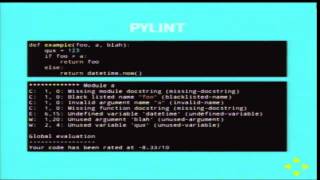
Writing Quality Code
Learn techniques and tools for improving code quality in Python, focusing on readability, design, testing, and documentation for easier maintenance and extension.
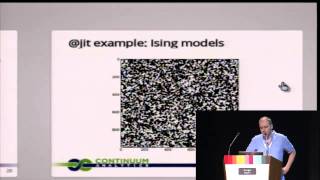
Numba - A JIT Compiler for Fast Numerical Code
Explore Numba, a JIT compiler for Python that accelerates numerical algorithms beyond Numpy capabilities, with CPU and GPU support. Learn its use cases, performance expectations, and inner workings.
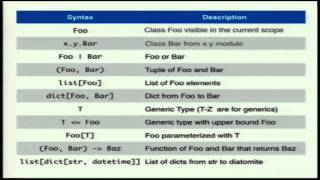
Static Type-Checking Is Dead, Long Live Static Type-Checking in Python
Explore static type-checking in Python, including PEP 484, type hints, and libraries like Hypothesis. Gain insights into type systems and their impact on code robustness.
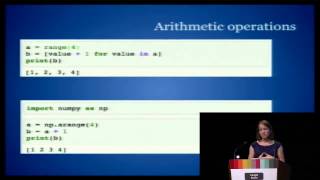
NumPy - Vectorize Your Brain
Learn essential NumPy idioms for efficient scientific computing in Python, covering array creation, broadcasting, universal functions, aggregations, slicing, and indexing to boost numerical computation speed.
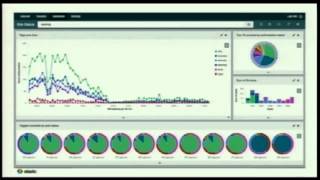
Beyond the Basics with Elasticsearch
Explore advanced Elasticsearch scenarios: trend detection using aggregation framework, percolator for reversed search, and geo-enabled search with relevancy for non-trivial data analysis.
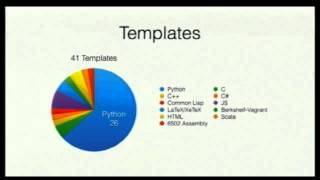
Come to the Dark Side! We Have a Whole Bunch of Cookiecutters!
Discover Cookiecutter: a powerful CLI tool for creating project templates. Learn to streamline your development process, create custom templates, and leverage community-driven resources.
Sustainable Way of Testing Your Code
Discover techniques for writing maintainable, organized tests using the nose framework. Learn to create selective, extendable test cases that remain clear and effective over time.
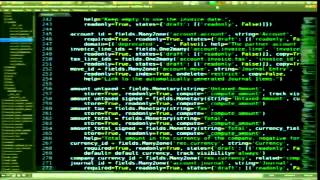
Odoo - The Underdog Python Killer App - A Python Framework for Web Based Business Apps
Explore Odoo: a powerful Python framework for building web-based business applications, offering productivity advantages over popular alternatives like Django.
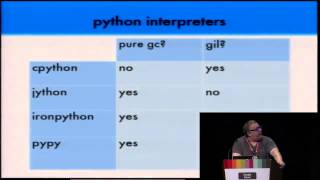
Python's Infamous GIL
Explore Python's Global Interpreter Lock: its history, benefits, drawbacks, and potential removal. Gain insights into multithreading challenges and GIL's impact on Python performance.

Towards a More Effective, Decentralized Web
Explore the future of decentralized web technologies, immutable state concepts, and hash-based data structures challenging traditional client/server paradigms for a more secure and efficient internet.

Keynote - Python Now and in the Future
Explore Python's present and future with its creator in an interactive Q&A session, covering community, features, and upcoming directions for the language.
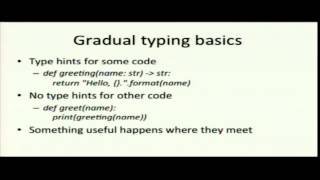
Type Hints for Python 3.5
Explore Python 3.5's optional type hints with creator Guido van Rossum. Learn the motivation, key elements, and implementation of this feature while understanding its impact on Python's dynamic nature.
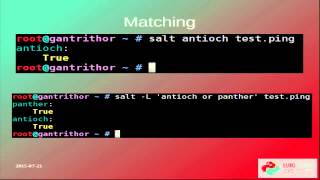
Salting Things Up in the Sysadmin's World
Explore SaltStack, a Python-based configuration management system. Learn its features, deployment, and practical applications for efficient system administration and automation.
Data Analysis and Map-Reduce with MongoDB and PyMongo
Explore data analysis techniques using MongoDB's aggregation framework and pymongo. Learn to perform complex operations like grouping, reshaping, and map-reduce with practical examples and best practices.
Understanding Non-Blocking IO
Explore non-blocking IO fundamentals, its implementation in Python, and its role in web frameworks. Gain insights into handling concurrent connections efficiently without blocking execution.
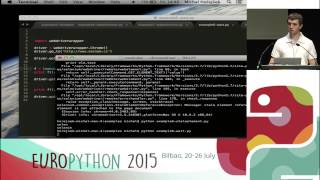
Testing Web Apps with Selenium
Learn to effectively test web applications using Selenium, overcoming common challenges and leveraging tools like webdriverwrapper for easier implementation and improved efficiency in automated browser testing.
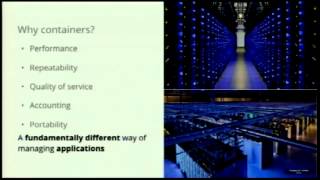
So, I Have All These Docker Containers, Now What?
Explore Kubernetes for efficient container orchestration and cluster management. Learn to simplify deployment, scaling, and maintenance of Docker-based applications across multiple machines.
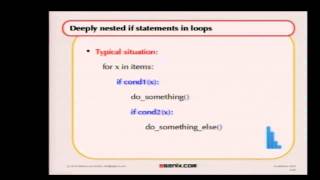
Python Idioms to Help You Write Good Code
Discover essential Python idioms for writing readable, maintainable, and extensible code, based on 20 years of experience in Python development.