
Event Discrete Simulation with SimPy
Explore event-discrete simulation using SimPy, learning key concepts and features through simple examples. Gain insights into modeling complex systems for analysis and optimization.
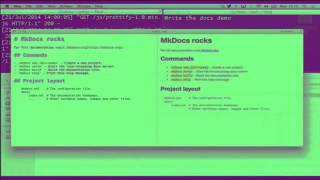
Documenting Your Project with MkDocs
Learn to create, style, and publish project documentation using MkDocs, a Markdown-based tool. Compare MkDocs with Sphinx and explore its inner workings and benefits for developers.
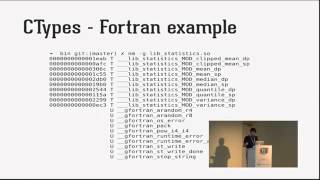
Extending Python - What Is the Best Option for Me?
Explore options for extending Python with external libraries: Native Extensions, Ctypes, and CFFI. Learn principles of shared libraries and CPython internals for informed decision-making.
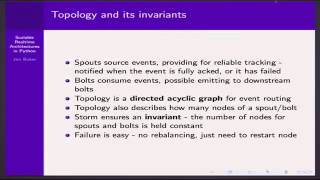
Scalable Realtime Architectures in Python
Explore scalable realtime architectures using Python with Storm, Kafka, and ZooKeeper. Learn about partitioning, retries, and idempotence for building robust, fault-tolerant systems that process continuous data streams.

Cutting-Edge APIs Using Hypermedia at BSkyB
Explore hypermedia-enabled APIs, their implementation using Flask and HAL, and the scalability benefits for expanding businesses. Compare with traditional APIs and learn practical advantages.
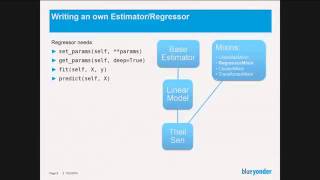
Extending Scikit-Learn with Your Own Regressor
Learn to extend Scikit-Learn by implementing a robust Theil-Sen estimator, exploring its advantages over ordinary least squares and understanding Scikit-Learn's design and contribution process.
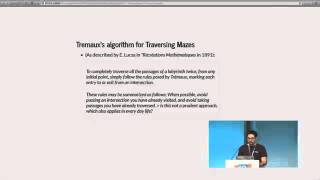
Traversing Mazes the Pythonic Way and Other Algorithmic Adventures
Explore graph algorithms through a Pythonic lens, focusing on maze traversal, efficient representations, and problem-solving techniques like backtracking and dynamic programming.
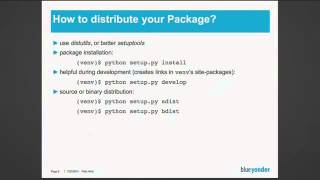
How to Setup a New Python Project
Learn best practices for structuring Python projects, configuring setup.py, and using tools like Git and Versioneer for efficient development and version control.
PyPy Status Talk - No No, PyPy Is Not Dead
Explore PyPy's latest developments, including JIT compiler, garbage collection, NumPy, Python 3 compatibility, CFFI, and STM research, showcasing its continued evolution and performance improvements.
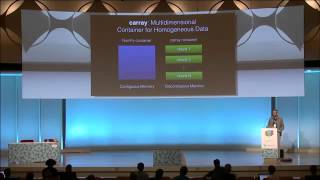
Out-of-Core Columnar Datasets
Explore tabular data implementations in Python, comparing on-disk and in-memory solutions. Learn about performance impacts of row-wise vs column-wise storage, chunking, and compression for big data analysis.
Farewell and Welcome Home - Python in Two Genders
Exploring gender transition in the Python community: personal experiences, challenges, and insights on diversity, privilege, and acceptance from a unique perspective.
A New Generation of Distributed Services Framework
Explore a distributed service-oriented platform for visual effects, covering setup, concurrency, componentization, and monitoring. Learn to build scalable systems for global collaboration.
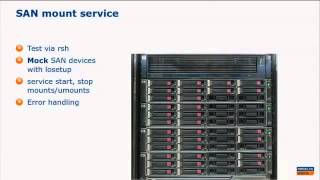
DevOps Risk Mitigation - Test Driven Infrastructure
Learn to apply Test Driven Development principles to infrastructure services, mitigating risks in DevOps environments and improving quality through automated testing of critical systems.

Writing Awesome Command-Line Programs in Python
Learn to create robust command-line programs in Python, covering structure, libraries, and best practices for input/output, configuration, and user interfaces. Enhance your skills in developing efficient CLI tools.
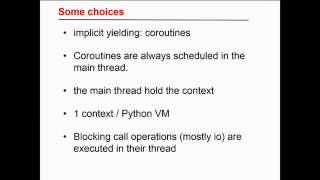
Concurrent Programming with Python and My Little Experiment
Explore concurrent programming in Python, from asyncore to asyncio, and discover a unique experiment porting Go's concurrency model. Learn about various solutions and their implementations.
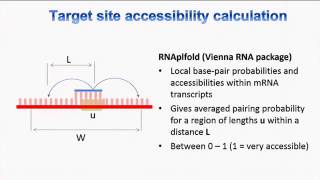
RISCy Business - Development of a RNAi Design and Off-Target Prediction Software
Explore RNA interference mechanisms and off-target prediction with a PyQt-based software tool for efficient gene silencing and targeted inhibition of gene expression.
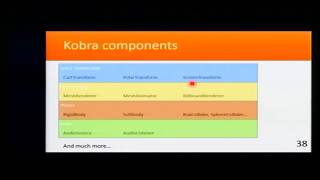
Python Gamedev MLG
Explore Python game development libraries, frameworks, and industry usage. Learn about Kobra, an open-source framework with ECS architecture and C++ bindings for modern game creation.
TDD is Not About Tests
Discover how to effectively use TDD to drive development, transform requirements into tests, and create efficient, readable code. Learn techniques for better refactoring and test effectiveness.
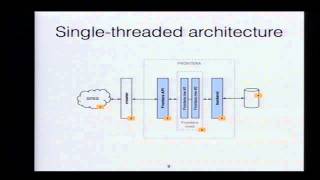
Frontera - Open Source Large-Scale Web Crawling Framework
Introduction to Frontera, an open-source framework for building large-scale web crawlers. Learn about its features, architecture, and how to create distributed crawlers using Scrapy, Kafka, and HBase.

Lessons Learned About Testing and TDD
Insights on testing and TDD from Sardinia Radio Telescope development. Explores functional, integration, and unit tests, best practices, and lessons learned for robust software production.

PyPy and the Future of the Python Ecosystem
Explore PyPy's role in enhancing Python's ecosystem, addressing competition from newer languages, and discussing strategies to maintain Python's versatility while improving performance.