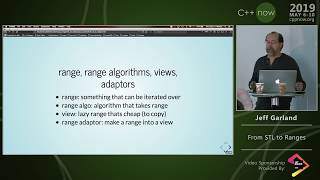
Using C++20 Ranges Effectively
Comprehensive exploration of C++20 ranges, covering concepts, algorithms, views, and practical applications. Includes code examples and exercises for effective implementation in daily programming.
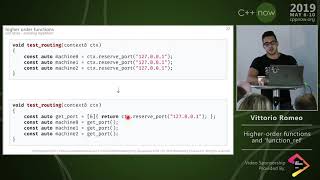
Higher-Order Functions and Function Ref
Explore higher-order functions in C++, their practical applications, and the proposed `function_ref` abstraction for C++20, enhancing code flexibility and performance.
Hey C, This Is What Performance Looks Like - Manually Generating Optimal Assembly at Compile Time
Explore optimizing C++ for exotic hardware through metaprogramming, outperforming industry standards while enhancing safety and usability. Learn DSL techniques for ARM Cortex SoCs to achieve exceptional performance.
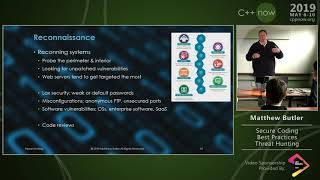
Secure Coding Best Practices - Threat Hunting
Explore threat modeling and secure coding practices in C++, focusing on identifying attack surfaces, analyzing vulnerabilities, and implementing effective defense strategies for robust software design.
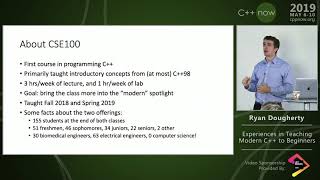
Experiences in Teaching Modern C++ to Beginners
Insights and methodologies for teaching modern C++ to beginners, focusing on C++11/14/17 concepts and best practices for educators to effectively introduce programming to freshmen.
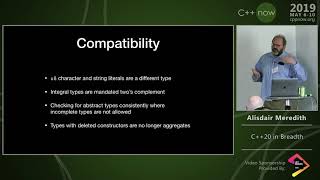
C++20 in Breadth
Comprehensive overview of C++20's major features and changes, exploring language updates, new capabilities, and their impact on C++ development and standardization.
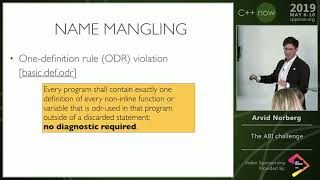
The ABI Challenge
Explore ABI compatibility challenges in C++ and learn strategies for developers to prevent silent memory corruption, encourage link errors, and improve build system awareness.
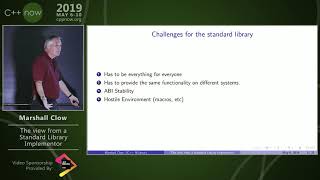
The View from a Standard Library Implementor
Insights into C++ standard library implementation, challenges, and advantages, with applications to Boost library maintenance and balancing user needs across different scenarios.
C++Now and CppCon - The View From Inside
Insider's guide to C++Now and CppCon conferences: history, attendance tips, cost-saving strategies, organizational insights, and future outlook. Valuable information for C++ enthusiasts and potential attendees.
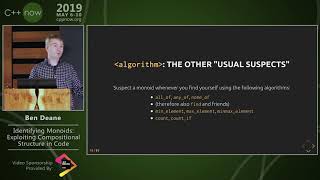
Identifying Monoids - Exploiting Compositional Structure in Code
Explore monoids as a powerful compositional pattern in code architecture. Learn to identify, exploit, and apply monoids to improve API design, incremental computation, and work distribution.
If You Can't Open It, You Don't Own It
Exploring hardware vulnerabilities and their impact on C++ systems, this talk delves into side-channel attacks, physical penetrations, and supply chain risks, offering insights for securing modern C++ designs.

Algorithm Intuition
Explore STL algorithms, their common uses, and how to unlock their potential through intuition and lambdas. Develop algorithm intuition to complement your data structure knowledge and enhance your C++ programming skills.
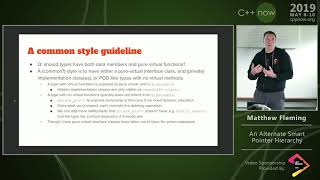
An Alternate Smart Pointer Hierarchy
Explore Pure Storage's custom smart pointers: owned and delete_ptr. Learn their semantics, conventions, and advantages over C++'s std::unique_ptr and std::shared_ptr.
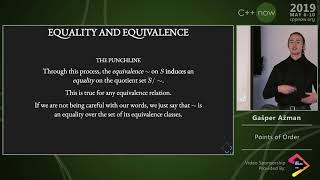
Points of Order in C++20
Explore C++20's new orderings: their types, uses, representations, and mathematical foundations. Gain insights into best practices and potential improvements for this crucial language feature.
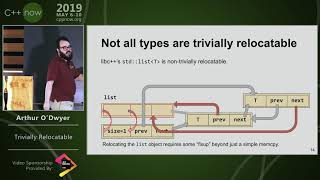
Trivially Relocatable
Explore C++ object relocation, its importance in optimizing vector reallocation and type-erased move-construction, and proposed language features for efficient memory management and performance improvements.
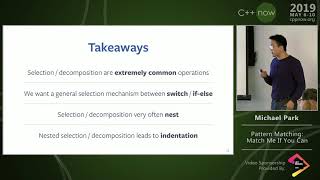
Pattern Matching - Match Me If You Can
Explore pattern matching in C++: declarative data inspection, proposal details, and code simplification examples. Learn about this powerful feature and its potential impact on C++ programming.
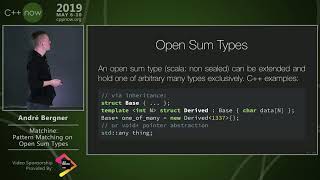
Matchine - C++ Pattern Matching for Open Sum Types
Explore advanced C++ pattern matching techniques for open sum types, focusing on efficient alternatives to RTTI and declarative dispatching methods for type hierarchies.
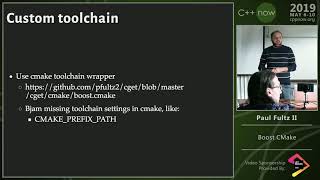
Taking the Plunge Towards CMake in Boost
Exploring CMake integration for Boost: benefits, user needs, script structure, modules, and migration strategies to enhance accessibility and community support.
The Ongoing Saga of ISO-C++ Executors
Explore the evolution of ISO-C++ executors, a generic abstraction for execution. Learn about concept-driven design principles and the latest developments in concurrent programming abstractions for C++23 and beyond.
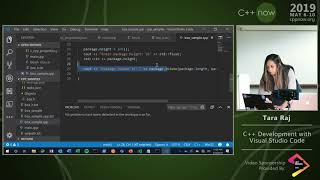
C++ Development with Visual Studio Code
Explore Visual Studio Code's powerful features for C++ development, including editing, building, and debugging, with live demonstrations and insights on remote development capabilities.
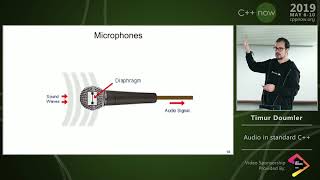
Audio in Standard C++
Explore audio programming in C++, covering digital representation, soundcard communication, and a proposal for a standard audio API. Learn key concepts and potential future developments.