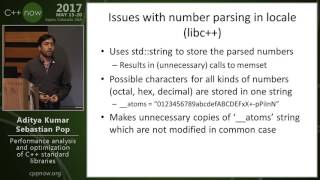
Performance Analysis and Optimization of C++ Standard Libraries
Análisis y optimización del rendimiento de las bibliotecas estándar de C++, incluyendo mejoras en algoritmos, atributos de funciones y comparaciones entre implementaciones, con sugerencias para desarrolladores.

Nbdl - A Library That Uses Metaprogramming - A Lot
Explore Nbdl, a generic library for application state management, leveraging metaprogramming with Boost.Hana to enhance performance and safety in C++ development.
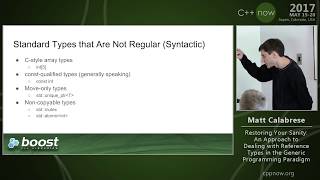
An Approach to Dealing with Reference Types in the Generic Programming Paradigm
Explore handling reference and proxy types in generic programming, discussing challenges, semantics, and potential solutions for future datastructures. Audience participation encouraged.
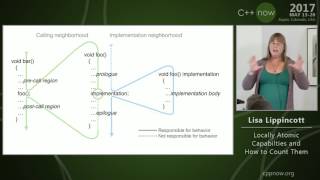
Locally Atomic Capabilities and How to Count Them
Exploring local capabilities in programming, their flow between functions, and methods to ensure correct usage. Presents a notation for function interfaces and techniques for testing capability usage.

The Holy Grail - A Persistent Hash-Array-Mapped Trie for C++
Exploring Hash-Array-Mapped Tries: A persistent, efficient data structure for C++ that combines tree and hash table characteristics, offering superior memory efficiency and immutability benefits.
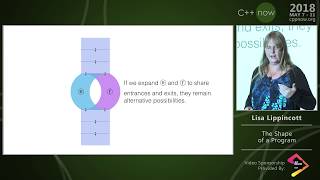
The Shape of a Program
Explore how programs can be viewed as mathematical shapes using topology, examining connections between actions, capabilities, time, and possibility in software architecture.
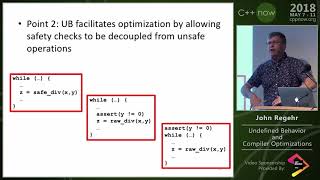
Undefined Behavior and Compiler Optimizations
Explores compiler optimizations, undefined behavior in intermediate representations, sequential memory models in C++, and the future of compiler technology, including formal verification and automatic generation.

A Quantum Data Structure for Classical Computers
Explore quantum data structures for classical computers, understanding superposition, entanglement, and coherence in C++ programming to broaden computational options and prepare for emerging quantum-reliant hardware.

C++ Mixins - Customization Through Compile Time Composition
Explore C++ mixins for customizable abstractions in embedded systems, focusing on compile-time composition techniques to enhance flexibility and performance in resource-constrained environments.

Fast Conversion From UTF-8 with C++ - DFAs - and SSE Intrinsics
Explore fast UTF-8 conversion using C++, DFAs, and SSE intrinsics. Learn efficient algorithms, bit manipulation techniques, and performance optimization strategies for text processing applications.
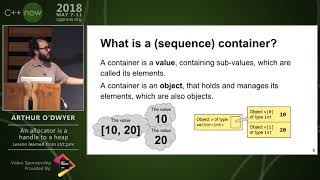
An Allocator Is a Handle to a Heap
Explore C++17's std::pmr framework, allocator concepts, and memory resource management. Learn about lightweight allocators, rebinding, and non-standard examples for efficient heap handling in C++.
Boost.Text - Fixing std::string, and Adding Unicode to Standard C++ - Part 1
Exploring Boost.Text: A modern approach to address std::string deficiencies and add Unicode support in C++, aiming for standardization and improved text handling.
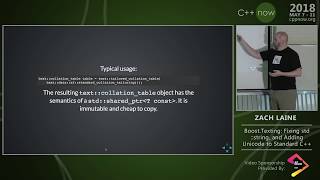
Boost.Text - Fixing std::string, and Adding Unicode to Standard C++ - Part 2
Explores Boost.Text library, addressing std::string flaws and adding Unicode support. Discusses modern string handling, text encoding, and potential C++ standardization.
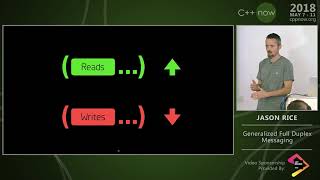
Generalized Full Duplex Messaging
Explore creating generic interfaces for full duplex messaging systems using Boost libraries and Nbdl. Learn to implement concrete solutions for various network protocols and manage object lifetimes in asynchronous operations.
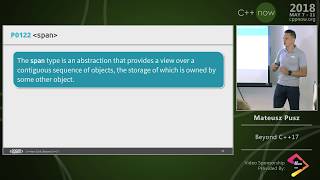
Beyond C++17
Explore C++20 features and promising proposals, including Span, Concepts, and Consistent Comparison. Gain insights into performance, low latency, and modern C++ advancements from an ISO C++ Committee member.
C++17's std::pmr Comes With a Cost
Explore C++17's std::pmr, its benefits and costs in large codebases. Learn about polymorphic allocators, their impact on move semantics, testing, performance, and when to use them effectively.
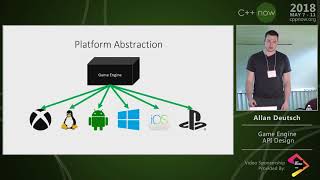
Game Engine API Design
Explore game engine API design in C++, examining industry trends and leveraging modern C++ features to create intuitive interfaces for game development.
If I Had My 'Druthers - A Proposal for Improving the Containers in C++2x
Proposal for refactoring C++ standard containers, addressing weaknesses, and suggesting improvements. Covers naming, design, implementation, and API enhancements for C++2x, emphasizing user needs and modern practices.
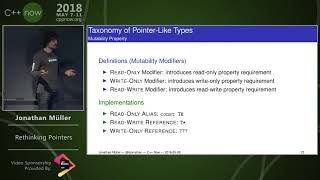
Rethinking Pointers
Comprehensive analysis of pointer-like types in C++, exploring their properties, use cases, and best practices for choosing the right pointer type in different situations.
Easy to Use, Hard to Misuse - Declarative Style in C++
Explore declarative programming techniques in C++ to create intuitive, robust interfaces. Learn how to leverage language features for clearer, more maintainable code and improved API design.

The Problem with Cutting Edge C++
Exploring the evolution of C++ and Boost, this talk examines the challenges of "cutting-edge" programming and its long-term implications for code maintainability and language development.