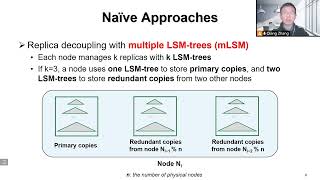
DEPART - Replica Decoupling for Distributed Key-Value Storage
Innovative approach to distributed key-value storage using replica decoupling, enhancing I/O efficiency and performance. Implements two-layer log for tunable ordering, outperforming Cassandra in various scenarios.
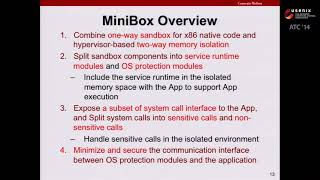
MiniBox - A Two-Way Sandbox for x86 Native Code
Explore MiniBox, a groundbreaking two-way sandbox for x86 native code, offering mutual protection between applications and operating systems in cloud computing environments.
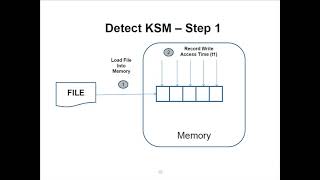
Hyperprobe - Towards Virtual Machine Extrospection
Explores a novel framework for detecting host OS kernel versions from within guest operating systems, leveraging hypervisor features and bugs to enable virtual machine extrospection.

Ripple - Communicating through Physical Vibration
Explore innovative vibratory communication using smartphone motors and accelerometers for secure data transmission, achieving up to 200 bits/s through novel techniques and system design.
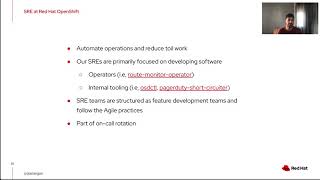
Lessons Learned Using the Operator Pattern to Build a Kubernetes Platform
Explore the Operator pattern in Kubernetes for automating SRE tasks, with insights from Red Hat's OpenShift development and guidance on when to implement custom Operators.

Grand National 2021 - Managing Extreme Online Demand at William Hill
Strategies for managing unprecedented online demand during a major sporting event, focusing on SRE preparation, lambda@edge logic, and queueing systems to handle traffic spikes.
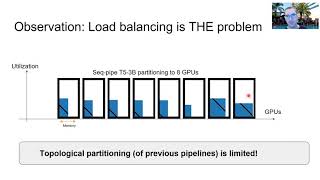
Fine-Tuning Giant Neural Networks on Commodity Hardware with Automatic Pipeline Model Parallelism
Explore fine-tuning giant neural networks on commodity hardware using FTPipe, a system enabling multi-GPU execution through innovative model partitioning and task allocation techniques.

NrOS - Effective Replication and Sharing in an Operating System
Explores NrOS, a novel OS kernel using node replication for improved scalability and simplified development, outperforming Linux while maintaining sequential kernel simplicity.
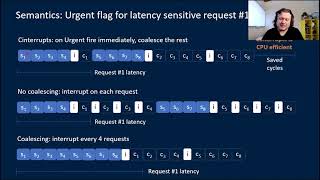
Optimizing Storage Performance with Calibrated Interrupts
Innovative approach to optimize storage device performance by allowing software to specify latency-sensitive requests, enabling devices to calibrate interrupts and balance latency and throughput effectively.
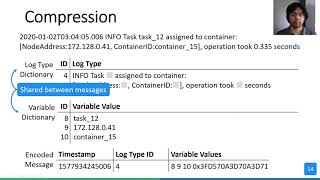
CLP - Efficient and Scalable Search on Compressed Text Logs
Innovative tool for lossless log compression with fast search capabilities, outperforming existing solutions in compression ratio, search speed, and ingestion performance for petabyte-scale log management.
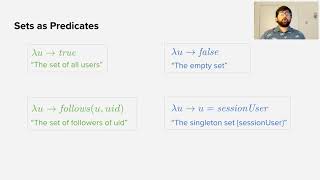
STORM - Refinement Types for Secure Web Applications
STORM: A web framework for building MVC applications with compile-time enforcement of security policies, reducing trusted code to under 1% and providing static security enforcement with minimal overhead.

Distance-Bounding Protocols - Verification without Time and Location
Explore a novel approach to verifying distance-bounding protocols using causality-based characterization, enabling automated security analysis without relying on time and location concepts.
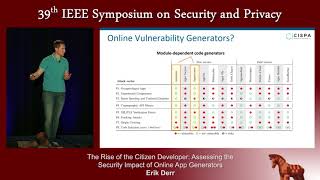
The Rise of the Citizen Developer - Assessing the Security Impact of Online App Generators
Assessing security risks of online app generators for citizen developers, revealing vulnerabilities in generated apps and their impact on the mobile ecosystem's overall health.
T-Fuzz - Fuzzing by Program Transformation
Innovative fuzzing technique that removes input checks to explore deeper code paths, improving bug discovery in software. Combines program transformation with symbolic execution for effective results.

Blue Note - How Intentional Acoustic Interference Damages Availability and Integrity in Hard Disk Drives and Operating Systems
Explores how acoustic interference can damage hard drives, causing data corruption and system failures. Presents findings on vulnerabilities and proposes mitigation strategies for legacy systems.
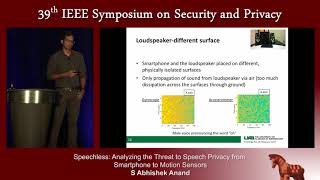
Speechless - Analyzing the Threat to Speech Privacy from Smartphone Motion Sensors
Analyzing potential speech privacy threats from smartphone motion sensors, exploring scenarios where sensors may be affected by speech signals and discussing implications for security and privacy.
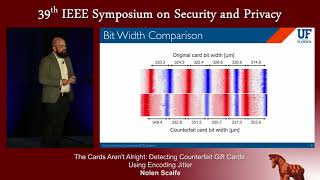
The Cards Aren't Alright - Detecting Counterfeit Gift Cards Using Encoding Jitter
Innovative technique for detecting counterfeit gift cards using magnetic stripe encoding jitter, offering a cost-effective solution to reduce fraud and financial losses in the gift card industry.
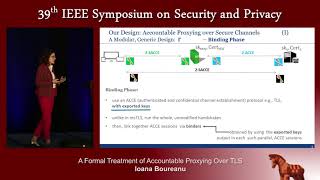
A Formal Treatment of Accountable Proxying over TLS
Formal analysis of accountable proxying over TLS, revealing vulnerabilities in mcTLS and proposing a secure alternative with provable security and practical implementation.
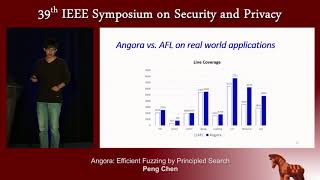
Angora - Efficient Fuzzing by Principled Search
Innovative fuzzing technique combining mutation-based speed with high-quality input generation, outperforming existing fuzzers in bug detection and branch coverage through advanced constraint-solving methods.
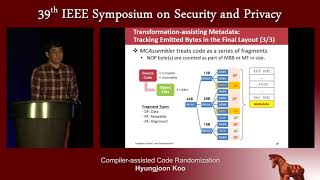
Compiler-assisted Code Randomization
Explore compiler-assisted code randomization as a defense against return-oriented programming exploits, balancing security with software distribution norms and maintaining compatibility.
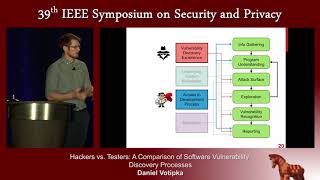
Hackers vs. Testers - A Comparison of Software Vulnerability Discovery Processes
Explore the processes, skills, and challenges of software testers and white-hat hackers in identifying security vulnerabilities, based on a comparative study of 25 professionals.