Holography with Broken Spacetime Symmetries - Transition into Adulthood
Explore holography's evolution in condensed matter systems, focusing on broken spacetime symmetries and their implications for strange metals and effective field theories.
Nonlinear Hall Effect Induced by a Quantum Metric Dipole in Antiferromagnetic Heterostructures
Explore nonlinear Hall effect in antiferromagnetic heterostructures, focusing on quantum metric dipole's role and its implications for electron correlations in quantum materials.
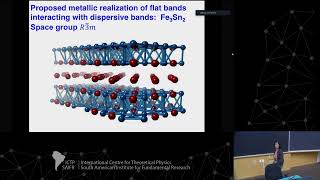
Flat Band and Weyl Physics in Ferromagnetic Kagome Lattices
Explore ferromagnetic kagome lattices, focusing on flat band and Weyl physics, electronic properties, and magnetization-dependent carrier density.
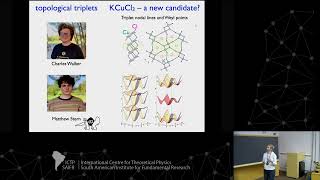
Band-Topology of Triplet Excitations
Explore band-topology of triplet excitations in quantum materials, focusing on inhomogeneities, frustration, and topology in strongly correlated electron systems.
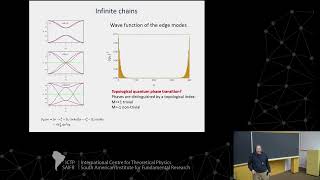
Hybridization Induced Superconductivity in Non-Interacting Chains
Explore hybridization-induced superconductivity in non-interacting chains, examining its effects on quantum materials with strong electron correlations.
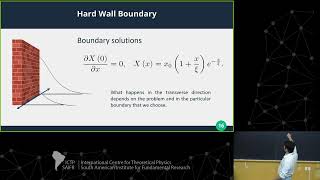
Spectrum of Entanglement as a Dimensional Reduction Tool for Studying Topological Insulators
Explore entanglement spectrum as a tool for studying topological insulators, focusing on interactions and disorder in quantum materials.
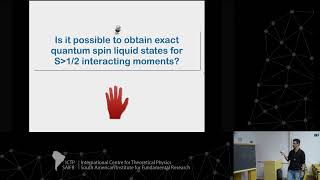
Multipolar Spin Liquid in an Exactly Solvable Model for J = 3/2 Moments
Explore multipolar spin liquids in an exactly solvable model for J = 3/2 moments, focusing on strong electron correlations in quantum materials.
Tutorial Session on Emergent Phenomena in Non-Equilibrium Quantum Many-Body Systems
Explore emergent phenomena in non-equilibrium quantum many-body systems through an in-depth tutorial session led by expert Marcello Dalmonte from ICTP-Trieste, Italy.
Minors: How I Learned to Stop Worrying and Love the Exponential
Explore exponential complexity in quantum systems through minors, gaining insights into non-equilibrium phenomena and many-body physics.
Phase Transitions in Active Matter
Explore phase transitions in active matter systems, examining their unique behaviors and emergent properties in non-equilibrium conditions.

Exploring Noisy Quantum Computers: Current Capabilities and Discoveries
Explore the potential of current noisy quantum computers in addressing complex physics problems, focusing on condensed matter and many-body physics challenges unsolvable by classical computers.
Simplifying the Simulation of Local Hamiltonian Dynamics
Explore advanced techniques for simplifying simulations of local Hamiltonian dynamics in quantum systems, enhancing understanding of complex quantum behaviors.
Amorphous Quantum Magnets in a Two-Dimensional Rydberg Atom Array
Explore amorphous quantum magnets using 2D Rydberg atom arrays, delving into cutting-edge research in condensed matter and statistical physics.
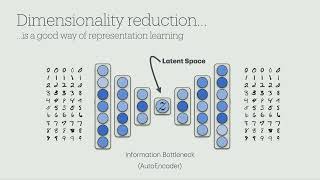
Representation Learning for Quantum Systems
Explore advanced techniques for representation learning in quantum systems, focusing on cutting-edge approaches and their applications in condensed matter physics.

Classical Machine Learning for Quantum Simulations: Detection of Phases, Order Parameters, and Hamiltonians
Explore classical machine learning techniques for quantum simulations, focusing on phase detection, order parameters, and Hamiltonian analysis.

Optimal Control and Implementation of Quantum Algorithms
Explore optimal control techniques for implementing quantum algorithms, enhancing efficiency and performance in quantum computing systems.
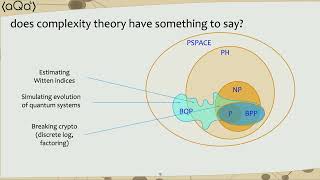
Provable Quantum Learning Advantages for Physics Data
Explore quantum learning advantages for physics data, uncovering provable benefits and applications in scientific research and analysis.
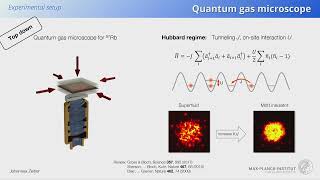
Quantum Gas Microscopy of Hubbard Systems Out of Equilibrium
Explore quantum gas microscopy techniques for studying Hubbard systems in non-equilibrium states, focusing on cutting-edge research in condensed matter physics.
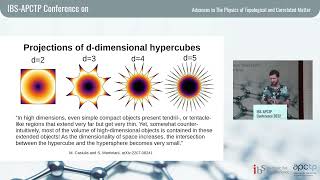
Persistent Homology Analysis of Phase Transitions in Quantum Systems
Explore persistent homology for analyzing phase transitions in complex physical systems. Learn how this topological machine learning method extracts meaningful information from sparse data in condensed matter physics.
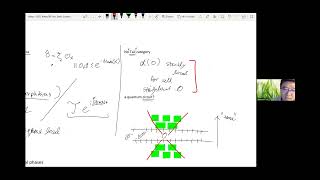
Topological Phases of Discrete Unitary Dynamics
Explore topological phases in discrete unitary dynamics, focusing on classification in the Clifford category across spatial dimensions and connections to anomalous boundary topological order.
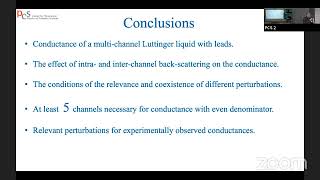
Fractional Conductances in Strongly Interacting 1D Systems
Explore fractional conductances in strongly interacting 1D systems with N channels. Analyze conditions for perturbation coexistence, gap opening, and conductance calculations in complex quantum systems.