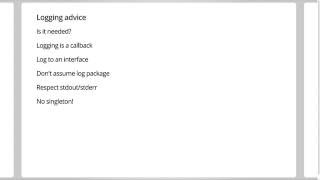
Practical Advice for Go Library Authors
Practical advice for Go library authors, covering naming, construction, zero values, interfaces, goroutines, and design principles for efficient and clean code.

Understanding Channels
Explore the inner workings of Go channels, their operations, and how they interact with runtime systems for effective goroutine communication and concurrency patterns.

Asynchronous Networking Patterns
Explore asynchronous networking patterns in Go, covering goroutines, resource management, and net.Conn implementations. Gain insights applicable to net/http, crypto/tls, and protocol development.

Rethinking Classical Concurrency Patterns
Explore Go's lightweight goroutines and concurrency primitives, challenging traditional patterns and demonstrating alternative approaches for efficient concurrent programming.

The Scheduler Saga
Explore the inner workings of Go's scheduler, including goroutine management, network IO coordination, and memory management mechanisms for efficient program execution.
Pardon the Interruption - Loop Preemption in Go 1.14
Explore Go 1.14's innovative asynchronous preemption, eliminating performance issues in tight loops and enabling efficient goroutine scheduling without overhead.
Reordering 59 Million NYT Publishing Assets Using Go and BadgerDB
Learn how to reorder 59 million NYT publishing assets using Go and BadgerDB. Explore efficient in-memory data processing, handling large-scale datasets, and optimizing performance for complex data operations.

Go Make Something Real - The Potential for Go on the Factory Floor
Exploring Go's potential in industrial automation: secure DevOps for factories and critical infrastructure, with real-world examples of microservice architectures in heavy industrial environments.
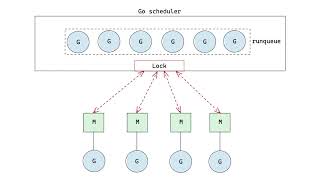
Queues, Fairness, and The Go Scheduler
Explore Go's scheduler, its fairness mechanisms, and runtime APIs. Gain insights into Goroutine scaling, thread mapping, and scheduler control techniques.
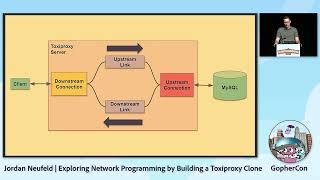
Exploring Network Programming by Building a Toxiproxy Clone
Explore network programming in Go by building a Toxiproxy clone. Learn about sockets, channels, goroutines, and TCP stream manipulation for chaos testing and application resilience.

IcedCoffeeScript
Explore IcedCoffeeScript, a powerful JavaScript system that improves code clarity, manageability, and performance by introducing language primitives for better handling of asynchronous operations.
J2ME.js - A Multi-Threaded Java VM in JavaScript
Explore j2me.js, a JavaScript-based Java VM for running Java/MIDP apps on modern mobile devices. Learn about mapping complex Java features to JavaScript and HTML5.

Shared Memory and Parallel Programming with JavaScript
Explore SharedArrayBuffer and Atomics for parallel programming in JavaScript. Learn to boost performance, utilize CPU cores, and write safe code with shared memory. Includes TurboScript intro and live demo.
Embedding V8 in the Real World
Explore NativeScript's architecture, V8 embedding, and mobile app development using JavaScript frameworks. Learn about multithreading, worker threads, and performance optimization techniques.

Building WebApps Like It's 1972
Explore the evolution of UI development, from 1972 Smalltalk innovations to modern web apps. Learn from early GUI concepts and Actor-model principles to enhance contemporary UI design and functionality.
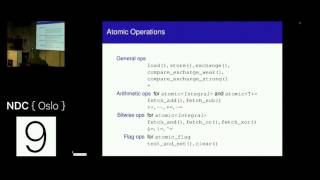
Safety - Off - How Not to Shoot Yourself in the Foot with C++ Atomics
Explore safe techniques for using C++ atomics in multithreaded code, including tools for synchronization, shared state access, scalability, and lock-freedom.

Generic Locking in C++
Explore generic locking in C++, focusing on folly/Synchronized library for reliable encapsulated locking. Learn about multithreading, STL containers, and techniques to avoid common pitfalls in lock-based synchronization.
Building ASP.NET Core Kestrel
Explore the high-performance Kestrel web server for ASP.NET Core, its architecture, and optimization techniques for building fast web applications.
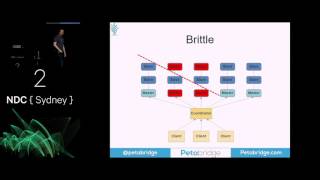
Akka.NET - The Future of Distributed Programming in .NET
Explore the actor model and Akka.NET to build powerful, highly available systems for distributed programming in .NET, addressing modern development challenges and improving application performance.

Stairway to Cloud - Orleans Framework for Building Halo-Scale Systems
Explore the Orleans Framework for building scalable cloud systems, focusing on virtual actors, stateful middle tiers, and its origins in Microsoft Research and game development.

Life with Actors - Experience Report
Exploring Akka.NET for media distribution: lessons learned, benefits gained, and insights into the actor model for managing millions of files with queues and cloud storage.