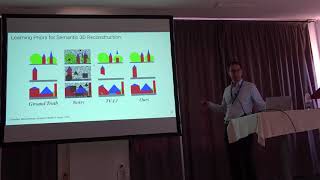
DALI 2018 - Andreas Geiger: How to Satisfy the Thirst for Data
Explore innovative approaches to address data scarcity in computer vision, including specialized architectures, soft constraints, self-supervision, and label transfer techniques.
EfficientDet - Scalable and Efficient Object Detection
Explore EfficientDet, a scalable object detection model that improves accuracy and efficiency through innovative techniques like BiFPN and compound scaling.
StyleGAN Explained
Comprehensive exploration of StyleGAN architecture, detailing its innovations over traditional GANs. Covers mapping networks, style control, and noise injection for high-quality image generation.

What Are GANs - Generative Adversarial Networks Explained
Explore generative adversarial networks (GANs), their working principles, training phases, and applications in AI and deep learning. Learn how GANs generate realistic data through generator-discriminator competition.
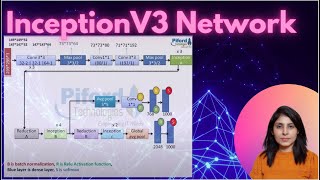
InceptionV3 - Inception Network
Detailed exploration of InceptionV3 architecture, covering its improvements over previous versions, including factorized convolutions, RMSProp optimizer, and label smoothing for enhanced CNN performance.
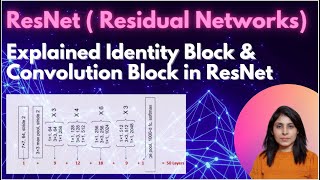
Explained Identity Block and Convolution Block in ResNet - Residual Networks
Practical explanation of identity and convolutional blocks in ResNet, including line-by-line code breakdown and discussion of residual concepts in deep learning architectures.
Face Detection with OpenCV
Learn face detection using OpenCV and Python on Raspberry Pi Zero. Explore object detection, AI, neural networks, and computer vision fundamentals. Practical implementation and insights provided.
Supercharge Your Vision AI Business with NVIDIA Metropolis
Discover how NVIDIA Metropolis can enhance your Vision AI business through improved performance, streamlined deployments, enterprise readiness, and access to GPU infrastructure and business support.

Getting Started with Caffe - Deep Learning Framework Introduction - Class 3
Learn to define, train, and deploy Deep Neural Networks using Caffe framework. Covers data management, network definition, training monitoring, and deployment for classification or feature extraction.
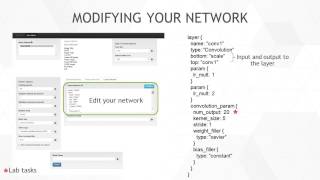
NVIDIA Deep Learning: Getting Started with DIGITS - Class 2
Learn to create, test, and optimize deep neural networks using NVIDIA's DIGITS tool for image classification tasks, with hands-on examples and practical deployment strategies.
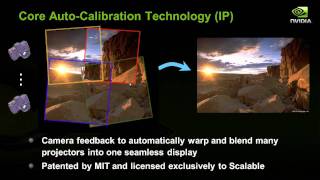
Using the GPU to Create a Seamless Display from Multiple Projectors - SIGGRAPH 2011
Explore GPU-based techniques for creating seamless multi-projector displays, covering warp blending, SLI Mosaic, and Nvidia's API for scalable desktop and command systems.
Tools for Mobile Photography and Computer Vision
Explore computational photography and computer vision for mobile devices, covering NVIDIA's research, hardware developments, and software tools like OpenCV and FCam for innovative mobile applications.
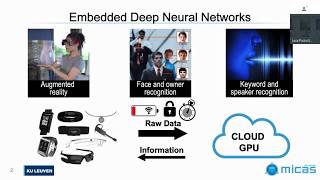
From Small to Tiny: Co-designing ML Models, Computational Precision, and Circuits - Energy-Accuracy Trade-offs
Explore co-designing ML models, computational precision, and circuits for energy-efficient tinyML systems. Learn about cross-layer optimization and cascaded networks for embedded applications.
Visual AI in Milliwatts - A Grand Challenge and Massive Opportunity
Explore visual AI's potential in low-power devices, discussing challenges, opportunities, and applications in security cameras and beyond. Learn about deep learning, processors, and algorithms driving this technology.
Face Detection Using OpenCV Using a Raspberry Pi Zero
Learn face detection with OpenCV on Raspberry Pi Zero. Covers installation, object detection basics, neural networks, and practical implementation using Python. Includes live demo and next steps.

Build Your Own AI Assistant - Object Classification with Python
Learn to build an AI assistant using Python, TensorFlow, and Google Colab for object classification. Covers neural networks, image processing, and hands-on demos for practical implementation.
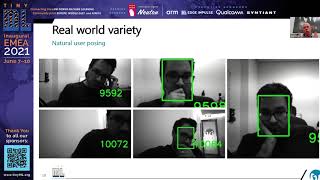
TinyML Journey - From Face Detection Demo to Real-Life Commercial Deployment
Explore the journey of TinyML from face detection demos to large-scale commercial deployment in notebooks, addressing real-world challenges and bridging the gap between technology and business.
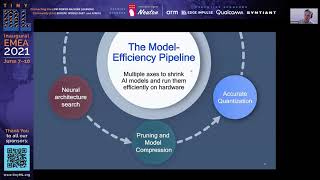
The Model Efficiency Pipeline: Enabling Deep Learning Inference at the Edge
Explore optimizing deep learning for edge devices through model efficiency techniques, including neural architecture search, pruning, quantization, and conditional processing.
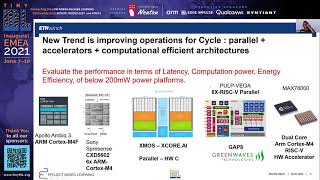
A Battery-Free Long-Range Wireless Smart Camera for Face Detection
Explore battery-free wireless smart cameras for face detection using edge AI and low-power microcontrollers. Learn about energy harvesting, tiny ML algorithms, and novel hardware architectures for IoT devices.
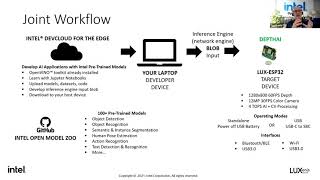
tinyML Vision Challenge - Intel-Luxonis DepthAI Platform Overview
Explore Intel and Luxonis' DepthAI platform for advanced vision solutions. Learn about AI inference, OpenVINO toolkit, and developing spatial edge applications using the LUX-ESP32 device.
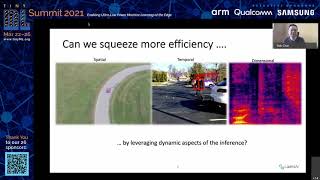
Adaptive Neural Networks for Agile TinyML - Keynote
Explore adaptive neural networks for efficient tinyML, enabling dynamic footprint minimization and runtime flexibility. Learn about throttleable networks, controller training, and hardware acceleration.