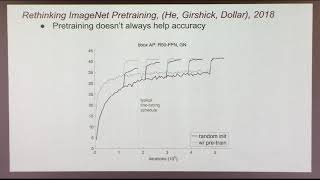
Towards Understanding Transfer Learning with Applications to Medical Imaging
Explore transfer learning in medical imaging, focusing on deep learning applications, performance evaluation, and feature similarity analysis using CCA. Insights on ImageNet models and chest X-rays included.
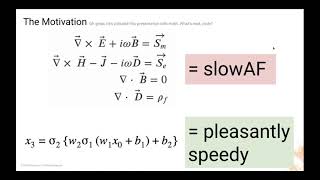
Inversion of 2D Remote Sensing Data to 3D Volumetric Models Using Deep Dimensionality Exchange
Innovative deep learning approach for inverting 2D remote sensing data to 3D models, reducing computation time from months to milliseconds. Explores unique embedding strategies and model architectures for efficient volumetric space reconstruction.
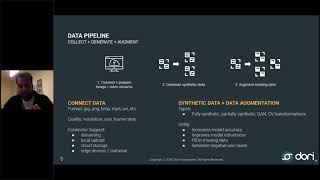
Building Scalable AI Computer Vision Applications
Standardized workflow for building scalable AI computer vision applications, covering data preparation, annotation, model selection, benchmarking, deployment, and monitoring for efficient development.
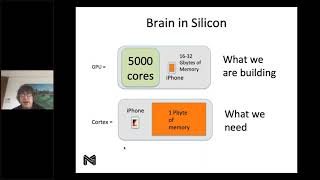
The Software GPU - Making Inference Scale in the Real World
Discover how to achieve GPU-level performance for deep learning inference using only software on commodity CPUs, challenging conventional wisdom and offering a cost-effective, flexible solution for scaling AI models.
Learning the Depths of Moving People by Watching Frozen People
Explore depth prediction techniques for moving subjects using static images, enhancing 3D modeling and computer vision applications in various fields.

End-to-End Object Detection with Transformers
Learn about cutting-edge object detection using Transformers, exploring architecture, bipartite matching, oppositional encoding, and attention scores in this comprehensive tutorial.
YOLOv4 - Optimal Speed and Accuracy of Object Detection
Explore YOLOv4's advancements in object detection, including improved speed and accuracy, new activation functions, and spatial attention mechanisms.
MAST - A Memory-Augmented Self-Supervised Tracker
Learn about MAST, a novel memory-augmented self-supervised tracker that enhances video tracking and segmentation using attention mechanisms and innovative algorithms.

SIGCOMM 2020 - Server-Driven Video Streaming for Deep Learning Inference
Explore server-driven video streaming for deep learning inference, including real-time camera set heuristics, object detection, and experimental results.
Hands on Machine Learning - Unsupervised Learning
Explore unsupervised learning techniques including clustering, dimensionality reduction, and Gaussian mixture models. Hands-on implementation using Python libraries for data analysis and visualization.
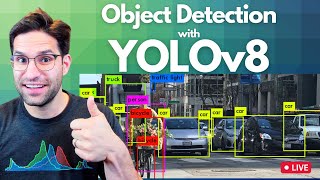
YOLOv8 Object Detection - First Look Live Coding
Explore YOLOv8 for object detection in Python, from installation to implementation on images, webcams, and videos. Includes hands-on coding and practical demonstrations.
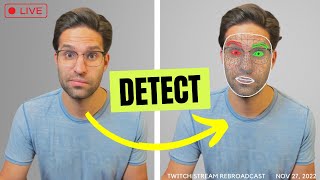
Face Detection with Python - Live Coding
Explore Python face detection models for age, race, emotion, and keypoints. Compare results and implement various techniques in this hands-on coding session.
Video Data Processing with Python and OpenCV
Learn to process video data using Python and OpenCV, covering reading, writing, metadata extraction, image manipulation, and annotation. Gain essential skills for machine learning applications in computer vision.

Solving Real World Data Science Problems With Python - Computer Vision Edition
Learn to build and improve convolutional neural networks for computer vision tasks using Python, TensorFlow, and Keras. Explore data augmentation, preprocessing, and network architecture optimization techniques.
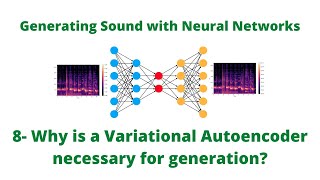
Generation with AutoEncoders - Results and Limitations
Explore image generation using autoencoders, analyze latent space representations, and understand limitations in generative tasks. Learn why variational autoencoders are necessary for improved generation.
Accelerate Image Annotation with SAM and Grounding DINO - Python Tutorial
Learn to accelerate image annotation using Grounding DINO and Segment Anything Model (SAM). Convert object detection datasets to instance segmentation and explore automatic annotation for real-time detectors like YOLOv8.
Artificial Intelligence: Success, Limits, Myths and Threats - Lecture 1
Explore AI's successes, limitations, and societal impact. Delve into machine learning, neural networks, and the future of AI. Gain insights on scientific intelligence and ethical considerations.
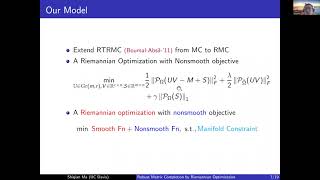
Robust Low-Rank Matrix Completion via an Alternating Manifold Proximal Gradient Continuation Method
Explore robust low-rank matrix completion using an alternating manifold proximal gradient method. Learn about its applications in computer vision, signal processing, and machine learning.
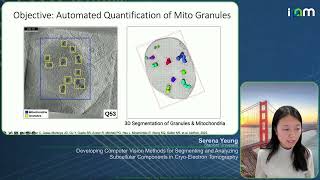
Computer Vision for Segmenting & Analyzing Subcellular Components in Cryo-Electron Tomography
Explore computer vision techniques for automated 3D segmentation and analysis of subcellular components in cryo-electron tomography, focusing on mitochondrial features in Huntington's Disease neurons.
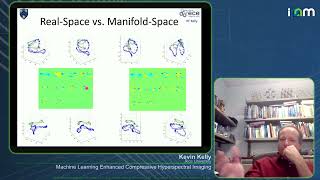
Machine Learning Enhanced Compressive Hyperspectral Imaging - IPAM at UCLA
Explore machine learning-enhanced compressive hyperspectral imaging techniques, combining optical systems and neural networks for efficient data acquisition and processing in various applications.
The Role of Data and Models for Deep-Learning Based Image Reconstruction
Explores deep learning in image reconstruction, focusing on model scaling, data requirements, and robustness. Discusses performance under distribution shifts and strategies for improvement.