TrenchBoot: Enhancing System Security with Intel TXT and AMD SVM
Explore TrenchBoot's integration of hardware-rooted security for open and proprietary systems, reducing attack surfaces and enhancing platform integrity through Intel TXT and AMD SVM technologies.
Protected Execution Facility for Secure Virtual Machines
Explore IBM's Protected Execution Facility for enhanced security in Linux servers. Learn about secure virtual machines, architectural modifications, and protection against compromised components in cloud computing.
Safely Restricting File Access with Landlock - A Programmatic Approach
Explore Landlock's innovative approach to file access control, addressing limitations of existing LSMs and enabling safe, unprivileged security policy implementation for Linux systems.
Syzbot and the Tale of Thousand Kernel Bugs
Explore Linux kernel bug detection tools and their impact on system security. Learn about syzbot, syzkaller, and sanitizers for improving kernel stability and reliability.
Spectre and Meltdown vs. Real-Time - Measuring Mitigation Costs
Explore the impact of Spectre and Meltdown mitigations on real-time systems. Quantify performance costs using benchmarks, focusing on latency and determinism in embedded environments and hypervisors.

Replace Your Exploit-Ridden Firmware with Linux
Learn how to replace vulnerable UEFI firmware with NERF, an open-source system using a tiny Linux kernel and initramfs, enhancing security and reducing exploit risks in PC and laptop firmware.
Linux Kernel Security Contributions by ANSSI
Explore ANSSI's contributions to Linux kernel security, including Landlock LSM and CLIP Linux. Learn about the benefits of open-source collaboration for government agencies and enterprises.
OpenPOWER Host OS Secure Boot Key Management
Explore OpenPOWER's flexible key management for Linux-based secure boot, covering architecture, ownership, updates, storage, and compatibility across firmware, kernel, and userspace.
Breaking and Fixing Dockerized Environments
Comprehensive analysis of Docker security vulnerabilities and best practices for securing containerized environments, covering image security, runtime protection, and ecosystem tools.
Kernel Self-Protection Project
Explore Linux kernel security enhancements and self-protection mechanisms with Google engineer Kees Cook, focusing on proactive defenses against vulnerabilities and exploits.
Using Hardware Protected Keys with the Linux Crypto API
Learn to use hardware-protected keys with Linux Crypto API for enhanced security in embedded systems. Explore implementation, benefits, and potential challenges in this in-depth presentation.
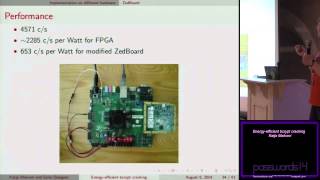
Energy Efficient BCrypt Cracking - Techniques and Strategies
Explore energy-efficient techniques for cracking bcrypt hashes, focusing on optimizing hardware and software for improved performance and reduced power consumption.
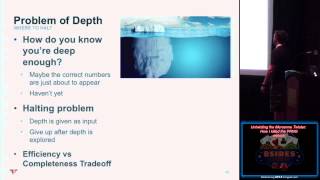
Untwisting the Mersenne Twister: How I Killed the PRNG Moloch
Unraveling the Mersenne Twister algorithm: exploring its vulnerabilities, testing methods, and implications for pseudorandom number generation in various applications.
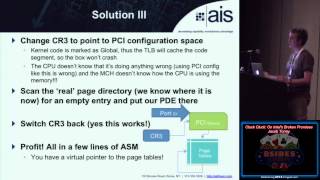
Cluck Cluck on Intel's Broken Promises - BSidesLV 2014
Explore Intel's unfulfilled promises and their implications for computer security. Gain insights into processor vulnerabilities and potential risks in modern computing systems.

What Packet Loss Reveals About VPN Behavior - BSidesLV 2014
Explore VPN behavior under packet loss, examining OpenVPN, IPSec, and netcat. Learn about packet timings, kernels, and algorithms to understand network queues and VPN fingerprints.

Proof-driven Development of Production-quality Cryptographic Software
Explore formal verification in cryptographic software development, focusing on Fiat Cryptography's innovative approach to achieving expert-level performance with comprehensive computer-checked proofs and specializing compilation.
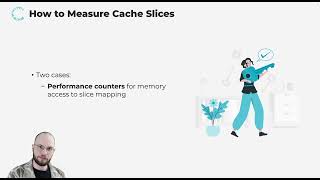
Efficient and Generic Microarchitectural Hash Function Recovery - Session 111
Explore efficient techniques for recovering microarchitectural hash functions, enhancing understanding of hardware vulnerabilities and potential security implications.
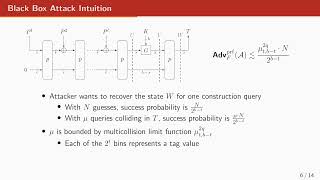
Leakage Resilience in Cryptography - FSE 2024 Session
Explore cutting-edge research on leakage resilience in cryptography, examining advanced techniques to protect against side-channel attacks and enhance data security.
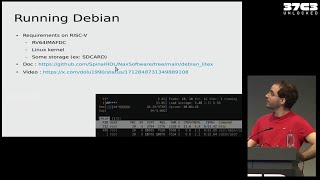
Open CPU and SoC Design: From RISC-V to Debian - 37C3 Lecture
Explore RISC-V CPU design, from hardware description to running Debian on FPGA. Covers out-of-order execution, multi-core systems, security, and Linux requirements using the open-source NaxRiscv core.

Proving Capability Safety in the Presence of Indirect Sentries
Explore capability safety proofs with indirect sentries, advancing understanding of secure programming models and language design.

Concurrent Mutation Must Go
Explore concurrent mutation challenges and solutions in programming languages, focusing on innovative approaches to enhance system reliability and performance.