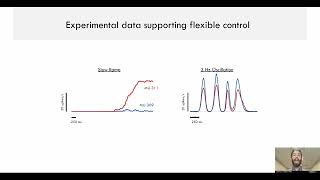
Interpretable Latent Variable Models Demonstrate Flexible Neural Control of Spinal Motor Units
Explore interpretable machine learning models for analyzing neural activity, focusing on spinal motor control and challenging the rigid control theory of motor unit function.
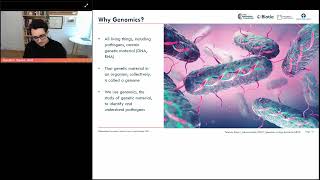
Towards A Global Federated System for Biosurveillance and Pandemic Early Warning Using Genomic, Epidemiological, Climate and Environmental Data
Explore a global federated system for biosurveillance using genomic, epidemiological, climate, and environmental data to model biological risks and enhance pandemic early warning capabilities.
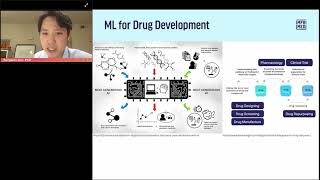
Moving Beyond Mutation - AI-driven Functional Precision Medicine for Cancer
Explore AI-driven functional precision medicine for cancer, combining live-cell assays, immune profiling, and machine learning to predict drug efficacy and improve treatment outcomes.

Reshaping Cell Biology Experiments for Automation
Discover how automation can revolutionize cell biology experiments, increasing efficiency, reproducibility, and scalability while reducing manual labor and enhancing traceability in laboratory workflows.
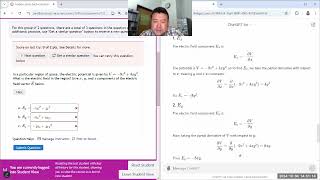
Physics 4B - Problem Solving with ChatGPT 4.0 - Set 6
Enhance problem-solving skills in physics using ChatGPT 4o, focusing on Set 6 exercises from PHYS 4B curriculum.
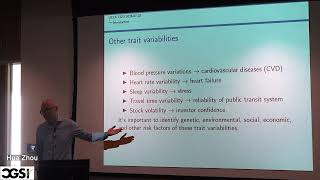
Statistical and Computational Algorithms for Analyzing Biobank Data
Explore statistical and computational algorithms for analyzing biobank data, focusing on robust estimation, longitudinal trajectories, and phenotyping disease progression in large-scale electronic health records.
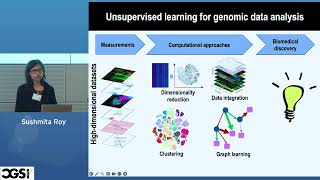
Matrix Factorization and Applications to Bulk and Single Cell Omic Datasets
Explore matrix factorization techniques for analyzing bulk and single-cell omic datasets, with applications in computational genomics and bioinformatics.
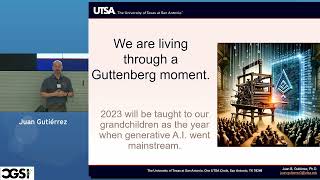
The Flaws of Others: Large Language Models in Biomedical Research
Explore the potential and limitations of large language models in biomedical research, focusing on their application and impact in analyzing complex malaria infection data.
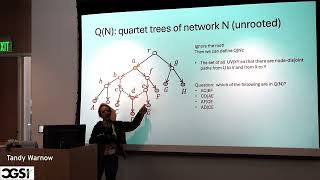
Statistically Consistent Estimation of Level-1 Phylogenetic Networks from SNPs
Explore statistically consistent methods for estimating level-1 phylogenetic networks from SNP data, focusing on rooted and unrooted structures in computational genomics.
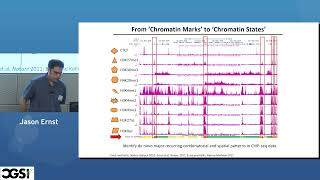
Computational Methods for Modeling and Analyzing Epigenomic Data
Explore computational methods for modeling and analyzing epigenomic data, focusing on chromatin state annotation, gene-based modeling, and cross-species conservation in functional genomics.
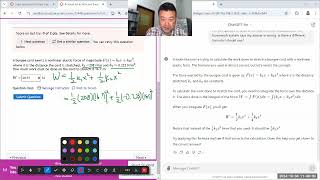
Physics 4A - Problem Solving with ChatGPT - Set 6
Enhance problem-solving skills in physics using ChatGPT 4o, focusing on Set 6 exercises from PHYS 4A curriculum.
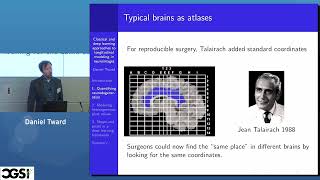
Classical and Deep Learning Approaches to Longitudinal Modeling in Neuroimages - CGSI 2024
Explore classical and deep learning methods for longitudinal modeling in neuroimaging, focusing on disease progression analysis and innovative techniques for tracking brain changes over time.
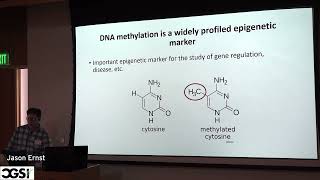
Computational Methods for Cross-Species Epigenomic Analyses - CGSI 2024
Explore computational methods for cross-species epigenomic analyses, focusing on DNA methylation imputation and conservation scoring across mammalian species.
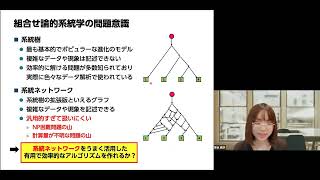
進化の系統樹と系統ネットワークに関する組合せ論 - 第17回MACSコロキウム
Dive into 進化の系統樹と系統ネットワークの数学的構造について、早水桃子博士による詳細な解説。系統樹の推定方法から構造定理まで、組合せ論的アプローチで探究する。
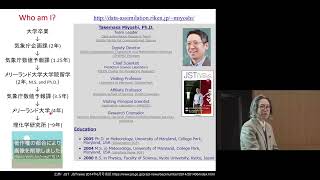
数値天気予報の要:データ同化とその展望
Dive into 数値天気予報の最先端技術、特にデータ同化の基礎から将来展望まで。気象予測の革新的手法とビッグデータ活用による精度向上について、実践的な知見を深める講演。

The Nobel Prize in Physics 2022
Delve into groundbreaking quantum entanglement discoveries and experiments that earned the 2022 Nobel Prize in Physics, exploring fundamental concepts that challenge our understanding of reality.
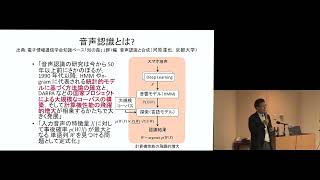
オープンサイエンス時代の大学図書館 - これから求められる人材とは 2019
オープンサイエンス時代における大学図書館員の役割と、アカデミックデータマネジメントの重要性について探求する講演。データ駆動型研究環境での新たな専門性を解説。
Superposition in Quantum Computing and Quantum AI - Hindi
Discover the fundamental concept of quantum superposition through clear Hindi explanations and practical examples, exploring its crucial role in quantum computing and AI applications.
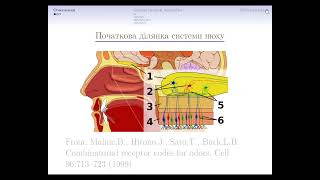
Стохастичний механізм підвищення селективності проекційних нейронів нюхової цибулини
Дослідіть стохастичні механізми та їх роль у підвищенні селективності нейронів нюхової цибулини, розкриваючи фундаментальні аспекти нейробіології.
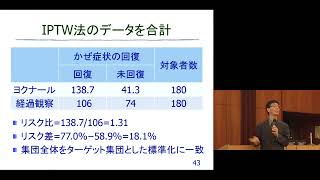
臨床研究者のための生物統計学 - 傾向スコアによる交絡調整と平均曝露効果の推定 - 第4章
傾向スコアを用いた交絡調整と平均曝露効果の推定について、臨床研究における生物統計学の実践的な手法を学びます。
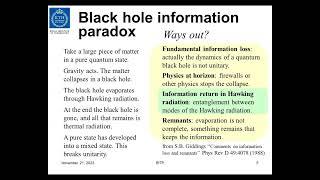
Random Pure Gaussian States and Hawking Radiation
Delve into quantum mechanics and black hole physics, exploring Hawking radiation, pure Gaussian states, and the implications for black hole evaporation and quantum entanglement.