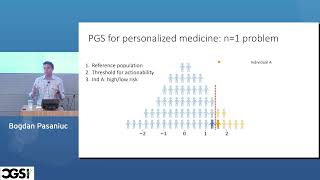
Personalized Genomic Medicine Using Large-Scale Biobanks Linked with Medical Records
Explore personalized genomic medicine using large-scale biobanks and medical records. Learn about leveraging genomic diversity for discovery and promoting precision health research in diverse populations.
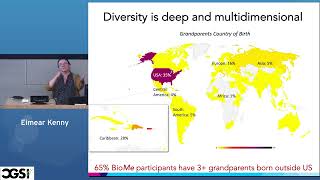
Population Genetics in an Era of Genomic Health
Explore population genetics' role in genomic health, focusing on electronic health records, personalized medicine, and genetic disease identification in specific populations.
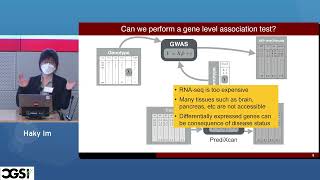
Integrating Multiple Omic Data to Improve Mechanistic Understanding and Prediction
Explore integrating multiple omic data to enhance mechanistic understanding and prediction in genomics. Learn techniques for improving data interpretation and predictive modeling in computational biology.
Designing DNA with Tunable Regulatory Activity Using Discrete Diffusion
Explore DNA Discrete Diffusion (D3) for engineering regulatory DNA sequences with targeted functional activity levels. Learn about its advantages, evaluation metrics, and applications in functional genomics.

gRNAde: Geometric Deep Learning for 3D RNA Inverse Design
Explore gRNAde, a geometric deep learning pipeline for 3D RNA inverse design. Learn about its architecture, use cases, and advantages over traditional methods in RNA sequence design.

The Future of Chemistry - Self-Driving Laboratories and AI-Driven Discovery
Explore self-driving laboratories revolutionizing scientific discovery through AI and automation. Learn about cutting-edge applications, key elements, and opportunities in chemistry, materials science, and biotechnology.
EquiReact: An Equivariant Neural Network for Chemical Reactions
Explore EquiReact, an equivariant neural network for predicting chemical reaction properties using 3D structures. Learn its advantages in flexibility, extrapolation, and data efficiency.

Stability-Aware Boltzmann Estimator Training of Neural Network Interatomic Potentials
Explore advanced neural network interatomic potentials for molecular dynamics simulations using Stability-Aware Boltzmann Estimator Training to enhance stability and accuracy across various systems and architectures.
Combinatorial Perturbation Prediction Using Causally-Inspired Neural Networks
Explore PDGRAPHER, a novel graph neural network model for phenotype-driven drug discovery. Learn how it predicts perturbagens to reverse disease effects, offering faster and more efficient therapeutic target identification.
HyperPCM: Robust Task-Conditioned Modeling of Drug-Target Interactions
Explore HyperPCM, a robust method for predicting drug-target interactions using hypernetworks. Learn about its state-of-the-art performance on benchmarks and excellence in zero-shot inference for unseen protein targets.

MFBind - A Multi-Fidelity Approach for Evaluating Drugs in Generative Modeling
Explore MFBind, a multi-fidelity approach integrating docking and binding free energy simulations for improved drug discovery generative modeling. Learn its advantages over current methods.

Evaluating Retrosynthesis with Syntheseus and Retro-Fallback
Explore advancements in synthesis planning evaluation through syntheseus and retro-fallback, enhancing molecule discovery with probabilistic uncertainty and new search algorithms.
Removing Biases from Molecular Representations via Information Maximization
Explore InfoCORE, an innovative approach to remove batch effects in drug screening data, enhancing molecular representations for improved property prediction and molecule-phenotype retrieval.
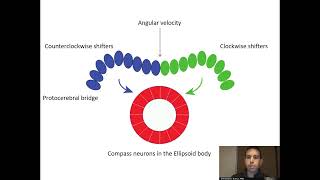
Recurrent Neural Networks in Brains and Machines
Explore neural networks as models for brain activity, examining their evolution and potential for bridging multiple cognitive systems. Gain insights into ongoing research and future directions in neuroscience.
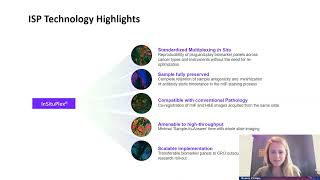
Innovative Biomarker Spatial Analysis for Comprehensive Tissue Immunophenotyping
Explore advanced tissue-based technologies for biomarker identification and disease prognosis using multiplex immunofluorescence assays and complex image analysis techniques.
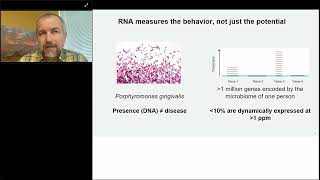
A Systems Medicine Platform Based on RNA Sequencing and Artificial Intelligence
Explore Viome Operating System (ViOS), an open-access platform integrating lab, computational, and logistics components for efficient clinical research and health improvement using big data and AI.
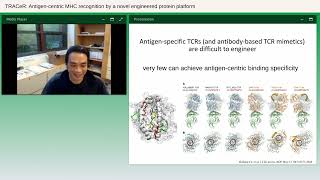
TRACeR: Antigen-Centric MHC Recognition by a Novel Engineered Protein Platform
Explore a novel engineered protein platform for antigen-centric MHC recognition, revolutionizing immune system understanding and potential therapeutic applications.
NextSeq 1000/2000 - Longer Reads and Extended Informatics
Explore key updates and features of NextSeq™ 1000/2000 sequencers and DRAGEN Bio-IT platform, focusing on longer reads and enhanced informatics capabilities.
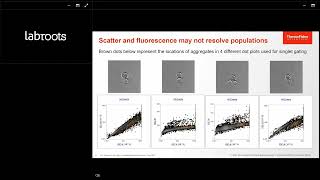
Automated Image Analysis Reduces User-to-User Variability in Flow Cytometry Gating Strategies
Discover how automated image analysis minimizes variability in flow cytometry data analysis, enhancing sample quality assessment and revealing morphological features beyond traditional parameters.
Insights into Cancer Genomics via COSMIC v98
Explore cancer genomics through COSMIC v98, learning about new cancer genes, download files, IDs, and data improvements in this comprehensive overview.
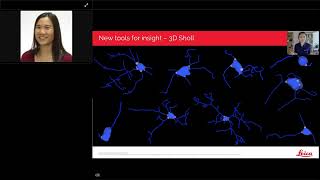
Unlocking Insights in Complex and Dense Neuron Images Guided by AI
Explore AI-guided techniques for analyzing complex 3D neuron morphology, overcoming challenges in multi-modal imaging and diverse neuronal densities.