Machine Learning for Gravitational Wave Astronomy - Concepts & Terminology
Explore machine learning concepts and terminology for gravitational wave data analysis, enhancing your understanding of this cutting-edge field in astronomy and physics.
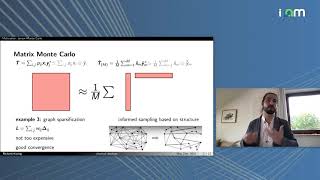
Predicting Many Properties of a Quantum System From Very Few Measurements
Efficient method for constructing approximate classical descriptions of quantum states using minimal measurements, enabling prediction of multiple properties with system size-independent measurement requirements.
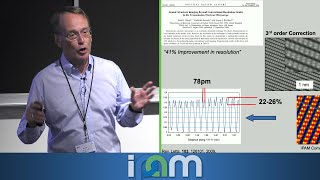
Strategies for Quantitative Imaging and Reconstruction from High Speed-Low Dose Data
Explore quantitative imaging techniques using AI/ML for analyzing large datasets of electron microscopy images, focusing on defect mapping in graphene and industrial catalyst studies.
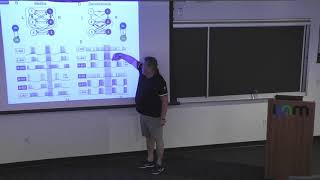
Reconstructed Rhythm-Generation by Neural Circuits in Two Sea Slugs
Explore biologically plausible models of swim center pattern generators in sea slugs, examining network-level bursting, stability mechanisms, and resilience to perturbations using dynamical systems and machine learning.
AI-Driven Workflows for the Discovery of Novel Superconductors
Explore AI-driven methods for discovering novel superconductors, including data augmentation, ultra-fast machine-learning potentials, and symbolic regression to improve predictive equations for superconducting transition temperatures.
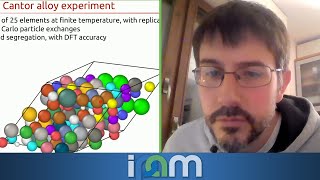
Machine Learning for Atomic-Scale Modeling - Potentials and Beyond - IPAM at UCLA
Explore machine learning techniques for atomic-scale modeling, addressing challenges in chemical diversity and integrating functional properties beyond interatomic potentials for advanced materials simulation.
High-Dimension Perspective on Extracting & Encoding Information in Chemical Systems
Explore high-dimensional data extraction and encoding in complex chemical systems, focusing on exascale computing opportunities, multiscale correlations, and challenges in feature selection and interpretability.
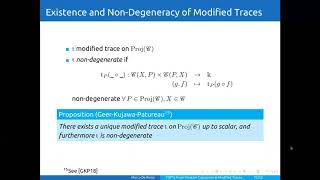
TQFTs from Non-Semisimple Modular Categories and Modified Traces - Marco de Renzi
Explore non-semisimple TQFTs and modified traces in topology, focusing on construction methods, invariants, and mapping class group representations derived from modular categories.
Frontiers of Geophysics - Exploration of Mars, Jupiter, and the Sun
Explore Mars, Jupiter, and the Sun through cutting-edge geophysical missions. Discover layered terrains, organic chemistry, and solar wind in this frontier-pushing presentation by Edward C. Stone.
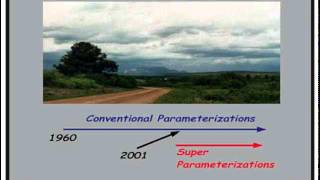
Bjerknes Lecture: Cloud System Resolving Models and Parameterization - AGU Fall Meeting 2001
Explore cloud parameterization and system-resolving models in climate science. Gain insights into innovative approaches for modeling complex atmospheric processes and their implications.
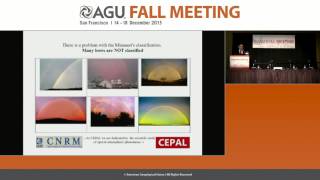
Why All Rainbows Don't Look Alike - New Classification System
Explore the science behind rainbow variations through a new classification system based on hundreds of images, offering insights into color band differences and atmospheric phenomena.
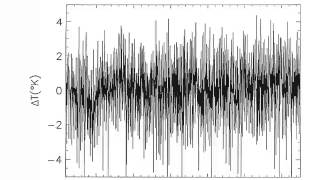
Complexity and Self-Organization in Earth Systems - Lorenz Lecture 2002
Explore self-organized complexity, predictability, and universal statistical distributions in natural systems through Donald L. Turcotte's insightful Lorenz Lecture at the 2002 AGU Fall Meeting.
Software Defined Vehicle Trends and Key Technologies - The Critical Driver of Automotive Industry
Explore Software Defined Vehicle trends, key technologies, and their impact on the automotive industry. Learn about virtualization, cloud-native practices, and community developments like AGL and VIRTIO.
Predictive Understanding of Coupled Interactions Among Water, Life, and Landforms
Explore coupled interactions among water, life, and landforms in this AGU Fall Meeting session, focusing on predictive understanding and cutting-edge research in Earth sciences.
Water, Weather, and Climate in Our Future - What Can We Know?
Explore the future of water resources, weather patterns, and climate change with insights from a retired NOAA expert. Gain valuable knowledge on potential impacts and uncertainties.
Predicting Extreme Events in Natural and Socioeconomic Systems - State-of-the-Art and Emerging Possibilities
Explore state-of-the-art methods and emerging possibilities for predicting extreme events in natural and socioeconomic systems, with insights from leading experts in the field.
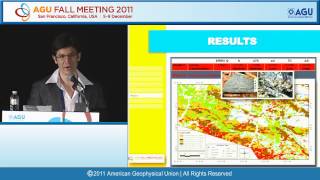
Computational Intelligence in Earth and Space Systems I
Explore cutting-edge computational intelligence applications in Earth and space systems, featuring innovative research and advancements in data analysis, modeling, and prediction techniques.
Computational Fluid Dynamics Analysis With Kubernetes, Kubeflow, and OpenFOAM - Erik Jacobs
Explore how Kubernetes, Kubeflow, and OpenFOAM can optimize computational fluid dynamics analysis, improving resource utilization and operational efficiency in high-performance computing environments.
Scale Down Your Environmental Impact - Kubernetes and Sustainability
Explore Kubernetes' environmental impact, comparing its efficiency benefits to adoption costs. Learn when K8s becomes eco-friendly and how to minimize energy usage from individual to enterprise scale.
Environmental Sustainability: An Energy-Aware Datacenter Operating System
Explore an energy-aware datacenter operating system that optimizes power consumption in distributed computing environments using open-source software, machine learning, and Kubernetes-based workload optimization.
Too Long Didn't Read: AI in Space, AGI Definitions, and AI in Agriculture
Explore space mining, AI terminology, and agricultural AI applications. Discusses ethical implications, technological advancements, and potential impacts on various industries.