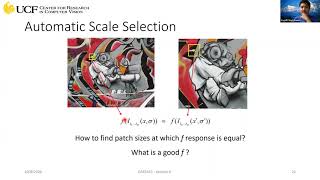
Computer Vision Features - Part 2 - Lecture 9
Explore advanced feature detection techniques including corner detection, HOG, and SIFT, focusing on their mathematical foundations and practical applications in computer vision.
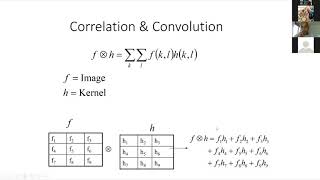
Image Filtering, Convolution, and Edge Detection
Explore image processing techniques including filtering, convolution, and edge detection. Learn about derivatives, noise reduction, and various edge detection algorithms for computer vision applications.
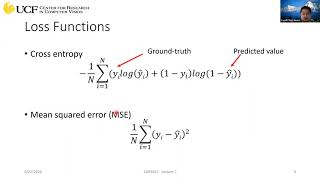
CAP5415 - Training Neural Networks Part 2 - Fall 2020 - Lecture 7
Explore advanced neural network training techniques, including loss functions, backpropagation, gradient descent optimization, and strategies to address common challenges in deep learning.
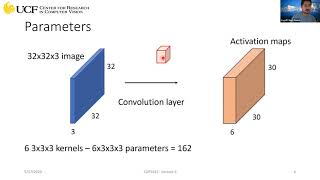
CAP5415 - Introduction to Convolutional Neural Networks Part 2 - Lecture 6
Explore convolutional neural networks' architecture, layers, and features. Learn about AlexNet, pooling, normalization, and the progression from low-level to complex features in deep learning.
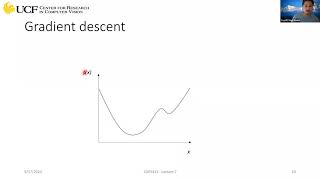
CAP5415 - Training Neural Networks Part 1 - Lecture 7 - Fall 2020
Explore neural network training techniques, including learning kernels, loss functions, and gradient descent, to enhance your understanding of deep learning fundamentals.
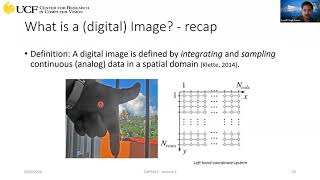
Introduction to Convolutional Neural Networks - Part 1 - Lecture 6
Comprehensive introduction to Convolutional Neural Networks, covering history, architecture, key concepts, and applications in image processing and beyond.
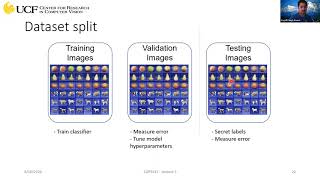
Introduction to Neural Networks - Lecture 5
Introduction to neural networks, covering object classification, image representation, and machine learning fundamentals. Explores biological inspiration, computational implementation, and practical applications in image recognition.
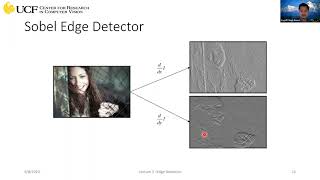
Edge Detection Techniques - Prewitt, Sobel, Marr-Hildreth, and Canny - Lecture 4
Edge detection techniques explored: Prewitt, Sobel, Marr-Hildreth, and Canny. Covers derivative masks, image gradients, and deep learning applications for advanced computer vision tasks.
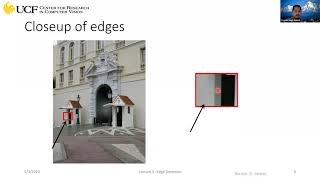
Computer Vision: Edge Detection Techniques - Part 1 - Lecture 4
Explore edge detection techniques, including origins, types, and applications. Learn about intensity profiles, noise effects, smoothing solutions, and evaluation methods for effective edge detection.
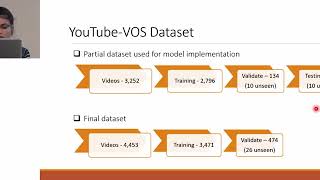
YouTube-VOS: Sequence-to-Sequence Video Object Segmentation
Learn sequence-to-sequence video object segmentation techniques, exploring datasets, algorithms, and metrics. Gain insights into YouTube-VOS implementation and experimental results on various benchmarks.
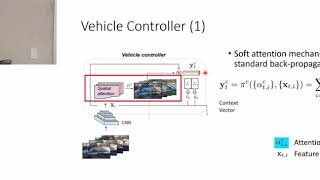
Textual Explanation for Self-Driving Vehicles
Explore self-driving vehicle technology through an explainable driving model, focusing on network architecture, preprocessing, and evaluation of vehicle control and explanation generation.
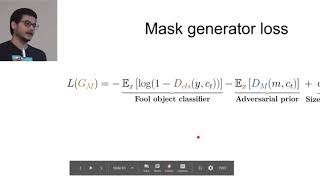
Adversarial Scene Editing: Automatic Object Removal from Weak Supervision
Learn to automatically remove objects from images using weak supervision, exploring mask generation and image inpainting techniques for seamless scene editing.
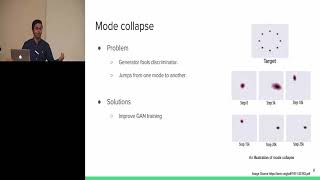
Multi-Agent Diverse Generative Adversarial Networks
Explore diverse generative adversarial networks, focusing on multi-agent systems, mode collapse prevention, and competing objectives in machine learning.
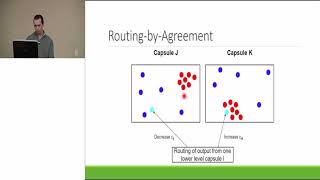
Dynamic Routing Between Capsules
Explore capsule networks, routing-by-agreement, and their applications in computer vision, with a focus on MNIST and multiMNIST datasets.
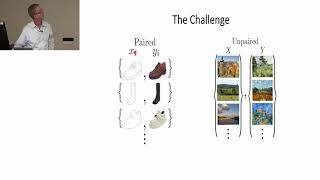
Unpaired Image-to-Image Translation Using Cycle-Consistent Adversarial Networks
Learn about unpaired image-to-image translation using cycle-consistent adversarial networks, exploring challenges, intuition, loss functions, and results in this comprehensive overview.
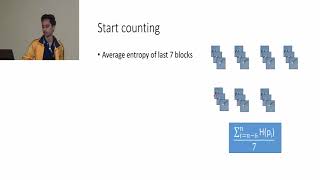
Live Repetition Counting - CNN Architecture and System for Online Motion Detection
Learn techniques for real-time repetition counting in video, including CNN architecture, counter integration, and online mode counting for multiple detectors and regions of interest.
Understanding Deep Learning Requires Rethinking Generalization
Explore deep learning generalization, examining regularization techniques, randomization tests, and neural network expressivity to challenge conventional understanding and improve model performance.
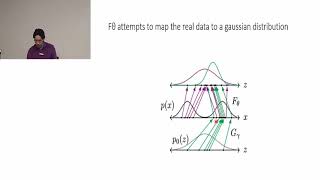
VEEGAN - Reducing Mode Collapse in GANs Using Implicit Variational Learning
Learn about VEEGAN, an innovative approach to reduce mode collapse in Generative Adversarial Networks (GANs) using implicit variational learning, with practical examples and results.
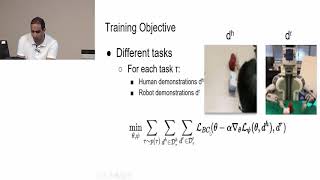
One-Shot Imitation from Observing Humans via Domain-Adaptive Meta-Learning
Learn domain-adaptive meta-learning for one-shot imitation, enabling robots to quickly learn new tasks by observing human demonstrations and adapting across domains.
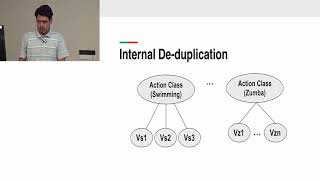
A Sparsely Labeled Dataset for Action Classification and Localization - SLAC
Explore a novel dataset for action classification and localization, covering data collection, training, validation, and evaluation methods for human action detection.
Pixel Recurrent Neural Networks
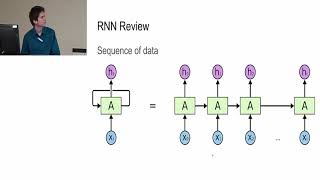
Explore cutting-edge image generation techniques, focusing on Pixel Recurrent Neural Networks. Learn about model architectures, RNN concepts, and LSTM equations for advanced AI applications.