Linear Algebra Fundamentals - Vectors, Matrices, and Operations
Comprehensive introduction to linear algebra covering vectors, matrices, and their operations. Explores applications in various fields and problem-solving techniques for systems of equations.
Prelinear Algebra - Essential Concepts for Linear Algebra
Comprehensive introduction to vectors, trigonometry, and geometry as foundational concepts for Linear Algebra, with applications in various fields like physics, economics, and machine learning.
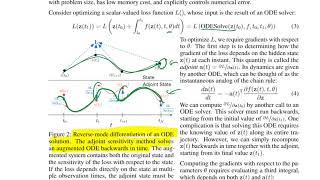
Neural Ordinary Differential Equations
Explore continuous-depth neural networks using differential equations, offering advantages in memory efficiency, adaptive evaluation, and numerical precision-speed tradeoffs for various machine learning tasks.
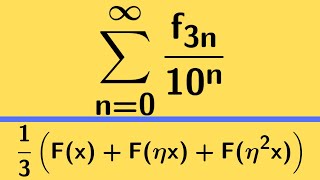
Generating Functions and Combinatorial Identities
Explore techniques for manipulating generating functions to create new combinatorial sum identities, with an application to Fibonacci number sums.
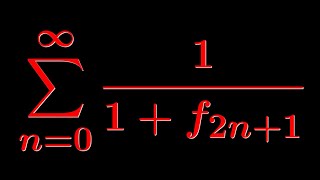
A Nice Fibonacci Reciprocal Sum
Explore a fascinating sum involving Fibonacci number reciprocals through various proof methods, including induction and monotone techniques.

What Is a Tensor Anyway? - From a Mathematician
Explore tensors from a mathematician's perspective, delving into their definition, properties, and applications in various mathematical fields.

Discrete Calculus - My Favorite Topic for a Student Seminar Talk
Explore discrete calculus through derivatives, antiderivatives, and fundamental theorems. Learn power rules, exponential functions, and Fibonacci numbers in this engaging mathematical seminar.
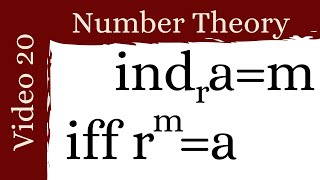
Indices - The Discrete Log - Number Theory
Explore discrete logarithms in number theory, focusing on indices and their applications in modular arithmetic and cryptography.
Modular Arithmetic - Number Theory
Explore fundamental concepts of modular arithmetic in number theory, including congruence relations, modular operations, and their applications in mathematics.
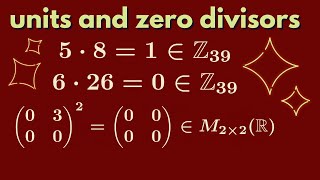
Abstract Algebra - Units and Zero Divisors of a Ring
Explore units and zero divisors in Zn and 2x2 real matrices, classifying elements and proving key properties in abstract algebra.
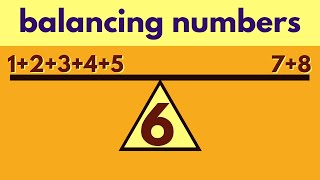
Balancing Numbers
Explore the concept of balancing numbers, including examples, recursion, and closed form calculations in this mathematical deep dive.
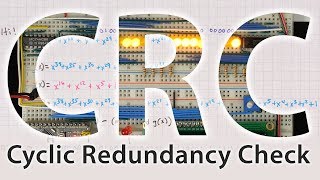
How Cyclic Redundancy Checks (CRCs) Work - Error Detection in Data Transmission
Explore cyclic redundancy check (CRC), a common error detection method, and learn about its mathematical principles and effectiveness in catching specific types of errors.
Math for Machine Learning - Exercises: Probability
Hands-on exercises exploring probability concepts in machine learning, including entropy, cross-entropy, and Gaussian distributions, with practical applications and insights.
Math4ML Exercises - Calculus
Hands-on calculus exercises for machine learning, covering little-o notation, gradients, linear approximations, and optimization techniques using Python and SymPy.
Math4ML Exercises - Linear Algebra, Continued
Hands-on linear algebra exercises for machine learning, covering matrix operations, shape-checking, composition, and practical applications in coding and ML contexts.
Math4ML Exercises - Getting Started & Linear Algebra
Introduction to Math4ML exercises, focusing on linear algebra fundamentals. Includes autograder demonstrations and hands-on problems to reinforce key concepts like array shapes, dimensions, and matrix operations.
Probability - Math for Machine Learning
Explore core probability concepts for machine learning, including surprises, loss functions, and Gaussians. Gain insights into the mathematical foundations of ML algorithms.
Linear Algebra - Math for Machine Learning
Explore core linear algebra concepts essential for machine learning, including arrays, linear functions, and SVD, with practical applications and programming analogies.
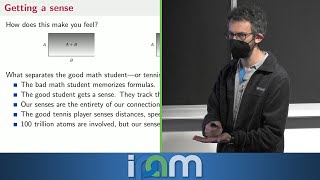
Sense-Making - Accounting for Intelligibility - IPAM at UCLA
Exploring mathematical accounting systems for collective intelligence, focusing on sense-making as a key component in understanding and articulating the phenomenon of intelligence.
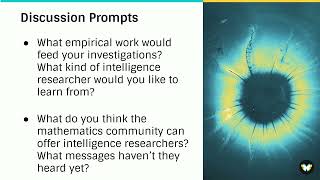
Broadening the Reach of Mathematical Approaches to the Study of Intelligences
Explore mathematical approaches to studying diverse intelligences across fields, discussing strategies for non-mathematicians to adopt these methods and potential funding opportunities for future research.

Categories - The Mathematics of Connection - IPAM at UCLA
Explore the mathematics of connection through category theory, focusing on open systems, their interfaces, and composition. Learn how this approach applies to various fields and collective intelligence.