
Distribu-ready with the Modular Monolith - Designing Future-Proof Applications
Discover how to design and implement a modular monolith architecture that's ready for future distribution, minimizing complexity while maintaining scalability potential for your applications.
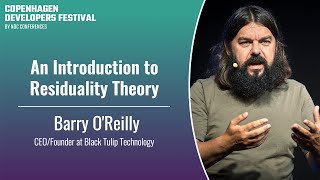
An Introduction to Residuality Theory
Discover a revolutionary approach to software design through Residuality Theory, using complexity science to better manage uncertainty in business systems and interconnected components.
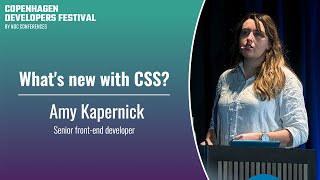
What's New with CSS - Modern Features and Capabilities
Discover the latest CSS features and capabilities, from container queries to directional layouts, empowering you to create more dynamic and responsive designs with fewer dependencies.
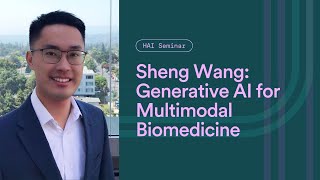
Generative AI for Multimodal Biomedicine
Explore groundbreaking developments in multimodal biomedicine AI, including GigaPath, OCTCube, and BiomedParse foundation models, and their potential impact on advancing medical applications through multi-agent frameworks.
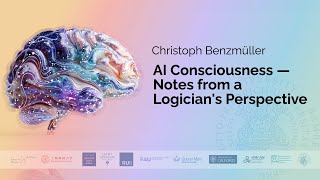
AI Consciousness - Notes from a Logician's Perspective
Explore logical self-reflection in AI systems through the LogiKEy framework, examining how logical formalisms can analyze their own consistency using nested embeddings in higher-order logic.

Diffusion Models - Lecture 18
Dive into the fundamentals of diffusion models with MIT Prof. Song Han, exploring their architecture, principles, and applications in machine learning and AI generation.
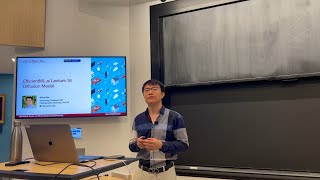
Diffusion Models - Lecture 18
Dive into the fundamentals of diffusion models, exploring their architecture, principles, and applications in machine learning through expert guidance from MIT's Professor Song Han.

Building Applications with RAG and LangChain on Google Cloud
Master building AI applications with RAG and LangChain on Google Cloud. Follow a hands-on demonstration of indexing data, creating a web interface, and deploying solutions for enhanced AI response accuracy.
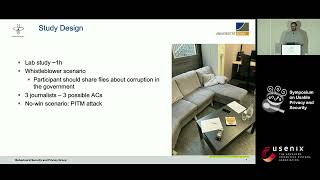
Can Johnny Be a Whistleblower? A Study of Social Authentication in Adversarial Scenarios
Explore the effectiveness of social authentication in secure messaging through a whistleblower scenario study comparing different verification methods and user behaviors in adversarial conditions.

An Evaluative Case Study of Shadow IT Mindsets Among Corporate Employees
Explore the complex dynamics of shadow IT in corporate environments through research findings on employee mindsets, risk awareness, and behavioral patterns in unofficial technology adoption.
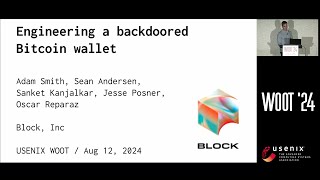
Engineering a Backdoored Bitcoin Hardware Wallet - Security Analysis and Implementation
Explore how attackers can secretly extract private seeds from Bitcoin hardware wallets through ECDSA signatures, demonstrating vulnerabilities in wallet security and firmware updates.
Towards Compositional Interpretability for XAI
Explore a mathematical framework using category theory and string diagrams to understand AI model interpretability, focusing on compositional structures and their explainability benefits in neural networks and transformers.

Compositional Approaches to Modelling Language and Concepts
Explore the integration of compositional and neural approaches in language modeling, examining their strengths, limitations, and potential for improving AI systems' performance and interpretability.

Non-Neural Intelligence: Biological Architecture Problem-Solving in Diverse Spaces
Explore biological intelligence beyond neural systems, examining how cells, tissues, and subcellular components demonstrate problem-solving abilities and collective decision-making across different scales.

Learning Libraries of Programmatic Policies
Discover how artificial agents can learn and maintain libraries of reusable behaviors for solving sequential decision-making problems through programming and neural network approaches.

Program Synthesis: Applications, Experiences, and Neuro-Symbolic Techniques
Explore program synthesis applications across spreadsheets, development, and education, discovering how user intent combines with neuro-symbolic techniques and LLMs for enhanced automated solutions.

Probabilistic Thinking in Language and Code
Explore the intersection of Bayesian models and LLMs, examining how natural and programming languages serve as languages-of-thought for human-like cognitive representations and reasoning.

Equilibrium is Inference - Lessons from Liquid-Liquid Phase Separation Models
Delve into the relationship between equilibrium systems and information processing, exploring neural computation models and their applications in molecular systems and phase separation dynamics.
Abstraction and Evolution with Large Language Models
Explore how large language models enhance genetic programming through concept-guided evolution, with applications in symbolic regression and image classification demonstrated through practical examples.

Adversarial Intelligence in Natural and Artificial Systems
Explore the dynamics of adversarial intelligence through genetic programming and coevolutionary algorithms, focusing on designing competitive AI agents and simulating strategic rivalries.
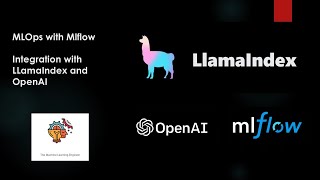
MLOps MLFlow - Integración con LlamaIndex en Español
Descubre cómo integrar LlamaIndex con MLFlow y OpenAI, explorando el seguimiento y gestión de modelos de lenguaje mediante la función Traces para optimizar tus proyectos de MLOps.