Introduction to Artificial Intelligence - Lecture 14: Assignment 4
Explore algorithmic techniques and data structures for AI problem-solving, applying learned concepts to simple games in this graduate-level introduction to Artificial Intelligence.
Introduction to Artificial Intelligence - Lecture 15: Intro to Reinforcement Learning
Explore reinforcement learning fundamentals, including key concepts and applications in AI problem-solving environments for modern algorithmic techniques.
Introduction to Artificial Intelligence - Bandit Algorithms - Lecture 16
Explore bandit algorithms in AI, learning key techniques for optimizing decision-making in uncertain environments through practical applications and examples.
Intro to Artificial Intelligence - Markov Decision Process (MDP) - Lecture 17
Explore Markov Decision Processes (MDPs) in AI, learning algorithmic techniques for modern problem-solving in uncertain environments.
Introduction to Deep Neural Networks - Lecture 21
Explore deep neural networks, their architecture, and applications in AI. Learn key concepts and techniques for implementing advanced machine learning models.

Computer Science Graduate School Research and Programming Best Practices
Learn essential research and programming practices for computer science grad school, from version control to experiment organization and data visualization.

Making C++ Fun, Safe, and Accessible
Explore strategies to make C++ more enjoyable, secure, and approachable for a wider audience. Learn how to overcome common challenges and misconceptions about the language.

The Singleton Pattern - Anti-Pattern or Solution?
Explore the Singleton pattern in C++: pros, cons, and proper implementation techniques for global aspects. Learn to overcome disadvantages and ensure testability in software design.

Safety in C++: All the Safeties - Lecture
Explore C++ safety concepts, their relation to correctness and security, and learn strategies for writing better code. Gain insights from Sean Parent's expertise in software architecture and development.
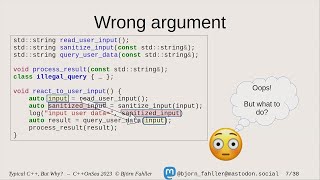
Typical C++ - Leveraging the Type System for Better Code
Explore how leveraging C++'s type system strengths improves code quality, prevents errors, enhances readability, and reduces risks during modifications.

How to Build C++ Interfaces That Are Hard to Use Incorrectly - Lecture
Discover techniques for designing C++ interfaces that prevent misuse, leveraging the type system to catch errors at compile-time and enhance code safety and reliability.
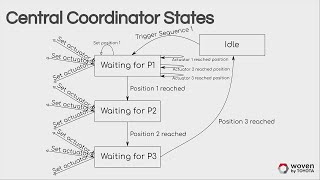
Designing for Concurrency Using Message Passing in C++
Explore message passing for concurrent C++ design, reducing synchronization errors. Learn practical implementation through examples like dining philosophers and robot control systems.

What Happens After the Compiler in C++ - How Linking Works
Explore the post-compilation process in C++, including linking, relocations, and memory management. Gain insights into how compilers, linkers, and operating systems collaborate to create executable programs.
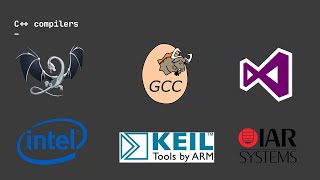
Standard C++ Toolset
Explore the evolving C++ ecosystem, from compilers and debuggers to build systems and dependency managers. Gain insights into standard tools for effective C++ development.

Coroutine Intuition in C++ - Lecture
Gain intuition on coroutines in C++20. Explore stackless asyncrony, generators, and senders/receivers through concise examples to improve code readability, maintainability, and composability.

Why Clean Code Is Not the Norm
Explore why clean code remains uncommon, debunk misconceptions, and learn strategies to promote better coding practices in software development.

Shared Libraries in Windows and Linux - Linking and Loading Deep Dive
Dive deep into linking and loading operations, exploring binary structures, static vs dynamic linkage, and Linux vs Windows differences. Gain clarity on opaque linker error messages.
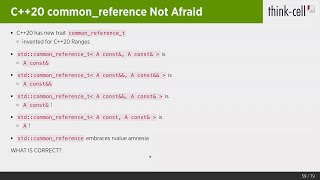
The C++ Rvalue Lifetime Disaster - Understanding and Mitigating Issues
Explore rvalue reference lifetime issues in C++, their impact on code safety, and potential solutions for improved memory management and generic programming.
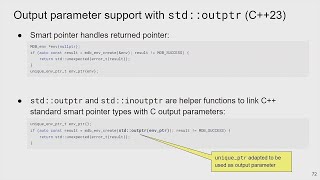
Efficient and Reliable Wrapping of C APIs Using Modern C++ - Lecture
Learn techniques for efficiently wrapping C APIs in modern C++, covering interface design, overhead reduction, compile-time safety, and unit testing strategies. Explore C++23 features for optimal API adaptation.
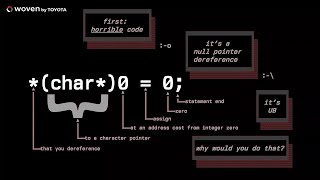
*(char*)0 = 0; - What Does the C++ Programmer Intend With This Code? - Lecture
Explore the intricacies of a simple C++ program, delving into programmer intent, language standards, compiler behavior, kernel interactions, and hardware implications across the entire stack.
An Engineering Approach to Optimizing C++ - Lecture
Explore practical C++ optimization techniques for real-time audio libraries. Learn to measure performance, identify optimization areas, and apply strategies across platforms using real-world examples from Tracktion Engine.