Understanding How Llama 3.1 Works - A Technical Deep Dive
Dive into Meta's groundbreaking Llama 3 architecture, exploring pre-training techniques, model capabilities, synthetic data quality, and implementation strategies for advanced AI development.

Inside the Rectified Flow Transformer Model - Understanding Advanced Image Generation
Dive into the technical architecture and methodology behind Flux, exploring rectified flow transformers, latent diffusion models, and the innovative approaches that led to superior image generation results.

The Prompt Report: Understanding Prompting Techniques and Taxonomy - Part 1
Explore systematic prompting techniques through an in-depth analysis of template structures, zero-shot methods, emotion prompting, and thought generation approaches for enhanced AI interactions.

Test Automation Reporting and Dashboarding with Report Portal
Master test automation reporting with Report Portal - from importing self-healing test results to creating custom dashboards and analyzing trends for enhanced CI/CD pipeline integration.

Virtual Threads and the Future of Reactive Programming in Java 21
Explore how Java 21's virtual threads transform concurrent programming, comparing them with reactive approaches and discovering new possibilities with Structured Concurrency and Scoped Values.
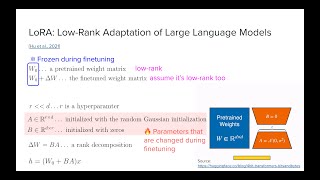
Parameter-Efficient Finetuning - QLoRA and LoRA Methods
Explore parameter-efficient fine-tuning techniques with LoRA and QLoRA, learning how to optimize large language models while maintaining performance and reducing computational costs.
Data Preparation for RAG Applications Using Qdrant and FastEmbed
Master data preparation techniques for RAG applications using Qdrant and FastEmbed, covering chunking methods, embedding generation, indexing strategies, and efficient data loading processes.
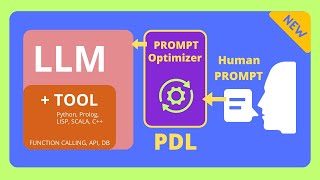
PDL: A Declarative Language for Smarter and Faster LLM Programming
Discover how PDL revolutionizes prompt programming with a declarative YAML-based approach, enabling modular, reusable patterns for enhanced LLM interactions and sophisticated application development.
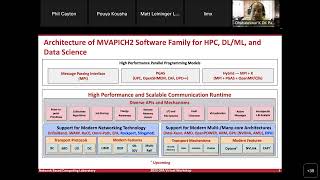
High Performance Scalable Support for Big Data Stacks with MPI - Leveraging MPI4Spark and MPI4Dask
Discover how MPI4Spark and MPI4Dask enhance big data frameworks by leveraging high-speed networks and HPC systems for improved performance and scalability in distributed computing environments.
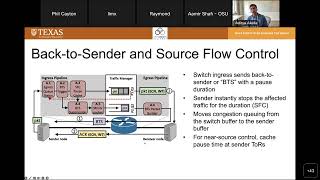
The Next Decade of Networking Challenges and Opportunities
Explore emerging advances in network technology, from transport protocols to hardware, and understand key challenges in supporting future applications across edge, cloud, and data centers.
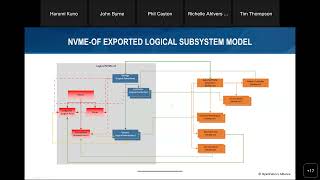
Diving Into the New Wave of Storage Management - NVMe and Swordfish Specifications
Explore the latest developments in NVMe and NVMe-oF storage management through Swordfish specification, covering expanded device support, fabric management, and composable infrastructure integration.
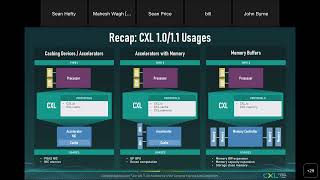
Introduction to Compute Express Link (CXL) 3.0 - Features and Fabric Management
Discover the latest advancements in CXL 3.0 technology, including enhanced fabric capabilities, improved memory sharing, and next-generation datacenter architecture for high-performance computing workloads.
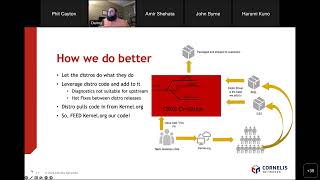
Supporting an Upstream First Kernel Driver for HPC Fabrics
Explore the evolution and improvements of the HPC fabric driver hfi1, from its staging phase to mainline kernel integration, focusing on upstream development and open-source delivery methods.
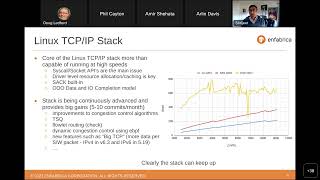
RDMA and Linux TCP - Zero-Copy Kernel Bypass for High-Performance Networking
Dive into high-performance networking with RDMA interfaces and Linux TCP stack optimization, exploring zero-copy techniques and kernel bypass for achieving 800Gbps throughput.
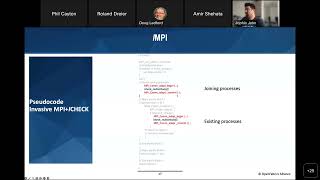
iCheck - Leveraging RDMA and Malleability for Application-Level Checkpointing in HPC Systems
Discover how RDMA and malleable multilevel checkpointing can enhance HPC system reliability through iCheck framework, offering improved performance and efficient data transfer mechanisms for supercomputing applications.
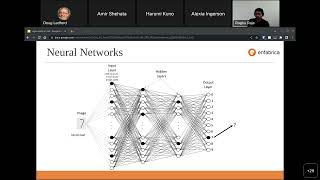
Designing Networking Stacks for Machine Learning Frameworks
Dive into networking stack design for machine learning frameworks, exploring challenges, solutions, and real-world applications through NCCL case studies and prototype implementations.
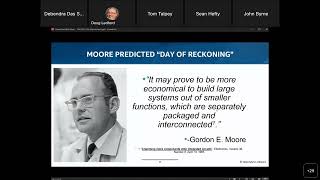
Universal Chiplet Interconnect Express - Building an Open Ecosystem of Chiplets
Discover how UCIe technology enables mixing chiplet components from multiple vendors for customized System-on-Chip construction, addressing growing compute demands across various sectors.
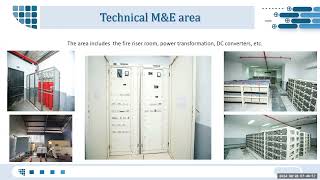
OCP Ready - Open Compute Project Data Center Certification
Discover the key principles and implementation strategies of OCP Ready certification through ST Digital's comprehensive overview of data center infrastructure standards.
Infrastructure Software for Hyperscale AI and GPU Clusters
Explore cutting-edge infrastructure software solutions powering large-scale AI operations and GPU cluster management for hyperscale computing environments.
Vector Storage for Large Scale Multimodal RAG
Explore advanced vector storage techniques for implementing large-scale multimodal retrieval-augmented generation systems and their practical applications.
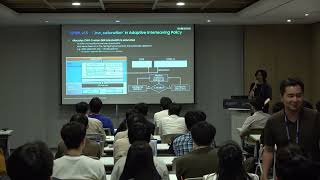
Effective Data Tiering and Memory Allocation Techniques in Heterogeneous Memory System
Discover advanced techniques for optimizing data tiering and memory allocation in heterogeneous systems, focusing on efficient resource management and performance enhancement.