
Oceananigans - An Ocean-Flavoured Fluid Dynamics Library
Explore Oceananigans, a Julia-based fluid dynamics library for oceanic modeling, featuring flexibility, GPU performance, and easy integration of custom components like sea-ice and biogeochemistry.

FMIExchange.jl - Foreign Models Through a Familiar Interface
Explore FMIExchange.jl for seamless integration of FMI-compliant models with Julia's DifferentialEquations.jl, enabling multi-model simulations and advanced control strategies in complex systems.

ProcessSimulator.jl - A Differentiable Chemical Process Simulator
Differentiable chemical process simulator leveraging symbolic transformations and automatic differentiation for robust flowsheeting, thermodynamic property calculations, and system-level optimization in Julia.
SpeedyWeather.jl - Reinventing Atmospheric Models
Innovative Julia-based atmospheric modeling tool offering interactive, user-friendly simulations for climate research, overcoming traditional Fortran constraints with flexible, extensible components.
Pkg en Route - The Logistics Behind the Julia Package Manager
Explore Julia's package manager infrastructure, from resolving dependencies to global distribution networks. Learn about server protocols, PkgServer.jl, and custom server setup for efficient package management.

Combined Stochastic Models for Cancer Patient Trajectories
Integrating diverse clinical data into a unified stochastic model for cancer patient trajectories, combining tumor growth, metastasis, and survival data using Julia for simulation and Bayesian inference.
MATLAB to Julia: Practical Examples for MATLAB Developers
Explore practical examples of transitioning from MATLAB to Julia, covering plotting, file handling, control systems, and package development for experienced MATLAB users.
Developing Supercomputing Geoscience Applications Using Julia
Explore modular Julia packages for accelerating geocomputing, enabling high-performance stencil codes that scale from laptops to GPU-accelerated supercomputers for geoscience applications.
What's the Plan? Task Planning for Robots - JuliaCon 2024
Explore task planning for robots using Julia's features to efficiently handle complex knowledge bases and action sequences in goal-oriented scenarios.

JSOSuite.jl - One-Stop Solution for Optimization
Explore JSOSuite.jl, a comprehensive optimization package offering automatic solver selection, research-level algorithms, and flexible modeling interfaces for various problem types in Julia.
Adventures in Julia IR - Plundering Core.Compiler
Explore Julia's typed intermediate representation (IR) and learn to implement custom optimization passes, extending compiler capabilities beyond conventional metaprogramming techniques.

RxEnvironments - Reactive Multi-Agent Environments
Explore reactive programming for multi-agent environments in Julia. Learn to model complex agent-environment interactions using RxEnvironments.jl, overcoming limitations of traditional reinforcement learning frameworks.
JuliaSim Modeling Language: Composing Complex Systems with ModelingToolkit - JuliaCon 2024
Explore JuliaSim Modeling Language: a declarative approach for composing complex systems using ModelingToolkit, offering easier learning, better diagnostics, and enhanced model reasoning.
Applications of Distributed Task Parallelism
Explore distributed task parallelism in Julia, comparing Dagger with other frameworks and libraries. Learn about unique features for efficient, scalable, and maintainable code.

Interpretable Hierarchical Calibration of Agent-Based Models
Explore scientific machine learning's fusion of traditional modeling and ML, focusing on neural network surrogates for agent-based models in epidemiology and automated hierarchical calibration.
Workflow for Developing Multiple Interdependent Packages - JuliaCon 2024
Explore efficient workflows for developing interconnected Julia packages, covering version management, testing, and deployment strategies for large-scale projects and team collaboration.
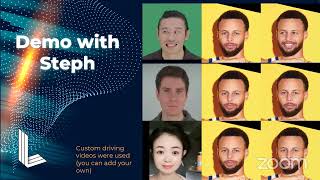
LivePortrait - Efficient Portrait Animation with Stitching and Retargeting Control
Innovative framework for video-driven portrait animation, balancing efficiency and control. Utilizes implicit keypoints, large-scale training, and advanced modules for superior performance and speed.
RouteLLM - Learning to Route Large Language Models with Preference Data
Optimize LLM deployment with dynamic routing, balancing cost and performance. Learn to train routers using preference data, achieving significant cost reduction while maintaining quality responses.
Best of Java Performance - JVM Language Summit 2024 Highlights
Explore cutting-edge JVM advancements: Valhalla, Leyden, Lilliput, and Babylon projects. Discover performance improvements, faster startup, better memory management, and GPU acceleration for Java.

How to Avoid Designing a Big Ball of Mud - YAGNI Principles
Dave Farley explores evolutionary software design, balancing complexity management with adaptability, and avoiding over-engineering while keeping systems flexible for future changes.
The Ultimate Cloud Platform Team Topology - Scaling Cloud Teams with CDK
Explore effective cloud platform team structures, leveraging Team Topologies and CDK to enhance collaboration, implement guardrails, and streamline serverless development for improved feature delivery.