Kelemetry - Global Control Plane Tracing for Kubernetes
Explore Kelemetry, a global tracing system for Kubernetes control plane, enhancing debugging by revealing object state transitions and causal event hierarchies across fragmented data sources.
Effortless Scalability: Orchestrating Large Language Model Inference with Kubernetes
Explore automated deployment of large language models on Kubernetes, leveraging CRDs for seamless management and optimizing GPU utilization through preset configurations and auto-provisioning.
Model Openness Framework: The Path to Openness, Transparency and Collaboration in Machine Learning Models
Explore the Model Openness Framework, a system for rating machine learning models based on openness and completeness, promoting transparency and collaboration in AI development.
Tackling Operational Time-to-Market Decelerators in AI/ML Projects
Explore strategies to accelerate AI/ML project deployment by addressing operational challenges, focusing on MSP collaboration and open-source tool management in hybrid and multicloud environments.

XRegistry - Looking Beyond CloudEvents
Explore xRegistry's role in enhancing CloudEvents for distributed systems, enabling efficient resource discovery, metadata querying, and automation in event-driven architectures.

The Future of Service Mesh - Sidecar vs Sidecarless
Explore Istio's evolution from sidecar to sidecarless Ambient mode, recent developments, and future plans for service mesh architecture in cloud-native environments.
Unlocking Heterogeneous AI Infrastructure in Kubernetes Clusters - Leveraging HAMi
Explore HAMi for managing diverse AI devices in Kubernetes clusters. Learn about unified scheduling, GPU sharing, QoS, flexible strategies, and real-world applications for optimized resource utilization.

eBPF Strengthens SR-IOV for Powerful Kubernetes Networking
Explore how eBPF enhances SR-IOV for high-performance networking in Kubernetes, enabling clusterIP resolution and optimizing AI workloads without dual CNIs.
Our Journey from In-House CD System to Open Source
Explore CyberAgent's journey from in-house CD system to open source, including strategies, challenges, and lessons learned in providing and evolving infrastructure for continuous delivery.
Leveraging Wasm for Portable AI Inference Across GPUs, CPUs, OS and Cloud-Native Environments
Explore WebAssembly's advantages for AI inference in cloud-native ecosystems, enabling uniform performance across diverse hardware and seamless integration into frameworks for enhanced deployment and scalability.
Unleashing the Power of Serverless Computing in Kubernetes with Knative, Crossplane, and Dapr
Explore serverless computing in Kubernetes using Knative, Crossplane, and Dapr. Learn to build and extend serverless applications with hands-on demonstrations and practical insights.
Harnessing Angular's Momentum - Strategies for Effective Refactoring
Explore strategies for effective Angular refactoring, integrating new features safely while considering their impact and relevance to your codebase. Learn practical techniques for revolutionizing your approach.
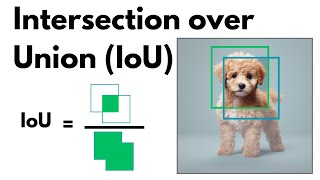
Intersection over Union (IoU) Explained with PyTorch
Learn to implement Intersection over Union (IoU) for object recognition using PyTorch. Covers theory, formulas, and practical code for bounding boxes and segmentation masks.
Juliet&Romeo: Making Julia a Hard Real-Time Robot Language
Explore Juliet&Romeo: a groundbreaking real-time robot programming language combining safety, dynamism, and low-latency multitasking with Julia compatibility for advanced machine control and AI integration.
Solving Difficult Reachability Problems in JuMP.jl
Explore advanced reachability analysis techniques for complex control systems using JuMP.jl, including temporal refinement and tools for nonlinear systems with neural network controllers.
Model Reparametrization with StructuralIdentifiability.jl - JuliaCon 2024
Explore StructuralIdentifiability.jl's new features for rapid identification of identifiable functions and model reparametrization, enhancing modeling and control practices.
Julia's Use in Nuclear Physics Data Analysis: A Case Study
Explore Julia's potential in nuclear physics data analysis, combining high performance with dynamic capabilities for efficient processing and visualization of large datasets.
Retro6502 for 8-bit Development - Smashing a Mosquito with a Pile Driver
Explore 6502 development with Retro6502, a Julia package enabling interoperation between 6502 and Julia code. Streamline prototyping, testing, and debugging for efficient 8-bit microprocessor programming.
Julia Community Reshapes Computation in Geosciences
Explore Julia's impact on geosciences: ecosystem tools, hardware acceleration, and collaborative initiatives revolutionizing Earth observation and software development in the field.
Differentiable Point Cloud Rasterisation in Julia
Explore differentiable point cloud rasterization in Julia, focusing on volumetric 3D data rendering to voxel grids or 2D images, with fast CPU/GPU implementations and integration into ChainRules.jl ecosystem.

Portable Communications Interface for Earth System Model - JuliaCon 2024
Explore ClimaComms.jl's high-level interface for Earth System Model components, enabling efficient communication patterns and distributed simulations across various architectures.