Monoclonal Antibody Bioprocess Engineering Advancements Using Conversational AI
Explore how AI models analyze and optimize monoclonal antibody production through advanced machine learning techniques, focusing on real-time data analysis and manufacturing improvements.

Hand Pose Detection and Interactive Painting with ML5.js
Master hand pose detection and gesture-based interactive painting using ml5.js. Create dynamic sketches by tracking hand keypoints and implementing real-time gesture recognition for creative digital art projects.
Blender 4.2 Liquid and Water Simulation Tutorial
Master the art of creating realistic liquid and water simulations in Blender 4.2 through step-by-step guidance on setting up, configuring, and animating fluid dynamics for 3D projects.
Creating Rigid Body Collision Animations in Blender 4.2
Learn how to create dynamic rigid body collision animations in Blender 4.2 through a practical step-by-step demonstration of physics simulation techniques.
Blender 4.2 Gear Simulation and Animation Tutorial - 2024
Master the creation of realistic gear animations in Blender 4.2 through step-by-step guidance on implementing rotational dependency drivers for mechanical simulations.

Python Backend Developer Skills and Learning Path - 2024 Guide
Discover the essential skills, tools, and knowledge required to become a successful Python backend developer, from core language concepts to deployment strategies.

Ogre Character Rigging with Rigify - Creating Automated Glutes Setup - Part 11.1
Master advanced Rigify techniques for creating automated glutes/butt rig setups, focusing on customization and extension of default metarigs for a two-headed ogre character.
Hash Functions in Data Structures - Division, Mid Square, and Folding Methods
Master essential hash function techniques in data structures, including division, mid-square, and folding methods for efficient data storage and retrieval optimization.
Collision Handling Techniques and Hashing in Data Structures
Master essential collision handling techniques in hashing, including separate chaining and open addressing methods, to efficiently store and retrieve data in data structures.
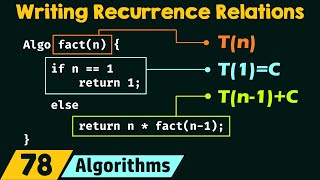
Writing Recurrence Relations in Algorithm Analysis
Master the process of analyzing recursive algorithms and creating recurrence relations through step-by-step guidance and practical examples.
Video Offloading on the Wayland Linux Desktop - Efficient Playback and HDR Developments
Explore recent advancements in Linux desktop video playback efficiency, focusing on Wayland compositors, GStreamer, GNOME, and Chromium developments, including HDR capabilities.
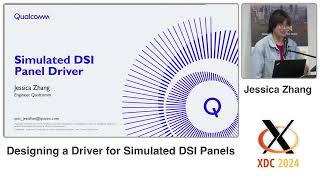
Designing a Driver for Simulated DSI Panels
Discover how to validate DSI panels through simulation, eliminating the need for physical hardware and enabling efficient testing of various panel configurations.
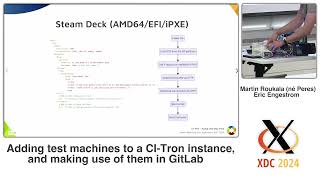
Adding Test Machines to CI-Tron Instance and Making Use of Them in GitLab
Discover how to seamlessly integrate test machines into CI-Tron systems and leverage them effectively in GitLab projects, with focus on ARM/RISCV64 SBCs and Android devices.
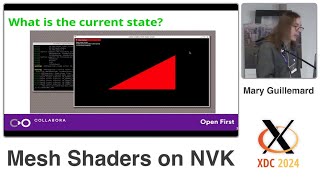
Mesh Shaders on NVIDIA Hardware - Implementation and Future Development in NVK
Dive into the technical implementation of mesh shaders on NVIDIA hardware and explore upcoming NVK developments for enhanced shader support.
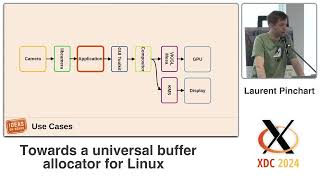
Towards a Universal Buffer Allocator for Linux
Explore the challenges and potential solutions for universal buffer allocation in Linux, focusing on media content frameworks, kernel-side improvements, and cross-device sharing capabilities.
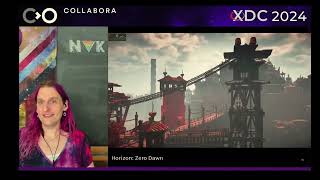
Nouveau and NVK Graphics Stack Update 2024 - Status and Future Plans
Explore the latest advancements in NVK, including performance enhancements, OpenGL support via Zink, and future development plans for the open-source NVIDIA graphics stack.
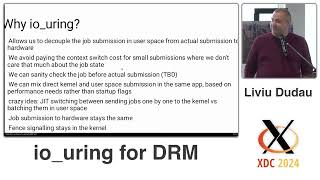
io_uring for Direct Rendering Manager (DRM) - Exploring Asynchronous Job Submissions
Explore the potential integration of io_uring mechanism with DRM framework for enhanced GPU performance and reduced context switching in modern graphics systems.
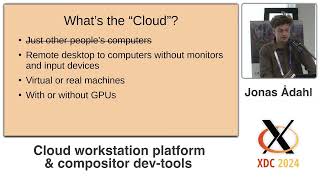
Cloud Workstation Platform and Compositor Developer Tools with PipeWire and Libei
Explore how cloud workstations leverage PipeWire and libei in post-X11 environments, while discovering innovative approaches to compositor development tooling.
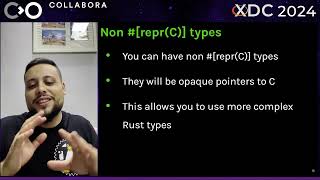
Porting the Nouveau Image Library to Rust - A Practical Rewrite Strategy
Discover practical strategies for integrating Rust with C codebases through a real-world case study of porting the Nouveau Image Library, including interoperability techniques and common pitfall solutions.
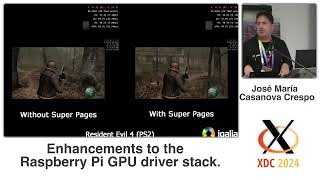
Enhancements to the Raspberry Pi GPU Driver Stack - Performance and Vulkan 1.3 Updates
Discover the latest GPU driver improvements for Raspberry Pi 5, including Vulkan 1.3 conformance, enhanced subgroups support, and optimizations for better memory usage and shader performance.
Quantum Phases of Rydberg Atoms on Shastry-Sutherland Lattice
Explore quantum phases and critical points of Rydberg atoms in frustrated Shastry-Sutherland lattice, validated through experimental testing on QuEra's quantum computer.