When Your Twin is Digital and in 3D
Explore digital twins in 3D using modern technologies like HoloLens and VR. Learn to develop and interact with virtual replicas using Unity3D and the Dolittle platform. Hands-on demos included.
Breaking Your Code in New and Exciting Ways
Explore property-based testing in C# and F# using FsCheck, learning how to generate input values that challenge your code's expected properties and behavior.
Getting Started with Your First Mining Rig
Learn to build and configure a custom Ethereum mining rig, optimize performance, and understand cryptocurrency storage options. Explore hardware choices, mining software, and wallet types for securing your digital assets.
Writing Simpler ASP.NET Core
Explore alternative approaches to simplify ASP.NET Core architecture, improving code clarity, reducing dependencies, and enhancing performance while maintaining clean, testable designs.
Introduction to Lock-Free Programming
Explore challenges and intricacies of lock-free programming, including CPU behavior, common pitfalls, and examples of simple lock-free structures. Gain insights to approach this complex topic with caution.
Higher Order Functions for Ordinary C++ Developers
Explore techniques for writing higher order functions in C++, elevating code abstraction, improving readability, and reducing duplication while maintaining performance.
Design for Test
Explore principles for designing testable applications, covering TDD, mocking, and system testing. Learn to create valuable products through effective design and architecture.
Strace - Monitoring the Kernel-User-Space Conversation
Explore strace, a powerful Linux tool for monitoring system calls. Learn to interpret its output, use advanced options, and gain insights into application-kernel interactions.
A Modern Embedded Product Platform
Explore the development of a modern embedded platform for high-end projectors, covering Linux, C++, IPC, Node.js, and HTML. Learn about software stacks, services, and interface design.
Reflections Around SW Obsolescence
Explore strategies to address software obsolescence in long-term projects, focusing on lifecycle management, security, modularization, and digital twin technologies for physical products like missiles.
Integrate Python and C++ with pybind11
Discover how to combine Python's rapid development with C++'s performance using pybind11. Learn to expose C++ libraries as Python modules for efficient hybrid solutions in data science and machine learning.
CUDA Kernels with C++
Explore CUDA for C/C++ with practical examples, focusing on using C++ features to enhance kernel code safety without compromising performance in GPU programming.
Great UX, Despite Agile - How to Get the Best Out of Your Design Team in Agile Projects
Discover strategies for integrating design and agile development, balancing strategic discovery with production-level design, and adapting to various team structures for optimal UX outcomes.
Microservice Architectures in Embedded Linux and FreeRTOS
Explore applying microservices architecture principles to embedded software, with examples from a multi-target project running Linux and FreeRTOS.
SW Testing - Can ML Save Us?
Explore the potential of machine learning in software testing, addressing challenges in GUI testing and discussing promising applications like supervised learning and reinforcement learning.
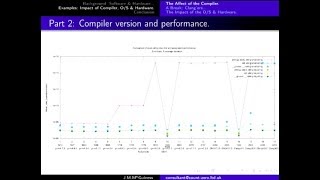
A Performance Analysis of a Trading System over Compliers
Explore micro-optimizations in C++ for high-frequency trading systems, analyzing compiler quirks, branch prediction, and switch statements. Examine performance impacts across different compilers and operating systems.
Agile Development at Scale With Autonomous Teams
Insights on building scalable agile organizations with autonomous teams, focusing on effective coordination, avoiding bureaucracy, and fostering continuous learning and innovation.
Optimising a Small Real-World C++ Application
Hands-on demonstration of optimizing C++ applications using measurement tools, showcasing common pitfalls and effective solutions through alternative algorithms and libraries.
Self-Awareness in C++ Code
Explore techniques for building a memory profiler in C++, focusing on strategies to intercept memory allocations, capture call stacks, and analyze memory usage patterns for optimization and debugging.

Words of Wisdom
Explore coding wisdom from famous figures, delving into value semantics, strong types, and API design for better programming practices.

Yara Birkeland - A Global Game Changer
Explore the development of Yara Birkeland, an autonomous vessel project, its motivations, key components, and potential impact on the maritime industry's future.