Multiple Time Domains
Explore multiple time domains in Linux systems, focusing on challenges and solutions for managing diverse timing requirements across different hardware components.
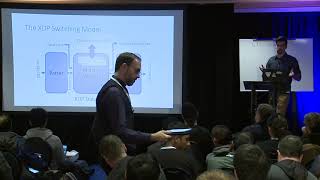
P4C-XDP - Programming the Linux Kernel Forwarding Plane Using P4
Explore P4C-XDP, a new backend for the P4 compiler leveraging XDP for high-performance software data plane in Linux kernel. Learn about its architecture, implementation, and potential applications.
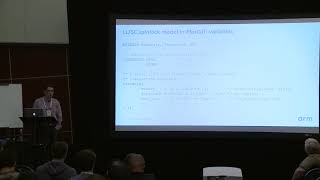
Formal Methods for Kernel Hackers
Discover how formal methods can benefit kernel development, find bugs, and improve design choices in Linux, with practical examples using PlusCal and TLA+.
Concurrency with Tools - Memory Model
Explore advanced concurrency concepts, tools, and memory models in Linux systems with experts Andrea Parri and Paul McKenney, enhancing your understanding of parallel programming.
BPF Host Network Resource Management
Exploring BPF-based framework for efficient network resource management, addressing limitations of traffic control subsystem and supporting both local and global allocations.
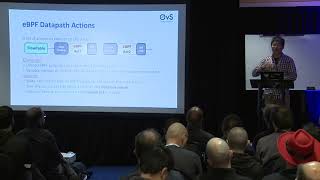
Bringing the Power of eBPF to Open vSwitch
Exploring eBPF integration with Open vSwitch: TC attachment, XDP offloading, and AF_XDP bypassing. Discusses challenges, experiences, and future directions for enhancing OVS performance and functionality.
Mind the Gap - Between Real-Time Linux and Real-Time Theory
Bridging real-time Linux and theory: task models, metrics, and validation for PREEMPT RT, enhancing understanding and improving kernel performance.
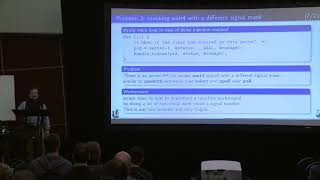
What Could Be Done in the Kernel to Make Strace Happy
Explore kernel API improvements for strace, including syscall info retrieval, enhanced wait functionality, increased time precision, PID namespace translation, and declarative syscall descriptions.
Elivepatch - Flexible Distributed Linux Kernel Live Patching
Explore flexible distributed Linux kernel live patching with Elivepatch, a tool for efficient and secure system updates without rebooting.
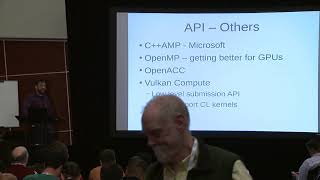
Open Source GPU Compute Stack - Not Dancing the CUDA Dance
Exploring open-source alternatives to CUDA for GPU compute acceleration, discussing potential for a vendor-neutral reference stack using SYCL/OpenCL/Vulkan and Mesa.
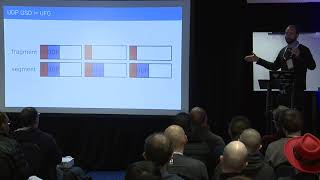
Optimizing UDP for Content Delivery with GSO, Pacing and Zerocopy
Optimizing UDP for content delivery: segmentation offload, zerocopy, and pacing techniques to improve performance, reduce overhead, and enhance protocol innovation in userspace.
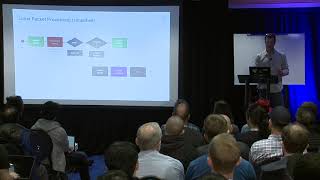
Leveraging Kernel Tables with XDP
Explore XDP framework for high-performance packet processing using kernel networking tables, discussing advantages, implemented features, and challenges in creating programmable packet pipelines.
When eBPF Meets FUSE - Improving Performance of User File Systems
Explore eBPF and FUSE integration to enhance user file system performance, with insights on architecture, examples, and applications.
Using eBPF as an Abstraction for Switching
Exploring eBPF's potential in container and physical switching, addressing bottlenecks, and proposing solutions for improved functionality and integration with other subsystems.
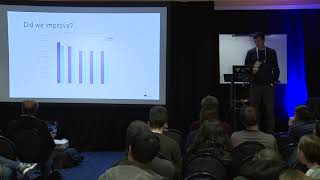
TC SW Datapath - A Performance Analysis
Evaluación y optimización del rendimiento de datapaths TC SW y ovskdp en Linux, con propuestas para mejorar la eficiencia del reenvío de paquetes y reducir la sobrecarga.
ZUFS - Zero Copy User-Mode FileSystem - One Year Later
Zero-copy user-mode filesystem architecture overview, highlighting improvements, challenges, and future directions for kernel integration and wider adoption of ZUFS technology.
Virtio as a Universal Communication Format
Explore virtio as a universal communication format, covering its properties, feature negotiation, compatibility, and applications in userspace drivers and VM guests.
Combining kTLS and BPF for Introspection and Policy Enforcement
Exploring the integration of kTLS and BPF for enhanced in-kernel introspection and policy enforcement of application data before encryption, addressing challenges and discussing optimization approaches.
The End of Time - 19 Years to Go
Exploring the 2038 Unix timestamp overflow issue, its impact on software and hardware, and ongoing efforts to address it in the Linux kernel and user space.
Heterogeneous Memory Management
Explore heterogeneous computing challenges, focusing on unified address spaces, memory management, and data placement across CPUs and parallel devices like GPUs.
XDP 1.5 Years in Production - Evolution and Lessons Learned
Evolution of XDP and BPF in production: performance improvements, operational challenges, and future enhancements. Insights from Facebook's network processing implementation using XDP for over 1.5 years.