Moving Big Projects to Python 3
Strategies for transitioning large Python projects to version 3, focusing on process management, team coordination, and overcoming common challenges in legacy codebases.
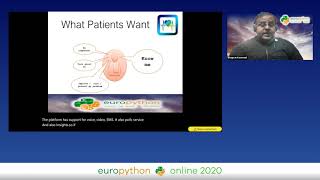
Telehealth Platform - Python & Django Powered
Explore an AI-powered telehealth platform built with Python & Django, featuring digital assistants, voice tech, and ML analytics to enhance doctor-patient interactions and streamline healthcare services.
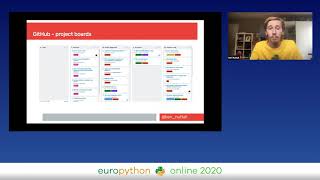
Tools for Maintaining an Open Source Python Project
Discover essential tools for open source Python project maintenance, covering packaging, testing, documentation, and community management. Enhance your development workflow and project sustainability.
Lessons from the Trenches - Rewriting and Re-releasing Virtualenv
Insights on rewriting virtualenv: challenges, goals, and outcomes of modernizing a crucial Python tool. Learn about maintainability, performance improvements, and new features.
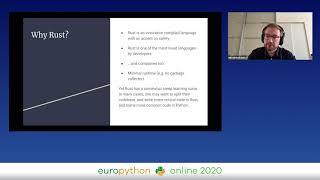
Extending Python with Rust
Explore integrating Rust with Python for enhanced performance. Learn about libraries, demos, benchmarks, Docker setup, and CI/CD for mixed Rust/Python projects.
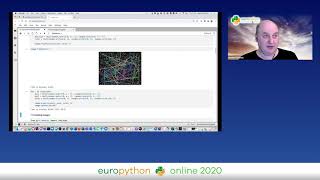
PyRT - Computer Graphics in Jupyter Notebooks for Fun and Teaching
Explore pyRT for raytracing in Jupyter notebooks, creating 2D animations, visualizing algorithms, rendering geodata, and generating 3D graphics with Python.
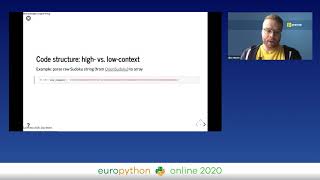
How to Write Multi-Paradigm Code
Explore efficient multi-paradigm Python coding by combining object-oriented and functional programming. Learn to structure code, handle data and state, and implement multiple solutions for optimal results.
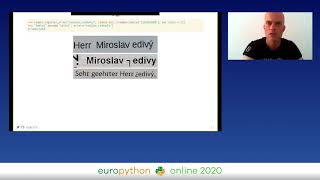
Your Name Is Invalid
Explore challenges in handling personal names in software, including encoding, case sensitivity, and localization. Learn best practices for Python applications to avoid common pitfalls.
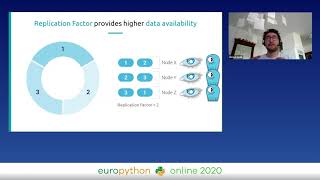
A Deep Dive and Comparison of Python Drivers for Cassandra and Scylla
Explore Python drivers for Cassandra and Scylla databases, comparing features and performance. Learn about cluster architecture, replication, and efficient query routing techniques.
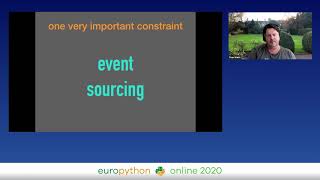
Serverless 2.0 with Cloudstate.io - Stateful Functions with Python
Explore next-generation serverless computing with Cloudstate, addressing challenges in distributed state management and long-lived stateful services for event-driven systems.
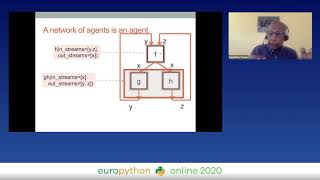
IoTPy - Python + Streams + Agents for Streaming Applications
Explore IoTPy for building concurrent, non-terminating streaming applications in Python, leveraging existing libraries for data analysis and distributed systems.

Radio Astronomy with Python
Explore radio astronomy using Python, focusing on redshift studies, galaxy distribution analysis, and machine learning techniques for processing large astronomical datasets.
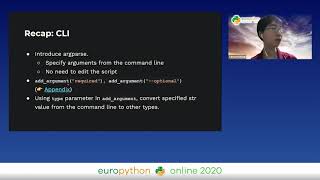
Bringing Your Python Script to More Users
Learn to transform Python scripts into user-friendly applications using CLI, GUI, and web interfaces. Explore techniques to make your code accessible and useful to a wider audience.
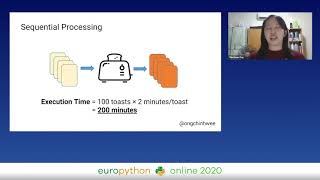
Speed Up Your Data Processing
Explore parallel and asynchronous programming techniques to optimize data processing pipelines, enhancing efficiency in data science workflows and overcoming common bottlenecks.
Train, Serve, Deploy - Story of a NLP Model ft. PyTorch, Docker, Uwsgi and Nginx
Learn to build, train, and deploy NLP translation models using PyTorch, Flask, Docker, uWSGI, and Nginx. Covers data preprocessing, model training, web app creation, containerization, and production serving techniques.
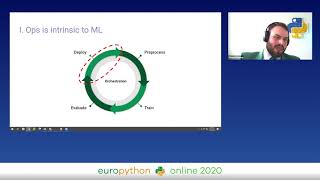
Painless Machine Learning in Production
Discover strategies for efficient machine learning deployment, covering infrastructure, tooling, and best practices for managing the ML lifecycle in production environments.
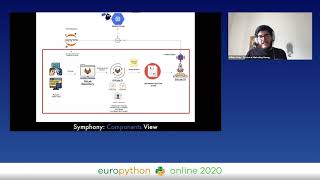
Deploy Your Machine Learning Bots Like a Boss with CI/CD
Learn to deploy machine learning chatbots using CI/CD, covering load balancing, testing, and model retraining. Gain practical insights for taking prototypes to production and iterating faster.
Docker and Python - Making Them Play Nicely and Securely for Data Science and ML
Learn Docker best practices for data-intensive Python applications, covering image optimization, security, automation, and efficient deployment workflows in Data Science and Machine Learning contexts.

15 Things You Should Know About Spacy
Discover 15 key insights about spaCy, an open-source NLP library for Python. Learn its strengths, limitations, and practical applications for processing and understanding large text corpora.
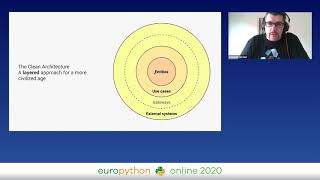
Clean Architectures in Python
Explore clean architecture principles for Python, focusing on layer separation and internal APIs to create maintainable, testable, and loosely coupled systems.
Building Smarter Solutions with No Expertise in Machine Learning
Explore practical ML solutions using existing models and AutoML techniques, with interactive demonstrations and insights for quick implementation without deep expertise.