How Async and Await Ended Up in Python
Explore the evolution of asynchronous programming in Python, from regular functions to async/await syntax. Learn about iterators, generators, and coroutines while discovering how to write efficient async code.
Good Features Beat Algorithms
Explore feature engineering and selection techniques to improve machine learning model accuracy. Learn how to develop an ensemble for measuring feature importance in real-world datasets.
Domain Driven Design Patterns in Python
Explore Domain-Driven Design patterns in Python, learning to model complex domains and implement tactical patterns for robust, maintainable software in large-scale projects.
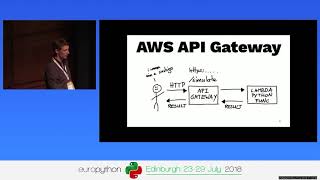
Winning Card Games with 1000+ CPUs
Explore how AWS Lambda and Python concurrency can optimize a genetic algorithm for winning the SushiGo card game, discussing implementation, challenges, and results.
Walking the Random Forest and Boosting the Trees
Explore tree-based ensemble models like Random Forest and Gradient Boosting, understanding their theory and implementation in Python for effective data science applications.
Bytecodes and Stacks - A Look at CPython’s Compiler and Its Execution Model
Explore CPython's inner workings: from code compilation to execution. Learn about tokenization, parsing, bytecode, and the stack-based virtual machine, suitable for Python developers of all levels.
From Linear Algebra to Machine Learning
Explore the mathematical foundations of machine learning, from linear algebra to optimization, with practical Python implementations using NumPy, SciPy, and TensorFlow.
Change Music in Two Epochs
Explore deep learning applications in music: instrument detection, isolation, and generation. Learn to build synthesizers, create datasets, and adapt models for increasing complexity.
Integration Tests with Super Powers
Aprenda estratégias eficazes para escrever testes de integração robustos usando Pytest, injeção de dependências e Docker Compose, melhorando a manutenibilidade e extensibilidade de suas aplicações.
EduBlocks - Making the Transition to Python Easier
Discover EduBlocks, a drag-and-drop Python 3 tool created by 14-year-old Josh Lowe to bridge the gap between block-based programming and Python, making coding more accessible for students and teachers worldwide.
Getting Your Data Joie De Vivre Back
Explore data-driven creativity through AI and visualization, from poetry composition to image reconstruction, blending technical skills with artistic expression for fun and learning.
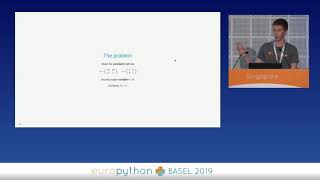
Dissecting tf.function to Discover AutoGraph Strengths and Subtleties
Explore AutoGraph in TensorFlow 2.0: Learn to write efficient, graph-convertible code, understand tf.function intricacies, and optimize performance in this in-depth tutorial.
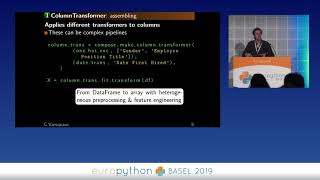
Machine Learning on Non-Curated Data
Techniques for handling missing values and non-normalized categories in machine learning, focusing on practical solutions using scikit-learn and DirtyCat for efficient data analysis without extensive cleaning.

Building a Powerful Pet Detector in Notebooks
Learn to build and deploy an AI-powered pet breed detector using Azure Notebooks, TensorFlow, and transfer learning techniques. Optimize the model for improved accuracy and create a web service.
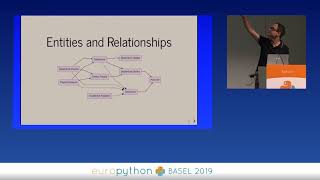
From Days to Minutes, From Minutes to Milliseconds with SQLAlchemy
Optimize SQLAlchemy performance by addressing N+1 queries, improving mass operations, and understanding ORM-database interactions for significant speed improvements.
Image Processing with Scikit-Image and Dash
Explore image processing using scikit-image and Dash. Learn to build interactive applications for transforming, analyzing, and visualizing images with Python tools in various scientific and industrial contexts.
Opt Out of Online Sexism – Open Source Activism
Explore an open-source browser extension combating online sexism. Learn about challenges, community-led development, and balancing NLP with web development for digital activism.
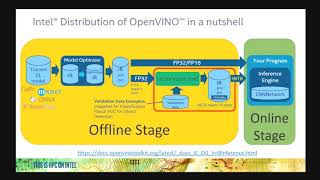
Accelerate Your Deep Learning Inferencing with the Intel DL Boost Technology
Explore Intel® DL Boost technology for efficient deep learning inference acceleration using low-precision INT8 and VNNI instructions on 2nd gen Intel Xeon Scalable processors.
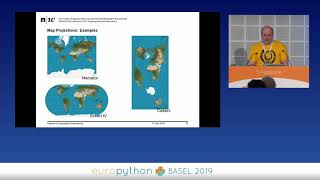
Geospatial Analysis Using Python and JupyterHub
Explore geospatial data processing and visualization using Python, covering vector and raster analysis, deep learning applications, and high-performance computing techniques for efficient spatial data handling.
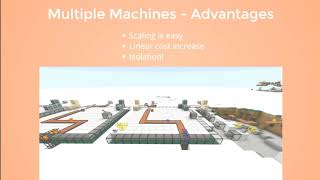
Python's Parallel Programming Possibilities - 4 Levels of Concurrency
Explore Python's parallel programming options: multiple machines, processes, threads, and green threads. Learn implementation techniques, potential pitfalls, and practical examples for each concurrency level.
PEP Yourself - 10 PEPs You Should Pay Attention To
Explore 10 essential Python Enhancement Proposals (PEPs) and their impact on everyday coding, from style guides to advanced features like data classes and assignment expressions.