Introduction to Sentiment Analysis with SpaCy
Learn to extract opinions from text using spaCy, covering sentiment analysis basics, topic extraction, and rating consolidation. Includes practical examples in German with English translations.
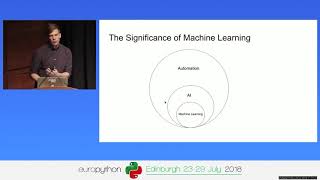
When to Use Machine Learning - Tips, Tricks and Warnings
Discover when and how to effectively apply machine learning, with practical tips and real-world examples from open-source projects and cryptocurrency trading.
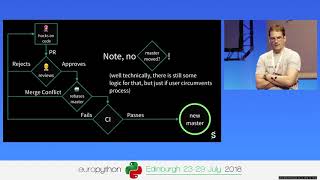
Marge - A Bot for Better Git'ing
Discover Marge-bot, an innovative tool enhancing Git workflows by testing pull requests against target branches and offering additional conveniences for improved Continuous Integration practices.
Cython to Speed Up Your Python Code
Discover how to significantly accelerate Python code using Cython, a powerful tool that translates Python to C/C++, enabling static optimizations and seamless integration of Python, C, and C++ features.
Asyncio in Practice - We Did It Wrong
Explore common pitfalls and best practices in asyncio programming, including avoiding callback hell, ensuring thread safety, and achieving true concurrency in Python.
Hello to the World in 8 Web Frameworks - Micro, Batteries Included & Async
Explore 8 Python web frameworks in a whirlwind tour, comparing microframeworks, "batteries included" options, and async frameworks. Broaden your horizons with practical examples and Jules Verne-inspired fun.
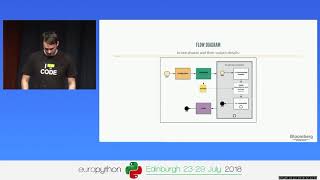
Standardize Testing in Python
Discover tox: an open-source tool for standardizing Python testing, simplifying CI processes, and ensuring high-quality, maintainable packages across various environments.
Microservices and Serverless in Python Projects
Explore microservices and serverless architecture in Python, focusing on AWS Lambda. Learn advantages, use cases, and practical implementation using frameworks like Chalice and Zappa.
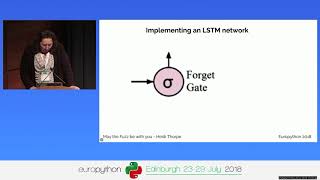
May the Fuzz Be with You
Explore how LSTM neural networks and Python can generate AI-driven test inputs for software testing and network security, improving upon traditional fuzzing techniques.
How to Write Deployment-Friendly Applications
Learn techniques for creating environment-agnostic Python applications that are easier to test, deploy, handle, and scale. Discover tools and best practices for structuring and configuring apps independent of their runtime environment.
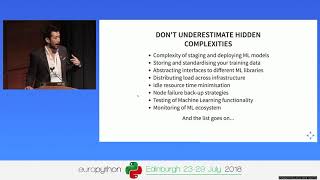
Industrial Machine Learning Pipelines with Python & Airflow
Learn to build scalable, distributed machine learning data pipelines using Airflow with Celery backend. Gain insights on industry challenges, comparisons with other technologies, and practical knowledge for implementation.
Understanding and Applying CQRS
Learn to implement Command Query Responsibility Segregation (CQRS) in Python using Nameko framework to enhance database performance and scalability in high-traffic applications.
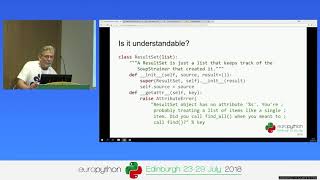
Writing Good Error Messages
Learn to craft clear, actionable error messages for better code readability and user experience. Explore common pitfalls and effective techniques for writing informative error messages in Python.
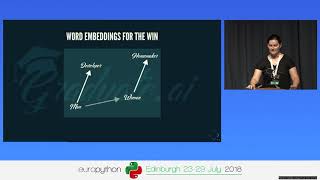
Trust Me, I'm a Data Scientist - Ethics for Builders of Data-Based Applications
Explore ethical pitfalls in data science through a practical example, covering algorithmic fairness, model interpretability, and handling minority classes in AI applications.
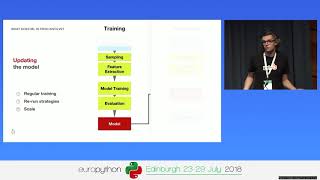
Productionizing Your ML Code Seamlessly
Learn to seamlessly transition ML code from experimental notebooks to production, focusing on development workflows, reliable deployment, and long-term maintenance for valuable insights and predictions.
Exploring the Python AST Ecosystem
Dive into Python's abstract syntax tree ecosystem, exploring tools for visualization, creation, and transformation. Learn practical applications in static analysis and metaprogramming for enhanced code manipulation.
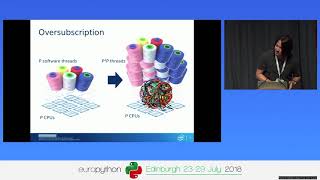
Addressing Multithreading and Multiprocessing in Transparent and Pythonic Ways
Explore advanced Python techniques for efficient multithreading and multiprocessing, including GIL management, static multiprocessing, and thread pool control for optimal performance on multi-core systems.
System Testing with Pytest, Docker, and Flask
Learn to combine Pytest fixtures with Docker for high-level integration testing of microservices, and embed mock web services using Flask to control and verify system component interactions.
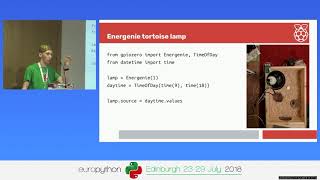
Programming Paradigms for Physical Computing and IoT
Explore multi-paradigm programming for GPIO devices on Raspberry Pi, from simple scripts to complex interactions, using Pythonic code for IoT and physical computing applications.
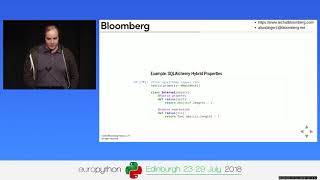
A Taxonomy of Decorators - A-E
Explore five categories of Python decorators: Argument Changing, Binding, Control Flow, Descriptive, and Execution. Learn their syntax, usage patterns, and practical applications in software development.
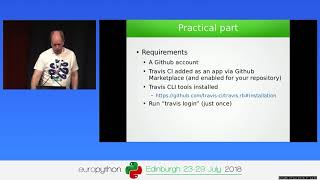
Automating Testing and Deployment with Github and Travis
Streamline open-source project maintenance by automating testing and deployment using Github and Travis. Learn to create an efficient release pipeline, reducing errors and simplifying the process.