An Introduction to Deep Learning
Comprehensive introduction to deep neural networks, covering theory, training methods, and applications in image processing, speech recognition, and text analysis.

Machine Learning - Power of Ensembles
Explore ensemble methods in machine learning, combining diverse models for improved accuracy. Learn bagging, boosting, and stacking techniques with real-world examples and practical insights.

Scientist Meets Web Dev - How Python Became the Language of Data
Explore Python's evolution as a data science powerhouse, blending scientific computing with web development. Learn how this versatile language empowers researchers and analysts to tackle complex data challenges.
A Python for Future Generations
Explore Python's evolution, interpreter challenges, and potential future improvements, drawing insights from JavaScript and Rust ecosystems to enhance language design and functionality.
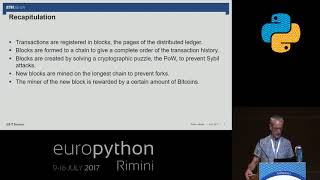
Bitcoin and Blockchain for Pythoneers
Explore Bitcoin and blockchain technology for Python developers, covering architecture, protocols, smart contracts, and consensus mechanisms. Gain insights for innovative problem-solving in fintech and beyond.
Async Web Apps with Sanic
Explore Sanic, a Python 3 web framework for async request handling. Learn its API, unique features like websockets and HTTP2 support, and compare it with other options.
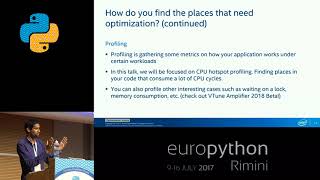
Python Profiling with Intel VTune Amplifier
Explore Python performance analysis using Intel® VTune™ Amplifier, a GUI tool for identifying bottlenecks, analyzing call stacks, and optimizing code efficiency in high-performance computing and machine learning applications.
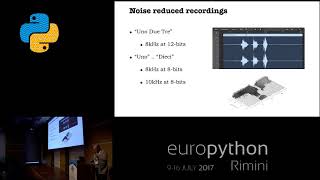
Building a Real-Time Embedded Audio Sampling Application with MicroPython
Explore real-time embedded audio sampling using MicroPython on the pyboard. Learn design, testing, and implementation of a voice recording and playback system for practical applications.

Python Microservices
Explore Python microservices: core concepts, benefits, implementation options, and challenges. Learn to build scalable, maintainable web applications with practical code examples.
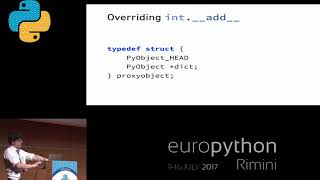
Monkey-Patching CPython with Ctypes to Conform to Party Doctrine
Explore CPython internals by modifying integer addition at runtime using only Python and ctypes. Gain insights into Python's data model, compilation, and execution process.
But How Do You Know Your Mock Is Valid? Verified Fakes of Web Services
Explore verified fakes for web services, ensuring mock validity through periodic tests. Learn to create accurate representations using pytest, Travis CI, requests, and Responses for reliable software testing.

Testing in Layers
Explore modular, layered testing strategies for efficient software development, from unit tests to end-to-end integration, emphasizing automation and rapid problem identification in DevOps environments.
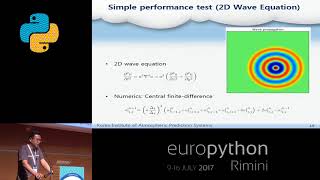
GPU Acceleration of a Global Atmospheric Model Using Python Based Multi-Platform
Explore GPU acceleration for global atmospheric models using PyMIP, a Python module integrating C, Fortran, CUDA, and OpenCL. Learn about performance improvements and multi-platform compatibility for weather forecasting and climate prediction.
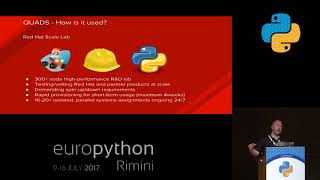
Skynet Your Infrastructure with QUADS
Explore automated infrastructure management with QUADS, a Python-based tool for scheduling and provisioning large-scale systems and networks, enhancing DevOps efficiency and documentation.
Tracing, Fast and Slow - Digging into & Improving Your Web Service’s Performance
Discover techniques for identifying bottlenecks and improving performance in complex web services, with insights on various tracing methods and tools for distributed systems.

Leveraging Consistent Hashing in Your Python Applications
Explore consistent hashing in Python applications, from standalone design to optimized clustering, with practical use cases and implementation strategies.
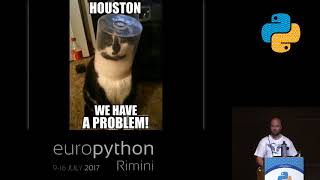
Django - From a Nightmare to a Dream with Best Practices
Discover best practices for refactoring legacy Django code, improving maintainability, and implementing tools for safer deployments and continuous integration.
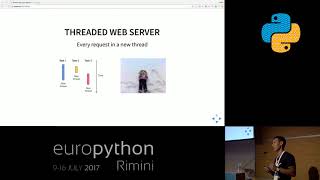
Using the Right Async Tool - Present Day
Explore asynchronous Python libraries for web development, comparing Twisted, Tornado, and AsyncIO to choose the right tool for various tasks, with live code examples and practical insights.
Infrastructure as Python Code - Run Your Services on Microsoft Azure
Explore Azure cloud deployment options for Python services using Infrastructure-as-Code principles, including Azure Resource Manager Templates, Azure SDK, and Ansible Module, with insights on avoiding pitfalls.
Running Python Code in Parallel and Asynchronously
Explore parallel and asynchronous Python execution, covering GIL, threads vs. processes, implementation techniques, potential pitfalls, and practical applications in web development contexts.
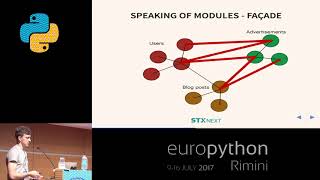
Why You Don't Need Design Patterns in Python
Explore Python's features that simplify or eliminate the need for traditional design patterns, showcasing the language's elegance and efficiency in solving common programming challenges.