
Modern C++ in Embedded Systems
Explore modern C++ in embedded systems, covering decision-making, tool support, language features, and practical applications for bare-metal and small-OS projects.
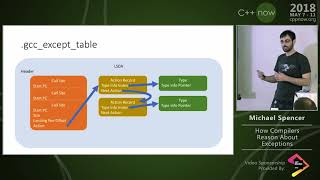
How Compilers Reason About Exceptions
Explore how modern compilers implement exceptions, their impact on optimization, and the true costs associated with their use in C++. Gain insights into exception handling mechanisms and performance considerations.
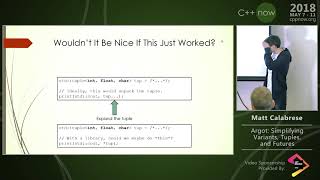
Argot - Simplifying Variants, Tuples, and Futures
Explore Argot, a library simplifying complex operations with tuples, variants, and futures in C++. Learn powerful techniques to enhance code readability and efficiency in handling these abstractions.
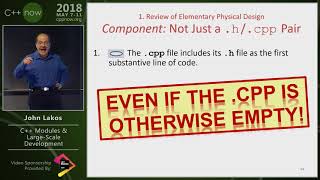
C++ Modules and Large-Scale Development
Explore C++ modules, their goals, and impact on large-scale development. Learn about efficiency, architecture requirements, and migration paths for codebases of all sizes.
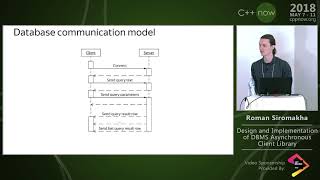
Design and Implementation of DBMS Asynchronous Client Library
Explore design and implementation of an asynchronous DBMS client library, focusing on efficient communication, type-safe queries, and customization. Learn about C++17 features, Boost libraries, and asynchronous programming techniques.

Git, CMake, Conan - How to Ship and Reuse Our C++ Projects
Explore efficient C++ project management using Git, CMake, and Conan. Learn modern techniques for dependency handling, modular design, and package creation to streamline development and improve code reusability.

Docker Based C++ Dependency and Build Management
Explore Docker for C++ project management, covering multi-stage builds, dependency resolution, and cross-platform targeting. Learn to streamline development with CppDock for efficient containerization.
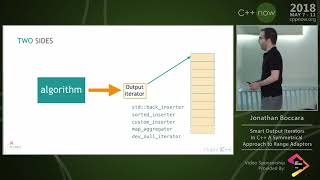
Smart Output Iterators
Explore smart output iterators in C++, their advantages, and how they complement STL algorithms and range libraries. Learn implementation techniques and performance comparisons for efficient collection manipulation.
What Else Has My Compiler Done For Me Lately
Explore recent compiler optimizations and features with Matt Godbolt, creator of Compiler Explorer, as he shares insights on efficient code writing and the latest compiler developments.
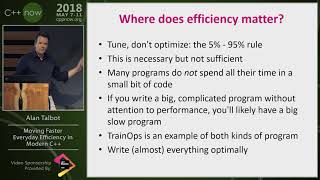
Moving Faster - Everyday Efficiency in Modern C++
Explore modern C++ efficiency techniques, from value semantics to container choice, for writing performant code that meets user expectations in everyday programming scenarios.
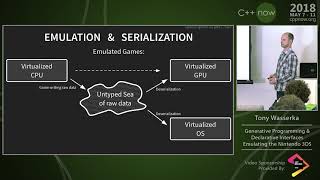
Generative Programming in Action - Emulating the 3DS
Explore generative programming in C++ for console emulation, focusing on the 3DS interprocess communication system. Learn to balance performance, maintainability, and correctness using modern C++ techniques.
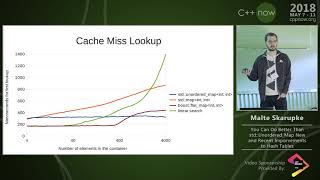
You Can Do Better than std - unordered_map - New Improvements to Hash Table Performance
Explore advanced hash table implementations and optimizations beyond std::unordered_map, including Robin Hood Hashing, SIMD instructions, and node-based container improvements for enhanced performance and memory efficiency.
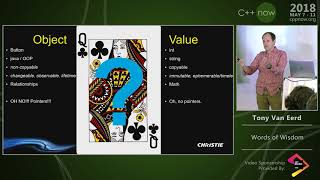
Words of Wisdom
Explore coding wisdom from various sources, covering value semantics, strong types, and API design. Gain insights on naming, consistency, and best practices in C++ programming.
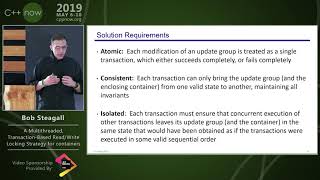
A Multithreaded, Transaction-Based Locking Strategy for Containers
Explore a multithreaded, transaction-based locking strategy for containers in C++, focusing on atomicity, consistency, and isolation. Learn implementation techniques using C++17 standard library and compare performance with other methods.
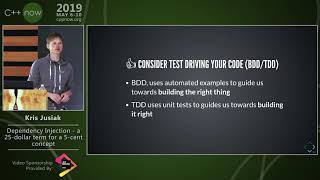
Dependency Injection - A 25-Dollar Term for a 5-Cent Concept
Explore dependency injection in C++, its benefits for maintainable code, and various implementation approaches. Learn to apply DI effectively in projects with changing requirements.
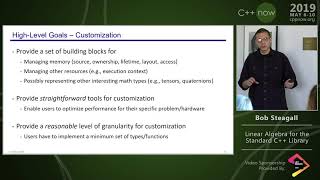
Linear Algebra for the Standard C++ Library
Exploring a proposal to add linear algebra components to the C++ standard library, covering design, rationale, and implementation details for matrices, vectors, and related operations.
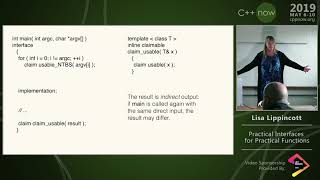
Practical Interfaces for Practical Functions
Explores practical approaches to developing formal interfaces for familiar functions in C++, drawing lessons for effective interface design and building on previous work in software architecture.
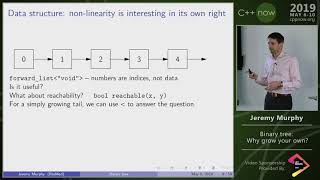
A Generic Binary Tree - Why Grow Your Own?
Explore the design and implementation of a generic binary tree for Boost.Graph, discussing trade-offs, storage options, and performance comparisons while drawing insights from classic computer science texts.
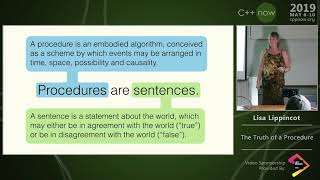
The Truth of a Procedure in Programming
Explore the mathematical logic behind programming procedures, treating them as statements about event arrangements and bridging programming with formal languages and truth concepts.
Implementing Physical Units Library for C++
Explore the design and implementation of a Physical Units Library for C++, including challenges, tradeoffs, and C++20 features that enhance usability, maintainability, and extensibility.
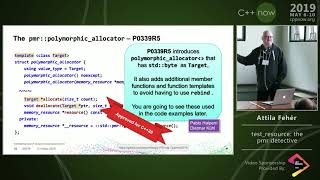
Test Resource - The PMR Detective
Explore pmr::test_resource for detecting memory allocation bugs in C++. Learn to diagnose and fix issues like leaks, overruns, and exception-safety failures using real-world examples.