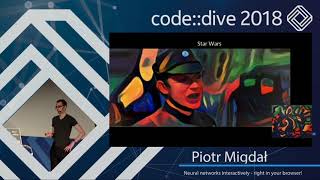
Neural Networks Interactively - Right in Your Browser
Explore neural networks interactively in your browser with TensorFlow.js. Learn about applications, demos, and privacy-focused machine learning projects through hands-on examples and visualizations.
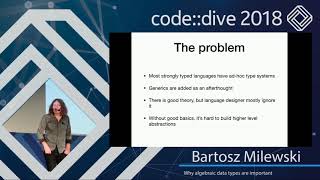
Why Algebraic Data Types Are Important
Explore type theory, category theory, and logic in functional programming, focusing on algebraic data types and their role in enhancing code reliability and expressiveness.
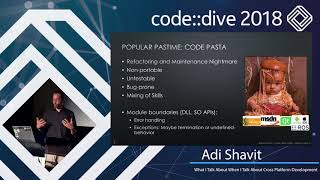
What I Talk About When I Talk About Cross Platform Development
Explore the Salami Method for efficient cross-platform development, focusing on separating platform-specific code from core functionality to create maintainable, testable, and portable systems.
Redux Architecture
Explore Redux architecture through live coding, learning its core concepts and practical implementation for efficient application state management.
Data-Oriented Design in Practice
Explore data-oriented design as an alternative to OOP in C++, focusing on practical examples from web browsers to demonstrate improved performance, scalability, and maintainability.
Reasons to Move Your C++ Code to Visual Studio 2017
Explore Visual Studio 2017's enhanced C++ development features, including cross-platform support, improved coding productivity, and CMake integration for a streamlined development experience.
What I Wish They Told Me - Part 2 of 2
Insights on software engineering principles, code quality, and architecture from an electronic engineering perspective, offering a structured approach to understanding and improving programming practices.
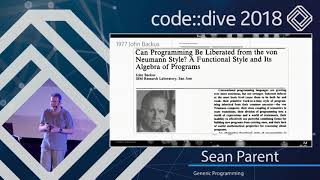
Generic Programming
Explore the origins, concepts, and impact of Generic Programming on software development, featuring insights from industry pioneers and its influence on C++ evolution.

What I Wish They Told Me - Part 1 of 2
Insights from an electronic engineer on software development, covering work ethics, assembly, compiler behavior, code quality, project challenges, and practical advice for programmers.
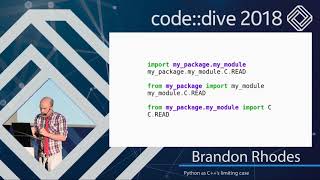
Python as C++’s Limiting Case
Explore Python's memory model as an extension of C++ conventions, examining language design trade-offs, performance considerations, and evolving programming paradigms.

Resilience Patterns in Practice
Explore fault tolerance concepts for distributed systems, including bulkhead, rate limiter, circuit breaker, retry, and fallback patterns. Learn to build resilient software that stays responsive in the face of failure.
Practical Aspects of Microservice Architecture
Practical insights on microservice architecture, covering system and entity aspects, design implications, and best practices for developing, testing, deploying, and securing distributed systems.

Faster than Memcpy
Explore optimization techniques for high-performance image processing, focusing on multi-threading and SIMD instructions for x86-64 architecture to achieve faster-than-memcpy speeds.

Hate Yourself? Keep Using Python 2
Discover why migrating from Python 2 to Python 3 is crucial, exploring benefits, challenges, and best practices for a smoother transition in software development.
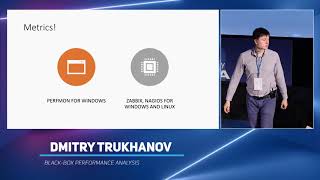
Black-box Performance Analysis
Explore end-user experience and performance analysis techniques for software design, focusing on blackbox methods, memory leaks, and practical strategies for system engineers.

Story of Autonomous Drone Racing
Explore the journey of building AI for autonomous drone racing, from concept to competition, with insights on challenges, strategies, and technological advancements.

AI in Healthcare
Explore AI's potential in healthcare, from image recognition to diagnosis assistance. Discover current efforts, challenges, and future possibilities in medical technology advancements.

Building Conversational Voice Bots – Lessons Learned
Insights into creating voice bots, covering technical aspects, user experience, and psychological challenges. Learn about conversational AI technology and real-world implementation experiences.
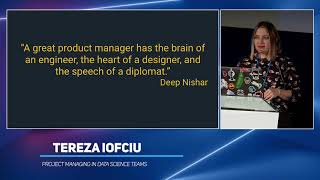
Project Managing in Data Science Teams
Insights on managing data science projects from ideation to production, focusing on stakeholder communication, problem-solving, and overcoming challenges in cross-disciplinary teams.
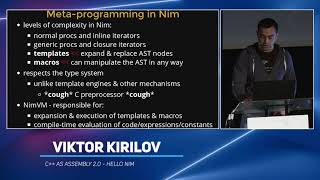
C++ as Assembly 2.0 - Hello Nim
Explore Nim, a powerful systems programming language with metaprogramming capabilities, as an alternative to C++. Learn its features, compilation model, and advantages over traditional languages.
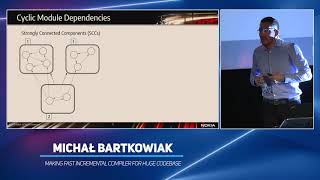
Making Fast Incremental Compiler for Huge Codebase
Explore techniques for creating a fast incremental compiler for large codebases, focusing on efficient data structures and algorithms to reduce compilation time from minutes to seconds.