Local - Arena Memory Allocator
Explore efficient memory management with John Lakos as he delves into local ("arena") memory allocators, optimizing performance and resource utilization in software development.
Structured Logging
Odkryj potencjał ustrukturyzowanego logowania w programowaniu. Poznaj techniki, API i implementacje, które zwiększą efektywność debugowania i analizy danych w twoich projektach.
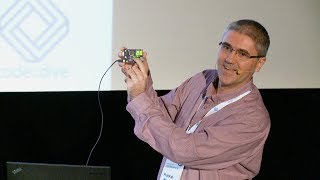
FPGA for Software Developers
Explore FPGA programming for software developers, covering boolean logic, architecture, instruction sets, and practical implementation using open-source tools and hardware connections.

DevOps Is Not Only for IT Players
Explore how DevOps principles can benefit non-IT industries, improving efficiency and collaboration across various sectors.

Architecture is - Not Everything
Explore the role of architecture in software development, its limitations, and the importance of balancing design with other crucial aspects of successful projects.
Striving for Ultimate Low Latency
Explore techniques for achieving ultra-low latency in C++ programming, focusing on high-frequency trading and market data processing. Learn optimization strategies and pitfalls to avoid.
DevOps Transformation - It's Not Just an R&D Thing
Explore DevOps transformation beyond R&D, understanding its impact on organizational culture, processes, and collaboration across departments.
Boost.tmp - Your DSL for Metaprogramming - Part 2 of 2
Explore advanced C++ metaprogramming techniques using boost.tmp library, including SFINAE strategies, efficient type traits, and a vision for fusion-style metaprogramming.
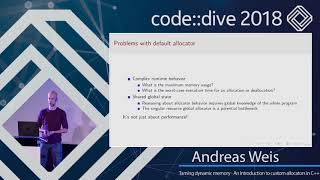
Taming Dynamic Memory - An Introduction to Custom Allocators in C++
Explore custom C++ allocators for enhanced memory management, covering techniques like pooling and monotonic allocation, alignment challenges, and integration with modern codebases.
CPU-Friendly Code
Explore CPU architecture, cache locality, branch prediction, and OS concepts to optimize code performance and efficiency beyond Big-O notation.
Virtual Assembly for Web Application
Explore WebAssembly's potential to boost web app performance using pre-optimized execution code, LLVM, and languages like C++ or Rust. Learn about DOM access, JavaScript integration, and multithreading in WebAssembly.
Time Brings All Things to Pass
Explore techniques for reliable testing of parallel software, including handling race conditions and timeouts. Learn to create a deterministic testing environment using innovative models and approaches.
There is a Better Future
Explores std::future limitations and introduces stlab::future as an enhanced alternative, covering advanced features like task graphs and CSP channels for parallel processing.
Easier Said Than Done - Self-Organized Teams
Explore the complexities of self-organized teams, focusing on individual behaviors, team dynamics, and strategies for creating high-performing groups in Agile environments.
Effective Practices for Engineering Teams
Explore proven engineering practices for optimizing team performance, enhancing software quality, and accelerating product development through knowledge sharing, design, monitoring, and incident response strategies.
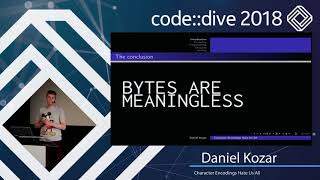
Character Encodings Hate Us All
Explore character encoding challenges, common pitfalls, and solutions across programming languages. Learn to handle multilingual text and avoid encoding-related issues in software development.
Multitype Pool - Fixed Type Allocation
Explore fixed-type allocation techniques to optimize memory management, reduce fragmentation, and enhance performance through stricter guarantees in modern allocators.
A Trusted Trip in the Cloud - Working with Trusted Hardware
Exploring trusted computing in cloud environments using TPM 2.0. Discusses practical challenges and experiences in setting up a secure cloud infrastructure with remote attestation and evolving open-source software.
How to Do Practical Data Science - From Real-World Examples
Explore real-world Data Science projects, their business impacts, and methodologies. Gain insights into executing successful DS initiatives and structuring conclusions for practical applications.
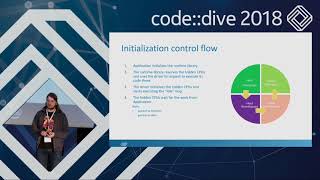
Reducing OS Noise Using Offload Driver
Explore techniques to reduce OS noise and improve performance in multi-core processors using offload drivers, with a focus on Intel® Xeon Phi™ Processors.
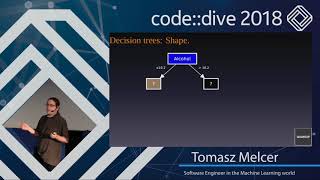
Software Engineer in the Machine Learning World
Exploring the unique challenges and approaches in machine learning programming from a software engineer's perspective, with insights on data handling, model development, and result interpretation.