Diving into Robocall Content with SnorCall
Explore SnorCall, a framework for analyzing robocall content at scale. Learn about its applications in identifying scam trends, monitoring political calls, and developing better defenses against unsolicited bulk telephone calls.

zkSaaS - Zero-Knowledge SNARKs as a Service
Explore zkSaaS, a framework for faster zk-SNARK computation by distributing proof generation across multiple servers while preserving privacy and achieving significant speed-ups.

Continuous Learning for Android Malware Detection
Innovative approach combining contrastive and active learning to combat concept drift in Android malware detection, improving accuracy and consistency over time.

Humans vs. Machines in Malware Classification
Experimental study comparing human and machine approaches to malware classification, revealing insights into feature prioritization and decision-making processes for both novice and expert analysts.
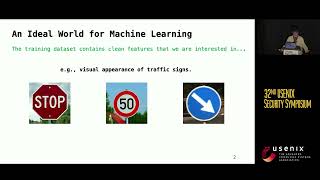
Towards a Proactive ML Approach for Detecting Backdoor Poison Samples
Proactive approach to detect backdoor poison samples in ML models, using Confusion Training to expose backdoor patterns and improve defense against various attacks.
ACORN - Input Validation for Secure Aggregation
Efficient secure aggregation protocol with input validation for privacy-preserving distributed analysis. Improves computational efficiency, reduces client communication, and prevents malicious influence on aggregate statistics or machine learning models.

Duoram - A Bandwidth-Efficient Distributed ORAM for 2- and 3-Party Computation
Innovative distributed ORAM protocol for secure computation, offering significant bandwidth efficiency and performance improvements through novel vector dot product evaluation techniques.
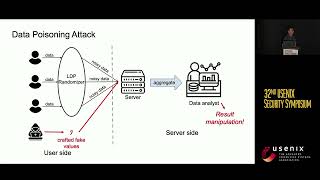
Fine-Grained Poisoning Attack to Local Differential Privacy Protocols for Mean and Variance Estimation
Explores a new fine-grained attack on local differential privacy protocols, allowing manipulation of mean and variance estimations. Discusses security-privacy consistency and proposes a defense method.
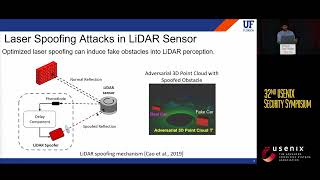
You Can't See Me - Physical Removal Attacks on LiDAR-based Autonomous Vehicles Driving Frameworks
Explores physical removal attacks on LiDAR-based autonomous vehicle systems, demonstrating how to deceive obstacle detectors and impact driving decisions through laser-based spoofing techniques.
15 Tips and Tricks to Improve Your Docker Compose Experience
Discover 15 expert tips to enhance your Docker Compose workflow, simplify configurations, and boost efficiency. Perfect for both beginners and experienced users looking to optimize their containerization process.
Standard C++ Toolset
Comprehensive overview of C++'s evolving ecosystem, covering compilers, debuggers, build systems, and testing frameworks. Explores standardization efforts and tools for efficient C++ development.
An Engineer's Guide to Linux Kernel Upgrades
Demystifying Linux kernel upgrades: Learn release processes, distinguish bugfix from feature releases, and implement safe deployment strategies for regular kernel updates with minimal risk.
Bridging the Gap - How Data and Software Engineering Teams Can Work Together to Ensure Smooth Data Integrations
Strategies for effective collaboration between data and software engineering teams to ensure smooth data integrations, covering logistics, infrastructure, data models, and application flow.
Safety and Security - The Future of C and C++
Explore the future of C/C++ in safety-critical and security-critical software development, discussing requirements, approaches, and implications for these programming languages.
How to Start a Modern C++ Project
Learn essential tools and practices for starting a modern C++ project, including IDEs, code analysis tools, build systems, and package managers. Streamline development and focus on writing efficient code.

CPU Isolation State of the Art
Explore recent advancements and future goals in CPU isolation, covering topics like memcg cache drain, IPI deferrals, cpusets v2 improvements, and energy optimization.

Unlocking the Web - Exploring WebAuthn & Beyond
Explore WebAuthn, passwordless authentication, and cloud computing challenges with insights on data privacy, Kubernetes, and the future of web security.

Extend Your Kubernetes With the Power of Open Source
Discover open-source projects to enhance Kubernetes capabilities, including event-driven autoscaling, package management, GitOps, and security. Gain practical insights and demos for advanced Kubernetes implementation.

The Modern Trolley Problem - Responsible AI Principles
Explore ethical challenges in AI-driven vehicles, from object recognition to decision-making algorithms. Delve into responsible AI principles and the importance of intentional, transparent coding in autonomous systems.

Functional Programming in Spring with Arrow, Lenses & Effects
Explore functional programming in Spring using Kotlin and Arrow framework. Learn to refactor object-oriented code for improved clarity, stability, safety, and testability in web applications.
Apache Pulsar - The Next Gen Messaging & Queuing System
Explore Apache Pulsar's innovative architecture for scalable messaging and queuing, featuring unified flexibility, durability, and serverless processing capabilities for modern data-driven applications.