
Nine Questions to Build Great Infrastructure Automation Pipelines
Explore nine key questions for building effective infrastructure automation pipelines, focusing on modular design, intent-driven approaches, and seamless tool integration for continuous delivery.
Automating Performance Tuning with Machine Learning
Explore machine learning-driven automation for optimizing Kubernetes microservices and JVM settings, enhancing performance, efficiency, and cost-effectiveness in complex tech stacks.
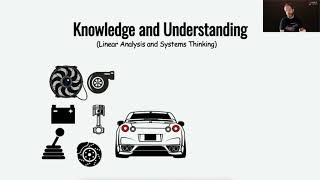
Learning More from Complex Systems
Explore complex systems' traits and learn better approaches to incident analysis beyond linear root-cause methods. Gain insights from history, science, and philosophy to enhance understanding of resilience in modern organizations.
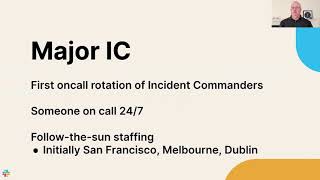
Evolution of Incident Management at Slack
Explore Slack's evolution in incident management, covering strategies for handling numerous incidents, team-wide capability building, and future directions in maintaining platform reliability.
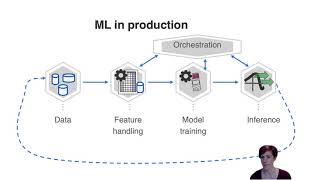
Demystifying Machine Learning in Production - Reasoning about a Large-Scale ML Platform
Explore techniques for managing and improving reliability in large-scale machine learning production systems, focusing on common failure modes, best practices, and practical strategies for SREs.
From 15,000 Database Connections to Under 100 - A Tech Debt Tale
Explore a multi-year tech debt resolution journey, focusing on reducing database connections from 15,000 to under 100. Learn strategies for handling scaling challenges in distributed systems.
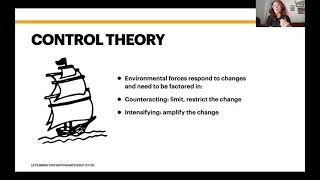
Let's Bring System Dynamics Back to CS
Explore System Dynamics for modeling feedback loops in distributed systems. Learn its history, tools, and applications to prevent outages and improve software architecture design.
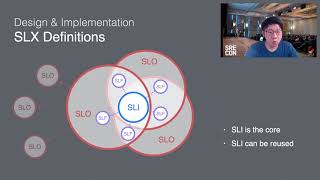
SLX - An Extended SLO Framework to Expedite Incident Recovery
Explore an extended SLO framework (SLX) for managing high-availability systems, featuring innovative concepts like SLF and SLD to build knowledge graphs and expedite incident recovery.
Optimizing Cost and Performance with Arm64
Explore how Honeycomb.io optimized cost and performance by migrating to arm64 architecture, reducing compute costs by 40% while improving latency, despite challenges in software compatibility and ecosystem complexity.

Take Me Down to the Paradise City Where the Metric Is Green and Traces Are Pretty
Explore OpenTelemetry for cloud-native observability, including its APIs and SDKs. Learn how to implement traces and metrics in Java and Go, with practical examples and insights on framework stability.

A Political Scientist's View on Site Reliability
Explore how political science concepts can provide fresh perspectives on site reliability, team dynamics, and simplifying complex production environments in software engineering.
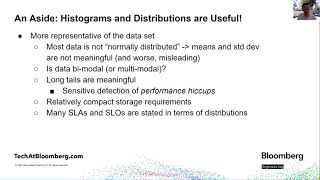
Latency Distributions and Micro-Benchmarking to Identify and Characterize Kernel Hotspots
Explore kernel hotspots using latency distributions and micro-benchmarking. Learn techniques to identify and address OS scale limits for improved system performance on bare metal hardware.
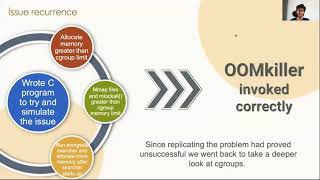
When Linux Memory Accounting Goes Wrong
Debugging Linux memory accounting issues in cgroups, exploring scenarios where misaccounting can lead to host inaccessibility and application failures despite set limits.

Why You Should Burn Down Your Datacenter
Explore datacenter optimization challenges, integrating infrastructure management with power, space, and cooling systems. Learn about industrial controls and their limitations in this thought-provoking talk.
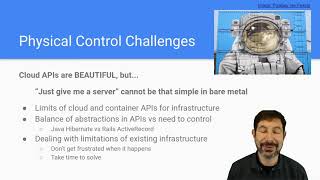
Can Infrastructure as Code Apply to Bare Metal?
Explore applying Infrastructure as Code principles to bare metal environments, addressing challenges and showcasing proven techniques for secure and resilient physical infrastructure automation.
Lessons Learned from a Ransomware Attack
Comprehensive analysis of a real-world ransomware attack on a school district, covering timeline, damage, recovery, and preventive measures for future cybersecurity preparedness.
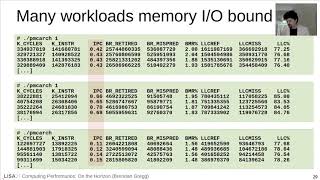
Computing Performance - On the Horizon
Explore future computing performance trends in processors, memory, storage, networking, and cloud technologies, with insights on emerging innovations and their potential impact.

Kind Engineering - How to Engineer Kindness
Explore practical strategies for fostering kindness in software engineering, covering code reviews, psychological safety, feedback, and workplace honesty to create happier teams and companies.
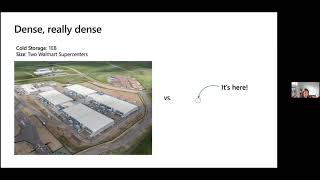
DNA Data Storage and Near-Molecule Processing for the Yottabyte Era
Explore DNA data storage and near-molecule processing for the yottabyte era, including encoding, decoding, random access, and potential for hybrid electronic/molecular computing systems.
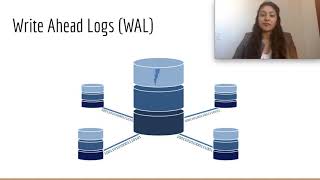
FAST '21 Work-in-Progress Reports
Explore cutting-edge research in storage systems through short presentations on topics like persistent memory, I/O optimization, transaction handling, and data privacy in analytics.
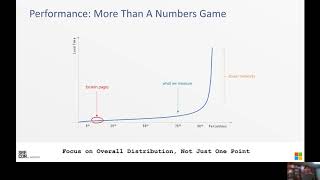
Off the Beaten Path - Moving Observability Focus from Your Service to Your Customer
Exploring customer-centric observability beyond traditional metrics, emphasizing direct engagement, user experience capture, and rethinking performance to enhance SRE practices and improve overall service quality.