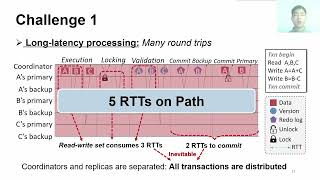
FORD - Fast One-sided RDMA-based Distributed Transactions for Disaggregated Persistent Memory
Explore efficient distributed transactions for disaggregated persistent memory using FORD, a system leveraging one-sided RDMA to improve throughput and reduce latency in remote memory pools.
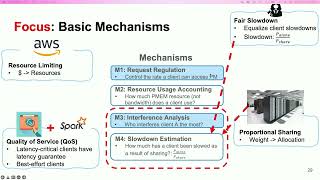
NyxCache - Flexible and Efficient Multi-tenant Persistent Memory Caching
Flexible multi-tenant persistent memory caching framework for efficient resource management, QoS guarantees, and performance isolation in cloud environments.
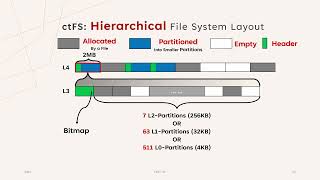
ctFS - Replacing File Indexing with Hardware Memory Translation through Contiguous File Allocation for Persistent Memory
Innovative file system design leveraging hardware memory translation for persistent memory, enhancing performance by eliminating indexing overhead and improving efficiency in file operations.
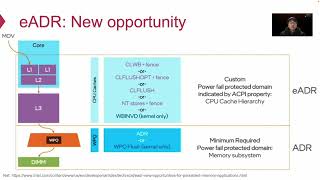
HTMFS - Strong Consistency Comes for Free with Hardware Transactional Memory in Persistent Memory File Systems
Explore hardware-software cooperation for high-performance, strongly consistent persistent memory file systems using Hardware Transactional Memory, overcoming traditional trade-offs between speed and data integrity.
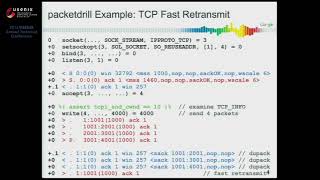
Packetdrill - Scriptable Network Stack Testing, from Sockets to Packets
Explore packetdrill, a scripting tool for testing TCP/UDP/IP network stack implementations. Learn its design, usage, and impact on developing Linux TCP features and bug fixing.
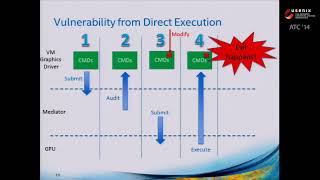
A Full GPU Virtualization Solution with Mediated Pass-Through
Explore GPU virtualization with gVirt, achieving 95% native performance and scalability up to 7 VMs through mediated pass-through technology for secure isolation and full feature support.
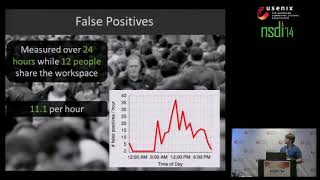
Bringing Gesture Recognition to All Devices
Innovative gesture recognition system for low-power devices, utilizing existing wireless signals to enable always-on functionality across various platforms, including battery-free devices.

The Origins of USAA's Postmortem of the Week
Discover USAA's journey in establishing an IT-wide Postmortem Review meeting, with tips for implementing your own large-scale review process. Learn from their experiences and insights.

Ceci N'est Pas un CPU Load
Explore the limitations of digital troubleshooting compared to analog electronics, and discover why our mental models for digital systems are constrained.

Spike Detection in Alert Correlation at LinkedIn
Discover how LinkedIn uses spike detection in alert correlation to quickly identify root causes of outages in their complex microservices architecture, reducing false positives and engineer toil.
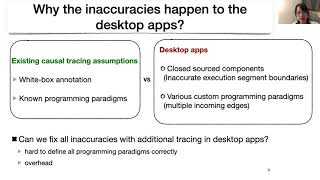
Argus - Debugging Performance Issues in Modern Desktop Applications with Annotated Causal Tracing
Innovative tool for debugging performance issues in desktop applications, using annotated causal tracing to model ambiguities and efficiently diagnose root causes of slowdowns.
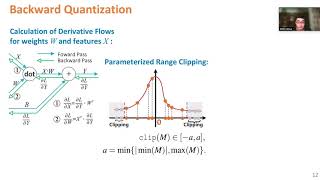
Octo - INT8 Training with Loss-aware Compensation and Backward Quantization for Tiny On-device Learning
Explores INT8 quantization for on-device learning, introducing Loss-aware Compensation and Parameterized Range Clipping to optimize forward and backward passes while preserving training quality.
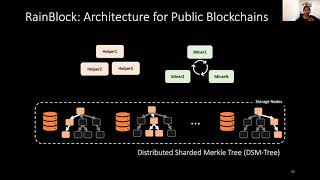
RainBlock - Faster Transaction Processing in Public Blockchains
Innovative blockchain architecture that significantly increases transaction processing speed without modifying proof-of-work consensus, using novel data structures and I/O optimization techniques.
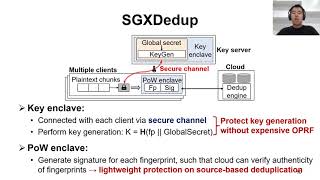
Accelerating Encrypted Deduplication via SGX
Explore SGXDedup, a novel approach leveraging Intel SGX to accelerate encrypted deduplication for outsourced storage, offering significant performance improvements while maintaining security and efficiency.
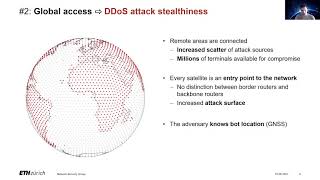
ICARUS - Attacking Low Earth Orbit Satellite Networks
Explores vulnerabilities in low Earth orbit satellite networks, introducing ICARUS attacks that exploit global accessibility, low-latency constraints, and network predictability to disrupt communications over large areas.
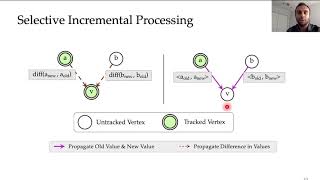
Controlling Memory Footprint of Stateful Streaming Graph Processing
Innovative techniques for reducing memory usage in streaming graph processing systems, enabling analysis of larger dynamic graphs while maintaining performance and accuracy.
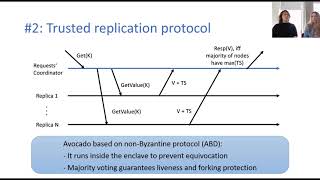
Avocado - A Secure In-Memory Distributed Storage System
Explore Avocado, a secure in-memory distributed storage system for untrusted cloud environments, offering strong security, fault-tolerance, consistency, and performance through innovative design and implementation.
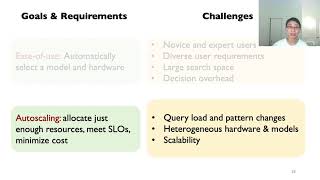
INFaaS - Automated Model-less Inference Serving
Automated system for distributed inference serving, optimizing model selection and resource allocation to meet performance and accuracy requirements while reducing costs and complexity for developers.
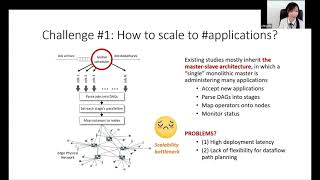
DART - A Scalable and Adaptive Edge Stream Processing Engine
Scalable, adaptive edge stream processing engine for IoT applications, enabling fast processing of concurrent queries in dynamic environments through dynamic dataflow abstraction and P2P overlay networks.
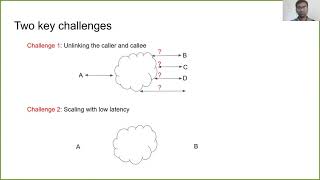
Addra - Metadata-Private Voice Communication Over Fully Untrusted Infrastructure
Innovative system for metadata-private voice communication, scaling to 32K users with low latency. Utilizes untrusted infrastructure and novel mailbox assignment, improving on existing solutions for secure communication.
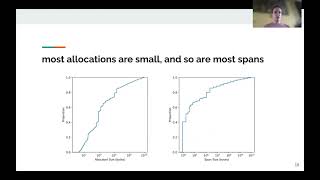
Beyond Malloc Efficiency to Fleet Efficiency - A Hugepage-Aware Memory Allocator
Explore TEMERAIRE, a hugepage-aware memory allocator enhancing TCMALLOC to reduce CPU overheads, improve application performance, and optimize fleet efficiency in warehouse-scale computing.