Immutable Data Science with Datomic, Spark and Kafka
Explore innovative data science architecture using Datomic, Spark, and Kafka for scalable real-time analysis without traditional ETL, offering immutability, multi-database querying, and horizontal read scalability.
When "Worst" is Best in Distributed Systems
Explore how designing distributed systems for worst-case network behavior can paradoxically improve typical performance, with practical lessons for web, transaction processing, and database applications.
Propositions as Types
Explore the profound connection between logic and computation, delving into the Propositions as Types principle and its impact on theorem provers, programming languages, and computing frontiers.

How to Have Your Causality and Wall Clocks, Too
Explore distributed monotonic clocks for causality and wall clock time synchronization in microservices. Learn about implementation, protocols, and applications in distributed systems.

Unconventional Programming with Chemical Computing
Explore unconventional programming through chemical computing metaphors. Learn artificial chemical computing basics, high-order concepts, and innovative problem-solving approaches using Clojure for demonstrations.
I See What You Mean
Exploring query languages for distributed systems programming, focusing on Dedalus and its ability to reason about correctness, consistency, and fault-tolerance in distributed environments.
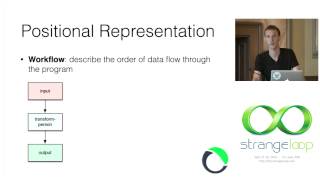
Onyx - Distributed Workflows for Dynamic Systems
Explore Onyx, a distributed computation system addressing workflow complexities in modern frameworks. Learn about its innovative approach to simplify processing and leverage hardware advancements.
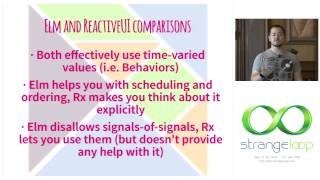
FRP in Practice - Taking a Look at Reactive UI - Cocoa
Explore Functional Reactive Programming principles applied to UI toolkits, using GitHub's desktop apps as a case study. Learn FRP implementation, challenges, and benefits in non-FRP frameworks.
Towards Annex - A Fact Based Dependency System
Explore a novel approach to dependency management using fact-based systems, functional programming, and datalog principles for improved flexibility, reproducibility, and context-aware artifact queries.
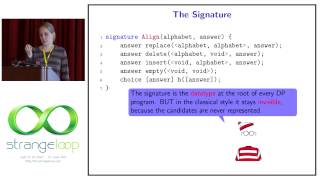
Dynamic Programming at Ease - With Grammars, Algebras, Products
Explore dynamic programming for combinatorial optimization problems using grammars, algebras, and products. Learn to efficiently solve complex problems by reusing intermediate results and reducing complexity.
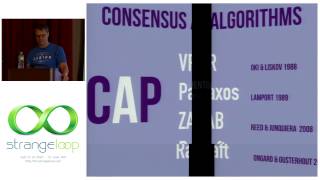
The Road to Akka Cluster, and Beyond
Exploring distributed computing landscape, from early computer architecture to modern challenges. Covers key theories, protocols, and technologies, with insights into Akka Cluster's design and future developments.
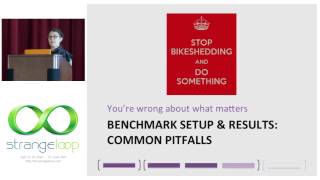
Benchmarking - You're Doing It Wrong
Discover common pitfalls in benchmarking and learn techniques to create accurate, meaningful performance measurements for your systems, guiding effective optimization efforts.
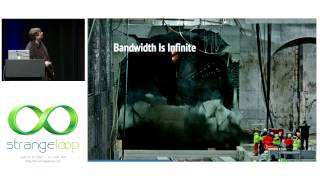
The Eight Fallacies of Distributed Computing
Explore eight common misconceptions in distributed computing, their implications, and real-world examples to help developers design more robust and scalable server architectures.
Svelte, Cybernetically Enhanced Web Apps
Explore Svelte's unique approach to building fast, reactive web apps without complex state management or virtual DOM, offering a fresh alternative to React and Vue.js.
Introduction to GitHub Actions
Automate repository workflows, CI/CD, and security with GitHub Actions. Learn to set up workflows, integrate with Package Registry, and create custom actions for enhanced productivity.
Turbocharged - Writing High-Performance C# and .NET Code
Learn to write faster, more efficient C# code using high-performance APIs and language features. Practical examples cover Span, Memory, System.IO.Pipelines, ArrayPool, and new JSON APIs in .NET Core 3.0.

Blazor in More Depth
Explore advanced Blazor features with its architects, covering server-side streaming, Razor Class Libraries, APIs, build systems, and compiler internals for a deeper understanding of the framework.
DDD Really Matters
Explore deep collaboration with domain experts and five essential strategies for achieving excellence in software development initiatives.
Why Kubernetes is Not Enough
Explore Farfetch's journey in migrating 500 microservices to Kubernetes, focusing on the creation of blueprints to manage service metadata and dependencies for improved agility and control.
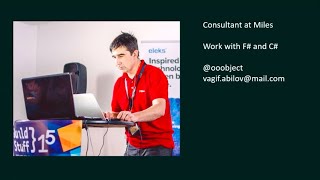
Frontend in F# - Hold My Beer
Discover how a backend developer tackles frontend development using F# and functional programming, exploring the MVU pattern and Fable for efficient web development.
Modernizing the Enterprise Desktop Application
Modernize WPF and Windows Forms apps: migrate to .NET Core 3, implement CI/CD, switch to MSIX, add telemetry, and incorporate modern Windows controls for enhanced desktop applications.