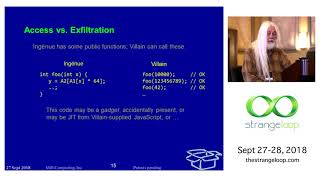
Mill vs. Spectre - Performance and Security
Explore CPU architecture vulnerabilities, focusing on Meltdown and Spectre attacks. Learn about the Mill architecture's unique approach to performance and security without hardware speculation.
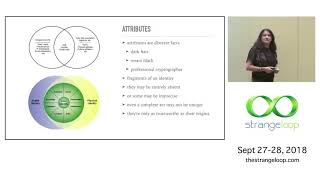
Identity & Trust in Monitored Spaces
Explore privacy, identity, consent, and data protection in monitored spaces. Learn to design systems that respect user rights and comply with regulations while ensuring security and trust.
Democratizing AI - Back-Fitting End-to-End Machine Learning
Explore LinkedIn's journey in democratizing AI, enhancing modeler efficiency, and scaling machine learning across engineering teams through innovative infrastructure and practices.

Learning from Machines
Explore cognitive models inspired by machine learning, offering insights into perception, expertise, and trauma. Gain a new perspective on human cognition and self-awareness.
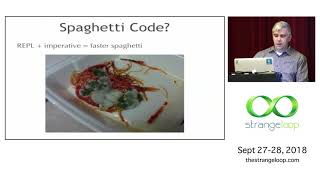
Running With Scissors - Live Coding With Data
Explore Clojure's unique features for effective programming and development processes through live coding demonstrations and practical examples.
Rosie Pattern Language - Improving on 50-Year Old Regular Expression Technology
Explore Rosie Pattern Language, an alternative to regular expressions offering improved scalability, readability, and composability for efficient data processing and pattern matching.
Reactive Programming - A Better Way To Write Frontend Applications
Explore functional reactive programming for simplified frontend development, treating data as asynchronous streams and transforming values over time to handle events more effectively.
Shaping Our Children's Education in Computing
Exploring the revolution in computing education, its challenges, and how we can actively shape it for our children's future in a rapidly changing technological landscape.
Observability for Emerging Infra - What Got You Here Won't Get You There
Explore modern infrastructure challenges and the shift from traditional monitoring to observability. Learn about event-driven approaches, complexity management, and the future of debugging distributed systems.
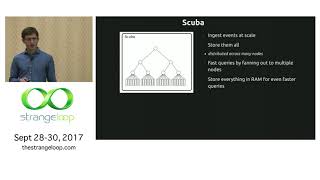
Why We Built Our Own Distributed Column Store
Explore the architecture and implementation of Retriever, a custom-built distributed column store database inspired by Facebook's Scuba, designed for efficient querying of large-scale event data.
Level Up Your Concurrency Skills With Rust
Explore Rust's approach to safe concurrent programming, learning how it catches errors at compile time and enhances your skills across languages. Gain insights into race conditions and memory safety.

How to Be a Compiler
Explore how compiling code parallels language learning and creative practices, revealing insights into software engineering and fostering an inclusive tech environment.
The Holy Grail of Systems Analysis - From What to Where to Why
Explore advanced distributed tracing techniques to pinpoint latency issues in complex microservice architectures, moving beyond traditional monitoring approaches for more effective system analysis.
Algorithms That Teach You Math
Explore algorithms designed to teach math step-by-step, optimizing for intuitive explanations rather than speed. Learn about mathsteps, an open-source library for solving and explaining algebra problems.
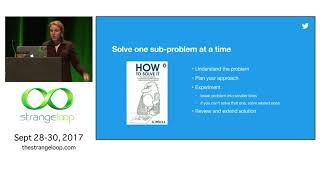
Scaling Validation and Quality of Streaming Data Products at Twitter
Explore Twitter's data quality engineering, focusing on scaling validation, stress testing, and innovative tools for maintaining high-quality streaming data products in a distributed architecture.
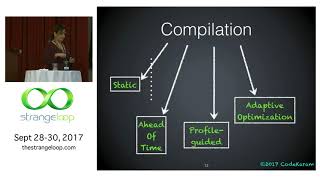
The Performance Engineer's Guide to Java HotSpot
Explore Java HotSpot VM optimizations, JIT compilation, and garbage collection techniques to enhance application performance and efficiency in server systems.
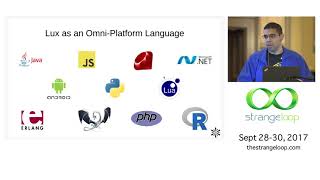
The Lux Programming Language
Explore Lux: a functional, statically-typed Lisp for multiple platforms. Learn about its features, philosophy, and potential impact on programming paradigms and meta-programming.
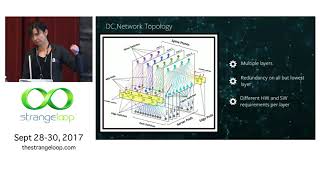
Building Switches Like Servers - The Strange World of Overlapping Networking
Explore Facebook's innovative approach to network infrastructure, focusing on disaggregating hardware and software for large-scale data centers and the operational challenges encountered.
Incident Insights from NASA, NTSB, and the CDC
Explore incident handling practices from NASA, NTSB, and CDC to improve software system recovery and prevent recurring failures in an increasingly automated world.
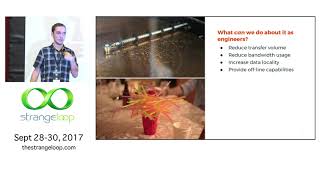
Empowering the Next Billion with OSTree, Flatpak, NDN, and the Cloud
Explorando herramientas innovadoras como OSTree, Flatpak y NDN para empoderar a la próxima generación de usuarios en regiones con conectividad limitada y reducir la brecha digital global.

Stop Rate Limiting - Capacity Management Done Right
Explore capacity management alternatives to rate limiting, using Little's Law and concurrency control for better API performance and resource isolation in microservices architectures.