Designing Augmented Reality Systems for Speed
Explore designing AR systems for speed, balancing complex algorithms with resource limitations. Learn trade-offs, concurrency, real-time interactions, and caching in AR development.
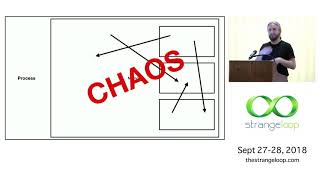
Isolation without Containers
Explore software fault isolation techniques beyond containers, focusing on sandboxing compilers for edge computing and IoT. Learn about machine code generation, optimization, and system integration.
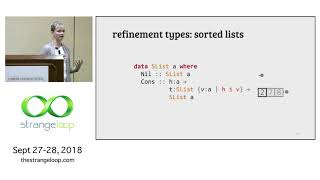
Type-Driven Program Synthesis
Explore type-driven program synthesis for creating complex data structures and repairing information flow leaks, enhancing software quality through declarative constructs and automated code generation.
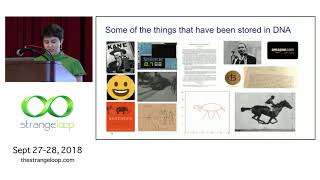
Algorithms for DNA Data Storage
Explore algorithms for efficient DNA data storage, including innovations in reading/writing, cost reduction, and potential applications for managing growing data storage needs.
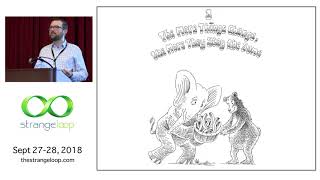
A Little Taste of Dependent Types
Explore dependent types, uniting programming and mathematical proofs. Learn about Pie, a tiny dependently typed language, and see a proof that's also a program.
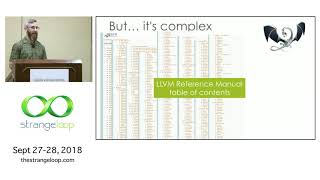
Verifying the LLVM
Explore LLVM's intermediate representation, its complexities, and the Vellvm project's approach to formal verification using Coq, aimed at ensuring compiler reliability and security.
Scalable Anomaly Detection - With Zero Machine Learning
Explore Netflix's innovative approach to detecting anomalies in complex distributed systems using stream processing and simple algorithms, without relying on machine learning.
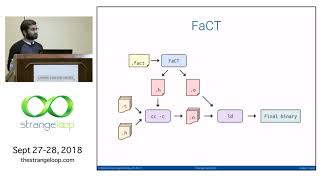
FaCT - A New Language for Constant-Time Programming
FaCT: A new language for writing constant-time cryptographic code, addressing security vulnerabilities in traditional methods. Enables high-level programming constructs while ensuring timing side-channel resistance.
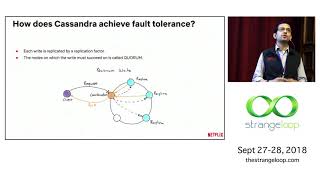
Building Financial Systems on Eventually Consistent DBs
Explore Netflix's innovative approach to building scalable, available, and consistent financial systems using eventually consistent databases, balancing tradeoffs between availability and data integrity.
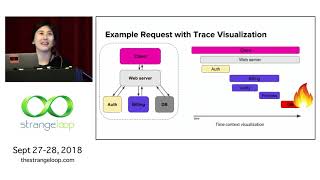
Understanding Microservices with Distributed Tracing
Explore distributed tracing for microservices: visualize request journeys, optimize performance, and gain system-wide insights. Learn implementation strategies and lessons from Lyft's adoption.
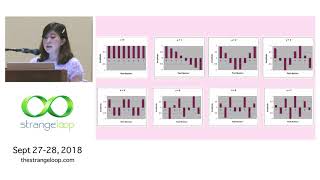
The Glitching Hour
Explore image formats, compression techniques, and data corruption to create artistic glitch effects. Learn how to manipulate digital imagery for unique visual aesthetics.
Building a Canary Testing Framework
Learn to build a canary testing framework for distributed systems, covering architecture, implementation in Go, test configurations, and result visualization using Prometheus.
A Box of Chaos - The Generative Artist's Toolkit
Explore generative art techniques, from algorithms and color theory to creating natural-looking code-generated artwork. Learn practical tools for producing unique digital art pieces.
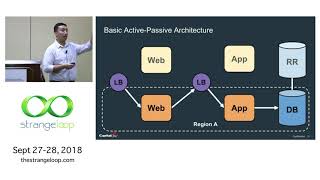
Architecting for Active-Active Resiliency in the Cloud
Explore multi-regional active-active resiliency in cloud architecture, covering data replication, availability calculations, and design patterns for maximizing service uptime and minimizing failures.

Machine Learning Failures - For Art
Explore hilarious machine learning failures in art, from cookie recipes to pony classification, and learn how to deliberately create amusing AI mistakes.
Privacy - The Last Stand for Fair Algorithms
Explore privacy's role in creating fair algorithms and ethical machine learning models. Learn about privacy-preserving techniques and their impact on data science and product design.
A Frontend Server, Front to Back
Explore the implementation of Fitbit's frontend server, covering queueing theory, software design, GC tuning, and Netty library, with practical insights on building fast, stable, scalable, and extensible systems.
End-to-End Encryption - Behind the Scenes
Explore end-to-end encryption protocols, their inner workings, and applications beyond messaging. Learn about key exchange, forward secrecy, and authentication in secure communication.

Powering Interactive Data Applications at Scale
Explore Druid's architecture for powering interactive analytic applications with millisecond query latencies, comparing it to traditional databases and key/value stores for OLAP use cases.
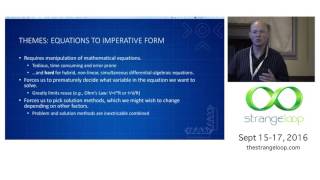
Modelica - Component Oriented Modeling of Physical Systems
Explore component-oriented modeling of physical systems using Modelica, a language for simulating complex devices in various industries. Learn about compilation processes and algorithms.
Designing Cypher - A Graph Query Language
Explore the journey of designing Cypher, a graph query language for Neo4j. Learn about language design principles, implementation challenges, and lessons learned in creating a specialized yet expressive tool.