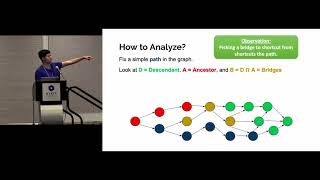
Parallel Reachability in Almost Linear Work and Square Root Depth
Explore efficient parallel algorithms for graph reachability, focusing on distributed computing and improved runtime complexity in large-scale networks.
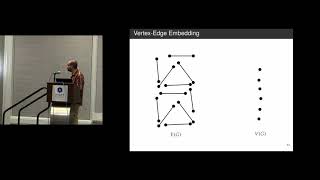
Inapproximability of Clustering in Lp Metrics
Explores computational complexity of clustering in Lp metrics, discussing approximation algorithms, hardness of approximation, and key concepts like Johnson Coverage Hypothesis.
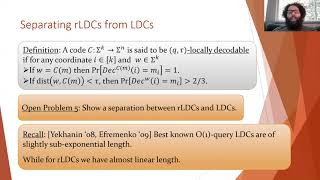
Relaxed Locally Decodable Codes
Explore advanced concepts in coding theory, including relaxed locally decodable codes, constant query regime, and list-decoding regime, with insights on lower bound techniques.
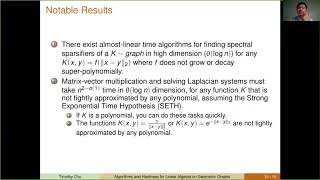
Algorithms and Hardness for Linear Algebra on Geometric Graphs
Explore algorithms and hardness for linear algebra on geometric graphs, focusing on K and K-graphs, sparsifiers, matrix-vector multiplication, and Hamming nearest neighbor problems.
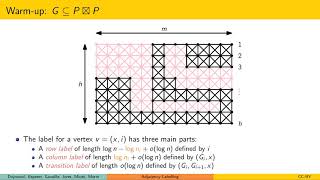
Adjacency Labelling for Planar Graphs - and Beyond
Explore adjacency labelling for planar graphs, covering universal graphs, labeling schemes, and the Strong Graph Product. Learn about binary search trees and their applications in graph theory.
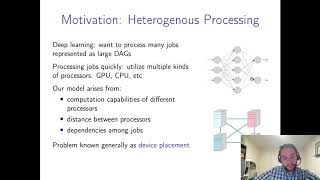
Scheduling Precedence-Constrained Jobs on Related Machines with Communication Delay
Explore efficient job scheduling on related machines, considering precedence constraints and communication delays. Learn about duplication strategies and algorithmic approaches for optimizing makespan.
A Tight Lower Bound on Adaptively Secure Full-Information Coin Flip
Explore secure full-information coin flipping protocols, adaptive adversaries, and biasing techniques. Analyze expected outcomes, protocol jumps, and robust vs. non-robust approaches.
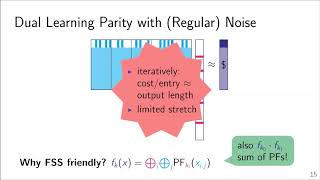
Correlated Pseudorandom Functions from Variable-Density LPN
Explore correlated pseudorandom functions and variable-density LPN, delving into weak PRFs, secure multi-party computation, and pseudorandom correlation generators for enhanced cryptographic security.
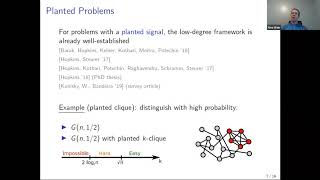
Low-Degree Hardness of Random Optimization Problems
Explore the challenges of random optimization problems, focusing on low-degree hardness and its implications for various mathematical models and algorithms.
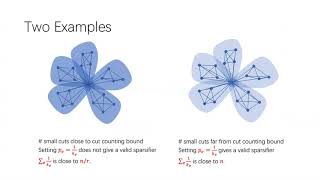
Near-Linear Size Hypergraph Cut Sparsifiers
Explore near-linear size hypergraph cut sparsifiers, their applications in SAT sparsification, and novel approaches to overcome limitations in existing methods.

Analysis of Two-variable Recurrence Relations with Application to Parameterized Approximations
Explore two-variable recurrence relations and their application to parameterized approximations, focusing on vertex cover problems and algorithmic techniques.
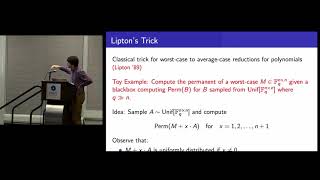
The Average-Case Complexity of Counting Cliques in Erdos-Renyi Hypergraphs
Explore average-case complexity of counting cliques in Erdos-Renyi hypergraphs, covering proof techniques, random KQ accounting, and binary expansions.
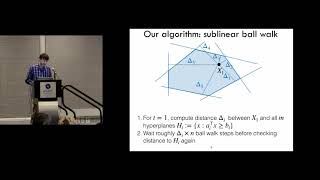
Faster Polytope Rounding, Sampling, and Volume Computation via a Sublinear Ball Walk
Explore advanced algorithms for efficient polytope analysis, including rounding, sampling, and volume computation using innovative Markov chain techniques.
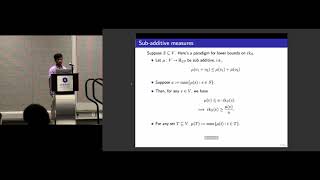
More Barriers for Rank Methods, via a "Numeric to Symbolic" Transfer
Explore advanced concepts in tensor rank, including numeric-to-symbolic transfer techniques and their applications in mathematics and computer science.
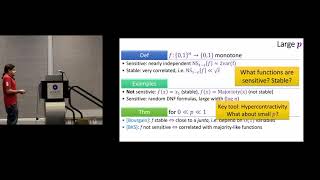
Noise Sensitivity on the p-Biased Hypercube
Explore noise sensitivity on p-biased hypercubes, examining shell thresholds and speculating on results in this concise mathematical analysis.
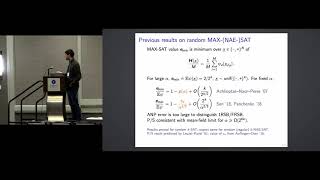
Breaking of 1RSB in Random MAX-NAE-SAT
Explore the intricacies of random MAX-NAE-SAT, focusing on 1RSB breaking, solution spaces, and key concepts like garnet transition and moment bounds.
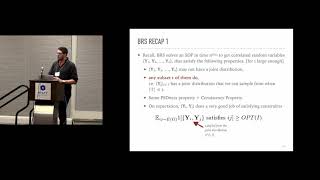
Approximating Constraint Satisfaction Problems on High Dimensional Expanders
Explore high-dimensional expanders and their role in approximating constraint satisfaction problems, with insights on natural collections and general expanders.
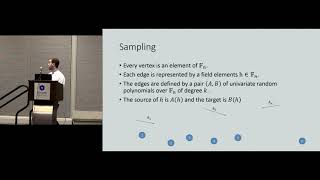
Sampling Graphs Without Forbidden Subgraphs and Unbalanced Expanders With Negligible Error
Explore efficient graph sampling techniques and unbalanced expanders, focusing on avoiding forbidden subgraphs and achieving negligible error rates in computational applications.
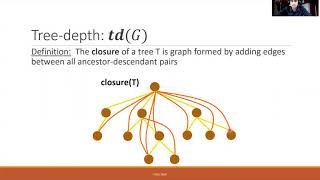
Tree-Depth and the Formula Complexity of Subgraph Isomorphism
Explore tree-depth's impact on subgraph isomorphism complexity, examining special cases, formula complexity, and graph minor approximation in this theoretical computer science talk.
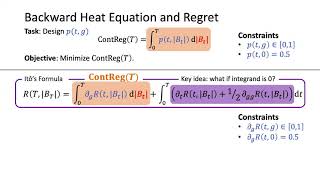
Optimal Anytime Regret with Two Experts
Explore optimal anytime regret in expert learning, focusing on two-expert scenarios. Discover techniques, proof overviews, and algorithmic designs for minimizing regret in prediction tasks.
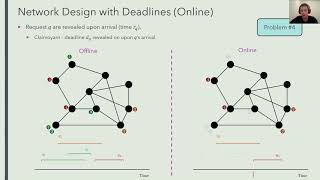
Beyond Tree Embeddings - A Deterministic Framework for Network Design with Deadlines or Delay
Explore deterministic frameworks for network design, addressing deadlines and delays. Learn about offline and online approaches, facility location, and analysis techniques.