Mathematical Theories of Communication - Old and New
Explore mathematical theories of communication, from Shannon's foundational work to modern interactive coding schemes and semantic communication, with applications to real-world scenarios.
Subspace Clustering Using Ensembles of K-Subspaces
Explore subspace clustering techniques, focusing on K-Subspaces ensembles. Learn about applications, results, and comparisons with other algorithms in this insightful talk by Laura Balzano.
On the Foundations of Deep Learning - SGD, Overparametrization, and Generalization
Explore foundations of deep learning, focusing on SGD, overparametrization, and generalization. Delve into optimization dynamics, margin theory, and the impact of network architecture on performance.
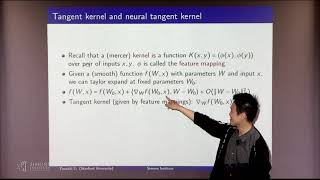
Learning and Generalization in Over-parametrized Neural Networks - Going Beyond Kernels
Explore neural network learning and generalization beyond kernel methods, examining tangent kernels, learning algorithms, and complexity in over-parametrized networks.
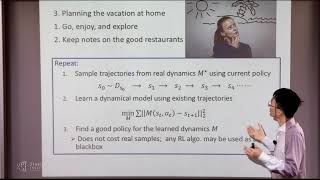
Practical Model-Based Algorithms for Reinforcement Learning and Imitation Learning
Explore efficient model-based algorithms for reinforcement and imitation learning, addressing challenges in learning dynamics and uncertainty, with practical examples and evaluations.
Nearest Neighbors I
Explore nearest neighbor algorithms in machine learning, covering regression, classification, consistency, and convergence rates in metric spaces. Gain insights into statistical learning frameworks and smoothness conditions.
Generalization I
Explore deep learning generalization with experts Peter Bartlett and Sasha Rakhlin, covering perceptron algorithms and key concepts in machine learning theory.

Berkeley in the 80s - Episode 1- Shafi Goldwasser
Insightful interview with Turing Laureate Shafi Goldwasser, exploring her groundbreaking research in theoretical computer science, interactive proofs, and zero-knowledge protocols at UC Berkeley in the 1980s.
Invariant Theory for Computer Scientists
Explore algebraic methods in computer science, focusing on invariant theory, graph isomorphism, and group actions. Learn about algorithms, moment polytopes, and open problems in the field.
K-Means and K-Medians Under Dimension Reduction
Explore k-means and k-medians clustering algorithms under dimension reduction, examining distortion graphs, cost analysis, and combinatorial lemmas for robust high-dimensional statistics.
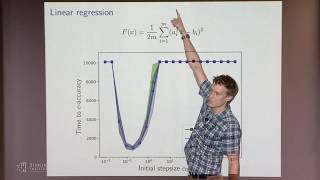
The Importance of Better Models in Stochastic Optimization
Explore stochastic optimization models, focusing on robustness, stability, and asymptotic minimax theory. Learn about weak convexity, sharp growth problems, and practical experiments.
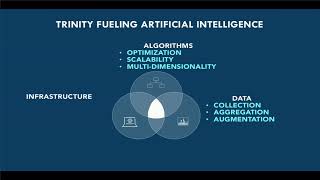
The AI Trinity - Data + Algorithms + Infrastructure
Explore the AI trinity: data, algorithms, and infrastructure. Learn about named entity recognition, active learning, crowdsourcing, data augmentation, and neural rendering models.
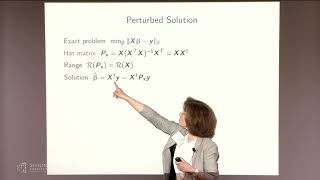
Randomized Least Squares Regression - Combining Model- and Algorithm-Induced Uncertainties
Explore randomized least squares regression, combining model and algorithm uncertainties for improved statistical analysis and numerical linear algebra applications.
The Future of Wireless and What It Will Enable
Explore the future of wireless technology, its potential, and innovative approaches like millimeter waves, small cells, and software-defined networks to overcome current limitations.
The Future Quantum Internet - Challenges
Explore challenges in quantum internet development, including performance, control, and routing entanglement flows. Learn about qubits, superposition, and long-distance entanglement in quantum networks.
First-Order Stochastic Optimization
Explore first-order stochastic optimization techniques for machine learning, covering gradient descent, adaptive learning, and convergence rates in data science applications.
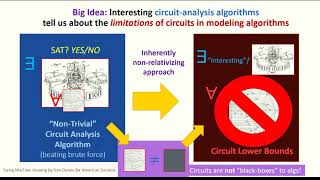
Circuit Lower Bounds from Algorithm Design - An Overview I
Explore circuit lower bounds in computational complexity, focusing on algorithm design techniques and their implications for NP problems and Boolean functions.
Classical Verification of Quantum Computations
Explore verification methods for quantum computations, including interactive proofs, post-quantum cryptography, and measurement protocols, with insights on challenges and potential solutions.
Cryptography for Quantum Computers
Explore quantum-resistant cryptography, virtual-black-box notions, indistinguishability obfuscation, and secure multiparty computation in the context of quantum computing challenges.
Quantum Simulators and Processors Based on Rydberg Atom Arrays
Explore quantum simulators and processors using Rydberg atom arrays, covering experimental setups, entanglement, spin models, and non-equilibrium quantum dynamics in programmable systems.
A Classical Algorithm Framework for Dequantizing Quantum Machine Learning
Explore dequantization of quantum machine learning algorithms, focusing on classical techniques for approximating quantum linear algebra and their implications for QML speedups.