Generating Melodies with a Neural Network
Explore neural network-based melody generation using LSTM, from data preparation to sampling with temperature, in this hands-on tutorial for AI music enthusiasts.
How to Create Melody Sequences to Train a Neural Network
Generate melody sequences for RNN-LSTM training: learn to create time series data, map songs to lists, and prepare inputs using one-hot encoding for neural network-based melody generation.
Deploying the Speech Recognition System on Docker with NGINX
Learn to deploy a speech recognition system using Docker and NGINX, covering containerization, orchestration, and configuration for efficient application deployment.
Long Short Term Memory Networks Explained Easily
Comprehensive explanation of LSTM networks, comparing them to simple RNNs and exploring their architecture and mathematical foundations for improved sequence learning.
Recurrent Neural Networks Explained Easily
Explore Recurrent Neural Networks: architecture, time series, and Back Propagation Through Time. Learn about simple RNN units and their applications in sequence processing tasks.
How to Implement a CNN for Music Genre Classification
Implement a CNN for music genre classification using TensorFlow. Learn cross-validation, inference, and practical application with code examples and step-by-step guidance.

Build a Spotify-Like Music Recommender System in Python
Create a Spotify-like music recommender system using Python, collaborative filtering, and Alternating Least Squares. Learn about music recommendation types, Spotify's architecture, and implement artist suggestions with the 'implicit' library.
How to Deploy ML Models in Production with BentoML
Learn to deploy Machine Learning models in production using BentoML, covering installation, model saving, service creation, bento building, and Docker containerization. Includes hands-on examples and practical deployment steps.
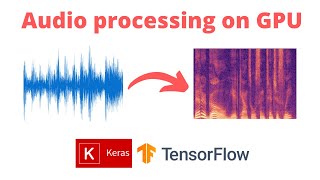
Audio Processing in Keras with Kapre
Learn to process audio in Keras using Kapre, exploring its advantages, features, and implementation. Discover how to embed audio transformations within deep learning models for optimized GPU-based calculations and easier deployment.
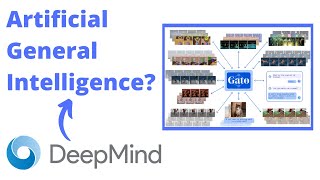
This AI Can Solve Tasks - Paper Analysis of Gato by DeepMind
Explore DeepMind's Gato, a revolutionary AI agent capable of 600+ tasks. Discover its potential for general intelligence, performance analysis, and the ethical implications of advancing towards AGI.
Pre-Processing Audio with Different Durations
Learn to preprocess audio data with varying lengths using PyTorch and torchaudio. Master techniques for cutting and zero-padding waveforms to standardize input for machine learning models.
Implementing and Training a Neural Network with PyTorch
Build and train a feed-forward neural network using PyTorch to classify MNIST digits. Learn data management, network implementation, and training loop creation in this hands-on tutorial.
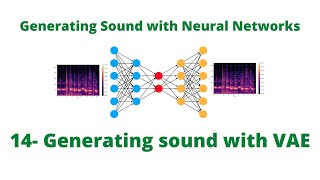
Generating Sound Digits with a Variational Autoencoder
Learn to generate audio spectrograms of sound digits using a trained Variational Autoencoder, then convert them into audio. Includes implementation, scripting, debugging, and result evaluation.
Preprocessing Audio Datasets for Machine Learning
Build an audio preprocessing pipeline for AI in Python, covering STFT, zero-padding, and min-max normalization. Learn to batch process audio files efficiently for machine learning applications.
How to Implement a Variational Autoencoder in Python and Keras
Implement a Variational Autoencoder using Python, TensorFlow, and Keras. Learn to modify the encoder, update loss functions, train the model, and visualize the latent space for data generation.
From Autoencoders to Variational Autoencoders - Improving the Encoder
Explore the transformation from autoencoders to variational autoencoders, focusing on improved encoding using multivariate normal distributions for enhanced generative capabilities in AI and sound processing.
Generation with AutoEncoders - Results and Limitations
Explore image generation using autoencoders, analyze latent space representations, and understand limitations in generative tasks. Learn why variational autoencoders are necessary for improved generation.
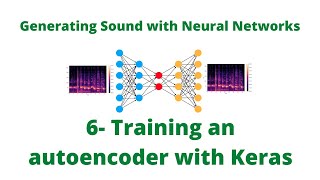
Building and Training an Autoencoder in Keras - TensorFlow - Python
Learn to build and train autoencoders using Python, TensorFlow, and Keras. Explore encoder-decoder architectures, implement training with the MNIST dataset, and gain practical insights into autoencoder development.
What is Platform Engineering - Understanding Its Role in Modern Software Development
Explore platform engineering's role in modern software development, its relationship with DevOps, and career opportunities in this emerging field.
The Science of Cause and Effect - From Deep Learning to Deep Understanding
Explore the foundations of causal reasoning and its impact on AI, decision-making, and scientific understanding with UCLA's Judea Pearl, a Turing Award winner and pioneer in probabilistic reasoning.
Multi-Agent Reinforcement Learning - Part II
Explore advanced concepts in multi-agent reinforcement learning, including equilibrium, rewards, and techniques like Q-value and no-regret learning. Gain insights into challenges and applications in AI and game theory.