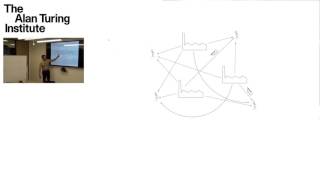
Optimisation - Linear Integer Programming - Professor Raphael Hauser
Explore linear integer programming, mixed integer models, and branch-and-bound algorithms for solving complex optimization problems in supply chain management and traveling salesman scenarios.
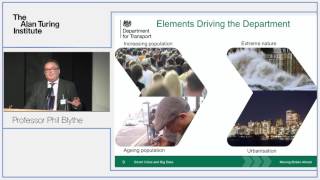
Turing Lecture - Chief Scientific Advisor for the Department of Transport, Phil Blythe
Explore evolving transport techniques, from aging infrastructure to autonomous vehicles, and their impact on future travel with insights from the Department of Transport's Chief Scientific Advisor.
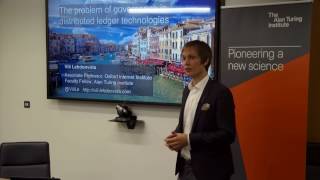
The Problem of Governance in Distributed Ledger Technologies - Professor Vili Lehdonvirta, OII
Explore governance challenges in distributed ledger technologies, examining economic organization, cooperation problems, and solutions through the lens of Bitcoin's development and debates.

PCA, AE, K-Means, Gaussian Mixture Model, Sparse Coding, and Intuitive VAE
Explore advanced machine learning techniques including PCA, autoencoders, K-means, Gaussian mixture models, sparse coding, and VAEs. Gain insights into their applications and intuitive interpretations.

Differentiable Associative Memories, Attention, and Transformers
Explore differentiable associative memories, attention mechanisms, and transformers. Learn about energy minimization, planning, and various transformer applications in machine learning and AI.

Self-Supervised Learning and Variational Inference
Explore self-supervised learning, variational inference, and advanced deep learning concepts with Yann LeCun. Gain insights into GANs, sparse modeling, and Variational Autoencoders (VAEs) in this comprehensive lecture.
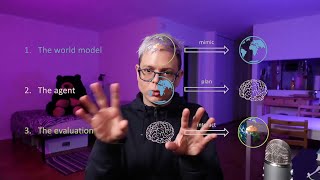
Prediction and Planning Under Uncertainty
Explore prediction and planning in uncertain environments, covering model predictive control, stochastic scenarios, and practical applications in AI decision-making.

Latent Variable EBMs for Structured Prediction
Explore advanced machine learning concepts including energy-based models, contrastive methods, latent variable models, and structured prediction. Gain insights into cutting-edge techniques and algorithms in deep learning.
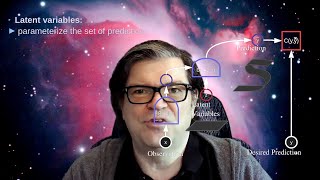
Joint Embedding Method and Latent Variable Energy Based Models
Explore joint embedding methods and latent variable energy-based models with Yann LeCun. Learn about predictive systems, inference, probabilistic models, and various training techniques for advanced machine learning applications.

The Truck Backer-Upper
Explore neural network applications in vehicle control, focusing on the Truck Backer-Upper problem. Learn about state transitions, training strategies, and Bayesian neural networks.

ConvNets in Practice
Explore practical applications of ConvNets in object detection, face recognition, and semantic segmentation. Learn about network architectures, performance comparisons, and real-world implementations in robotics and image processing.

Parameter Sharing - Recurrent and Convolutional Nets
Explore parameter sharing in recurrent and convolutional neural networks, covering hypernetworks, RNNs, LSTMs, attention mechanisms, and ConvNets, with insights on architecture, training, and biological inspiration.

Modules and Architectures
Explore non-linear functions, cost functions, and advanced architectures like multiplicative interaction and mixture of experts in deep learning, with insights from expert Yann LeCun.

Gradient Descent and the Backpropagation Algorithm
Explore gradient descent and backpropagation algorithms, covering supervised learning, parametrized models, loss functions, and neural network architectures with PyTorch implementation.

Low Resource Machine Translation
Explore machine translation techniques for low-resource languages, covering evaluation methods, supervised and unsupervised learning approaches, and domain adaptation. Gain insights into Nepali-English translation case study.

Graph Convolutional Networks - GCNs
Explore Graph Convolutional Networks (GCNs), their connection to CNNs, and implementation using PyTorch and DGL. Learn about tensors on vertices and edges, residual gated GCNs, and domain sparsity.

Self-Supervised Learning in Computer Vision
Explore advanced self-supervised learning techniques in computer vision, including PIRL, SwAV, AVID+CMA, and Barlow Twins, to enhance your understanding of representation learning and model training.
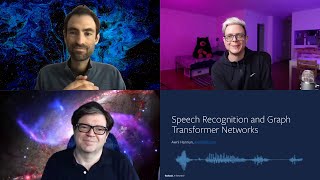
Speech Recognition and Graph Transformer Networks
Explore modern speech recognition techniques, including connectionist temporal classification, beam search decoding, and Graph Transformer Networks, with expert insights and practical applications.

Self - Cross, Hard - Soft Attention and the Transformer
Explore attention mechanisms and Transformer architecture, covering self/cross and hard/soft attention, key-value stores, and practical implementation in PyTorch for advanced deep learning applications.

AE, DAE, and VAE with PyTorch - Generative Adversarial Networks and Code
Explore autoencoders, VAEs, and GANs with PyTorch. Learn implementation, visualization, and comparison of generative models through hands-on coding and insightful analogies.

From LV-EBM to Target Prop to Autoencoder
Explore various autoencoder types, from target propagation to variational autoencoders, understanding their mechanisms, applications, and differences in deep learning and neural network architectures.