PCGRL - Procedural Content Generation via Reinforcement Learning - Paper Explained
Explore how reinforcement learning can be applied to game level design, framing it as a sequential decision-making process for fast and diverse level generation.
Self-Training With Noisy Student Improves ImageNet Classification - Paper Explained
Explore a novel semi-supervised learning approach for image classification using unlabeled data, improving model performance and robustness through iterative self-training and noise injection techniques.
Playing Atari with Deep Reinforcement Learning - Paper Explained
Explore deep reinforcement learning's breakthrough in Atari game mastery using convolutional neural networks, revolutionizing AI with pixel-based control policies and outperforming human experts.
Neural Architecture Search Without Training - Paper Explained
Explores a novel approach to Neural Architecture Search using statistics of the Jacobian around data points, enabling rapid architecture evaluation without training and significantly accelerating the search process.
Gradient Origin Networks - Paper Explained with Live Coding
Explore Gradient Origin Networks: a novel implicit generative model for efficient latent representation learning, with live coding demonstration and in-depth explanation of the paper's key concepts.
Addendum for Supermasks in Superposition - A Closer Look
In-depth analysis of "Supermasks in Superposition" paper, exploring G objective, superposition concept, and broader impact. Includes live coding demonstration and theoretical discussions.
Live Machine Learning Research - Plain Self-Ensembles - Part 1
Live implementation of a novel ensemble model using label-free self-distillation, demonstrating improved accuracy with more students and challenging assumptions about ensemble learning in machine learning research.
On the Measure of Intelligence by François Chollet - The ARC Challenge - Paper Explained
Explores the ARC challenge for testing machine intelligence, focusing on rapid generalization tasks based on human core knowledge priors like object-ness and symmetry. Discusses goals, examples, and potential solutions.
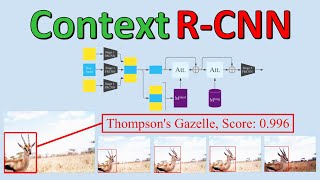
Context R-CNN- Long Term Temporal Context for Per-Camera Object Detection
Explores Context R-CNN, an object detection model leveraging long-term temporal context from static cameras. Improves performance in wildlife and traffic monitoring by incorporating data from multiple frames.
On the Measure of Intelligence by François Chollet - The Math Explained
Explore the formal definition of intelligence measurement, focusing on generalization difficulty, priors, and experience in terms of algorithmic complexity, as proposed by François Chollet.
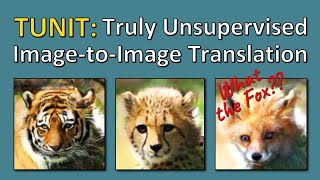
Rethinking the Truly Unsupervised Image-to-Image Translation - Paper Explained
Explore TUNIT, a groundbreaking approach to unsupervised image-to-image translation. Learn about its innovative architecture, loss functions, and experimental results for transforming images across domains.
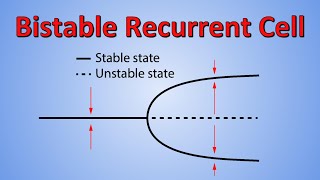
A Bio-Inspired Bistable Recurrent Cell Allows for Long-Lasting Memory
Explore a bio-inspired recurrent cell design that enhances long-term memory in neural networks, inspired by neuronal bistability and offering improved performance on time-series tasks requiring extended recall.
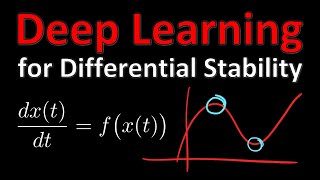
Deep Differential System Stability - Learning Advanced Computations from Examples
Explore how language models can learn complex mathematical computations for differential systems, including stability analysis and controllability, through example-based training.

End-to-End Adversarial Text-to-Speech - Paper Explained
Explore end-to-end adversarial text-to-speech synthesis, tackling alignment challenges and producing high-quality audio directly from text input using innovative neural network architectures and training techniques.
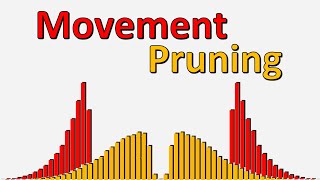
Movement Pruning - Adaptive Sparsity by Fine-Tuning
Explore Movement Pruning, an adaptive sparsity technique for fine-tuning deep neural networks. Learn its advantages over Magnitude Pruning in transfer learning scenarios and its impact on model efficiency.
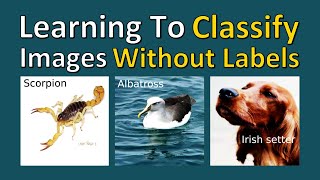
Learning to Classify Images Without Labels - Paper Explained
Explore innovative techniques for unsupervised image classification, combining representation learning, clustering, and self-labeling to group visually similar images without predefined labels.
On the Measure of Intelligence by François Chollet - Foundations - Paper Explained
Exploring Chollet's proposal for measuring AI intelligence through generalization ability, challenging traditional skill-based evaluations and drawing inspiration from psychometrics to redefine intelligence assessment.

Dynamics-Aware Unsupervised Discovery of Skills - Paper Explained
Explores a novel RL framework for autonomous skill discovery and goal-directed planning, combining model-based and model-free approaches to learn predictable behaviors and their dynamics without explicit rewards.
How to Use Facebook's DETR Object Detection Algorithm in Python - Full Tutorial
Hands-on tutorial implementing Facebook's DETR object detection algorithm in Python, covering model loading, image processing, output handling, and visualization with various test cases.

A Critical Analysis of Self-Supervision, or What We Can Learn From a Single Image
Explores self-supervision in deep learning, revealing that a single image with data augmentation can effectively train lower network layers, challenging assumptions about large dataset requirements.
Regularizing Trajectory Optimization with Denoising Autoencoders - Paper Explained
Explore regularizing trajectory optimization in reinforcement learning using denoising autoencoders to improve planning and sample efficiency in motor control tasks.