What Is the Best Image Format? - Basics for Beginners
Explore various image formats, their characteristics, and ideal use cases to determine the most suitable format for different scenarios.
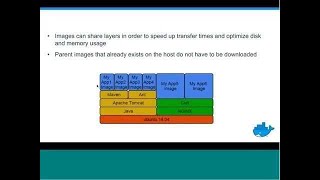
The Most Common Questions IT Admins Ask About Docker
Explore Docker for IT admins: common questions, platform evolution, container vs VM comparisons, networking models, and enterprise architecture insights.
How Cornell Uses Docker Datacenter to Simplify Production Deployments
Discover how Cornell University leverages Docker Datacenter to streamline production deployments, adopting microservices and addressing IT challenges for improved efficiency and innovation.
A ZooKeeper Layer for FoundationDB - Paul Hemberger, HubSpot
Explore building a ZooKeeper layer for FoundationDB, comparing data models, consistency guarantees, and watch semantics. Learn about emulating ZK using Directory Layer, changefeeds, and approaches for ephemeral nodes and session management.
Artificial Intelligence-Machine Learning in Manufacturing and Inspection - A GE Perspective
Explore GE's perspective on AI/ML in manufacturing, focusing on metal additive manufacturing, ceramic matrix composites, and microstructure quantification for improved quality assurance.
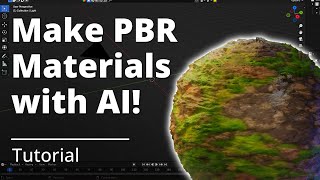
How to Make PBR Materials with AI - Stable Diffusion Tutorial 2023
Learn to create realistic PBR materials using AI and Stable Diffusion. Explore local and fast methods, prompting techniques, upscaling, and tools like Materialize and Poly for high-quality textures.

Coding as a Developmental Playground
Explore computational thinking and robotics in early childhood education, focusing on coding as a new literacy and developmental tool for young children's creativity and self-expression.
Embedding Domain Knowledge for Machine Learning of Complex Material Systems
Explore embedding domain knowledge in machine learning for complex material systems, focusing on hierarchical approaches, response surfaces, and hidden correlations in materials research.

VMware Horizon - Your Platform for On-Premises and Azure Desktop Virtualization
Explore VMware Horizon's hybrid platform for desktop virtualization, offering operational consistency, cost reduction, and faster deployment across on-premises and Azure environments.
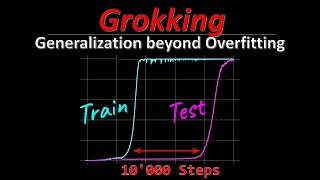
Grokking - Generalization Beyond Overfitting on Small Algorithmic Datasets
Explore the fascinating "grokking" phenomenon in neural networks, where sudden pattern recognition leads to perfect generalization. Discover its implications for deep learning and algorithmic datasets.
How Far Can We Scale Up? Deep Learning's Diminishing Returns
Explores the limits of scaling up deep learning, discussing computational costs, CO2 emissions, and potential solutions to overcome diminishing returns in AI model performance.
Inconsistency in Conference Peer Review: Revisiting the 2014 NeurIPS Experiment
Análisis detallado del experimento de revisión por pares de NeurIPS 2014, examinando la subjetividad en las evaluaciones y la capacidad de los revisores para predecir el impacto futuro de los artículos.
Self-Driving from Vision Only - Tesla's Self-Driving Progress by Andrej Karpathy - Talk Analysis
Analysis of Tesla's vision-only self-driving progress, discussing data labeling, edge-case sampling, neural network training, and the advantages of camera-only systems over multi-sensor approaches.
Decision Transformer - Reinforcement Learning via Sequence Modeling
Explore how Decision Transformer reframes offline reinforcement learning as sequence modeling, leveraging Transformer architecture to generate optimal actions based on desired returns, past states, and actions.
Why AI Is Harder Than We Think
Explores four fallacies in AI research leading to overconfident predictions, examining the complexity of intelligence and challenges in developing advanced AI technologies like self-driving cars and conversational companions.
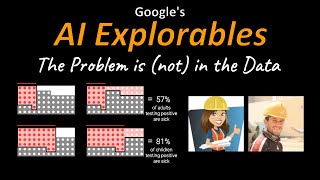
Is the Problem in the Data? Examples on Fairness, Diversity, and Bias
Exploring AI bias through interactive examples on fairness, diversity, and hidden biases. Examines whether bias issues stem from data or other factors in machine learning models.

Linear Transformers Are Secretly Fast Weight Memory Systems - Machine Learning Paper Explained
Explore the connection between linear transformers and fast weight memory systems, uncovering limitations and proposing improvements for more efficient deep learning models.
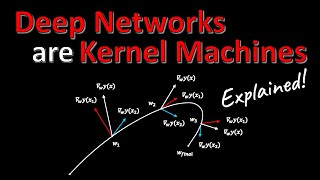
Deep Networks Are Kernel Machines
Explores the theory that deep neural networks function as kernel machines, challenging the view that they discover new data representations. Discusses implications for interpretability and algorithm development.
Extracting Training Data from Large Language Models - Paper Explained
Explores a method to extract training data from large language models, discussing security implications, risks, and mitigation strategies for models like GPT-3. Covers technical aspects and ethical considerations.

DeepMind's AlphaFold 2 Explained - AI Breakthrough in Protein Folding - What We Know and What We Don't
Comprehensive exploration of DeepMind's AlphaFold 2, a groundbreaking AI system that solved the protein folding problem. Covers the science, previous approaches, and potential implications for biology and medicine.
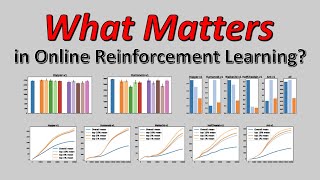
What Matters in On-Policy Reinforcement Learning? A Large-Scale Empirical Study
Comprehensive study on on-policy reinforcement learning, examining 50+ design choices across 5 environments. Provides insights and recommendations for practitioners to optimize agent performance in continuous control tasks.