
Efficient Distributed Deep Learning Using MXNet
Explore distributed deep learning with MXNet, covering practical challenges, deployment strategies, and advanced techniques for efficient large-scale machine learning implementations.
On Gradient-Based Optimization - Accelerated, Distributed, Asynchronous and Stochastic
Explore advanced gradient-based optimization techniques for machine learning, including accelerated, distributed, asynchronous, and stochastic methods, with insights from differential geometry and nonconvex optimization.
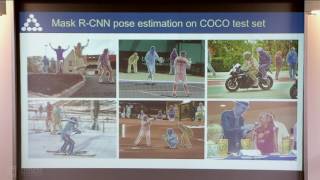
Unsupervised Representation Learning
Explore hierarchical representation learning, common sense AI, and advanced neural network architectures with Yann LeCun. Gain insights into unsupervised learning and video prediction techniques.
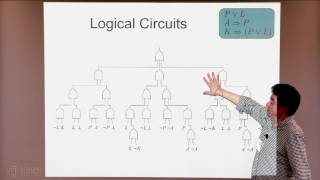
Tractable Learning in Structured Probability Spaces
Explore tractable learning in structured probability spaces, focusing on logical circuits, probabilistic inference, and learning algorithms for complex datasets with constraints.

Power of Active Sampling for Unsupervised Learning
Explore active sampling techniques for unsupervised learning, focusing on matrix completion, graphical models, and clustering. Learn about statistical tradeoffs and computational complexity.
Stochastic Variance Reduction Methods for Policy Evaluation
Explore stochastic variance reduction methods for policy evaluation in reinforcement learning, covering MSPBE, SVRG, and SAGA algorithms with experimental results.
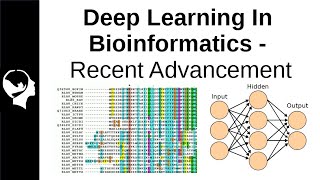
Deep Learning in Bioinformatics - Recent Advancement
Explore recent advancements in deep learning for bioinformatics, covering BTINET, autoencoders, and deep belief networks. Gain insights into cutting-edge applications in genomics, drug discovery, and disease prediction.
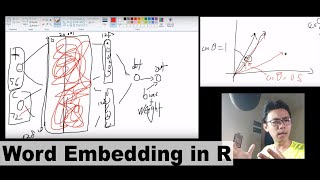
Word Embedding with Keras - A RStudio Tutorial
Learn word embedding techniques using Keras in RStudio. Covers theory, concepts, and practical implementation, including Keras basics and machine learning fundamentals for natural language processing.
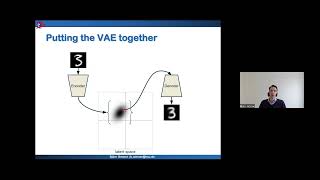
Deep Generative Models and Stable Diffusion: Revolution in Visual Synthesis - Lecture by Björn Ommer
Explore deep generative models, focusing on diffusion models and Stable Diffusion. Learn about visual synthesis advancements, efficiency improvements, and future developments in this cutting-edge field.
Toward Generalizable Embodied AI for Machine Autonomy
Explore recent advancements in machine autonomy, focusing on generalizable embodied AI through sequential decision-making, simulation environments, and human-AI collaboration.
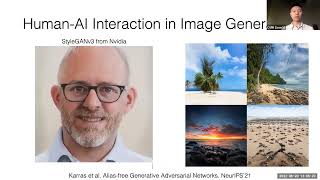
Human-AI Interaction for Computer Vision
Explore human-AI collaboration in computer vision, covering image classification, content editing, generative AI, and interactive learning for enhanced AI systems and applications.
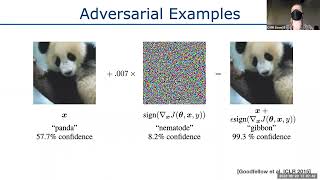
Responsible Computer Vision - Model Failures and Solutions
Explore visual recognition challenges, dataset biases, and domain adaptation techniques to improve model performance and address fairness issues in computer vision systems.
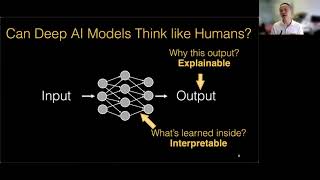
Human-Centric AI for Computer Vision and Machine Autonomy - ICCV'21 Tutorial
Explore human-centric AI in computer vision, covering explainable models, interpretable neural networks, and interactive machine learning for improved AI systems and autonomous machines.
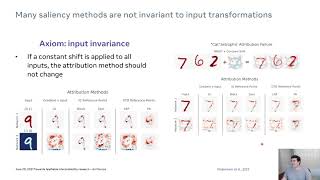
Towards Falsifiable Interpretability Research in Machine Learning - Lecture
Explore techniques for falsifiable interpretability in machine learning, focusing on saliency, individual neurons, and populations. Learn to build stronger hypotheses for more robust research.
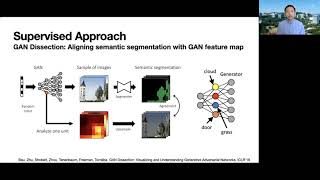
Interpreting Deep Generative Models for Interactive AI Content Creation
Explore deep generative models for AI content creation, covering image generation, latent space manipulation, and interactive techniques. Learn about challenges and applications in this cutting-edge field.
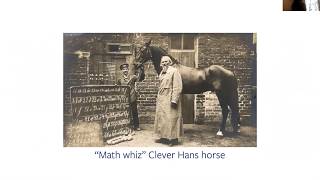
Understanding Deep Neural Networks - CVPR 2020 iMLCV Tutorial
Explore deep neural network interpretability through meaningful perturbations, extremal perturbations, and activation analysis. Learn techniques for understanding and improving model behavior in computer vision tasks.
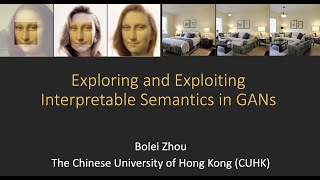
Exploring and Exploiting Interpretable Semantics in GANs - CVPR 2020 Tutorial
Explore interpretable semantics in GANs, covering deep generative representation, GAN dissection, latent space manipulation, and applications in face synthesis and image processing.

Modeling Conceptual Understanding in Image Reference Games - CVPR 2020 Tutorial
Explore image reference games, conceptual understanding modeling, and machine theory of mind in this tutorial on interpretable vision and multi-agent communication.
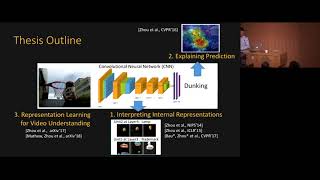
Interpretable Representation Learning for Visual Intelligence
Explore interpretable representation learning in deep neural networks for visual intelligence, covering object classification, scene recognition, and network visualization techniques.

The Problem with Qubits
Explore quantum computing challenges, error rates, and benchmarking methods with insights on quantum supremacy and superconnected qubits from a leading expert.
Debiasing Random Forests for Treatment Effect Estimation
Explore techniques for debiasing random forests in treatment effect estimation, focusing on resource allocation in election campaigns and get-out-the-vote experiments.