
C++ Iteration Revisited 2024 - Safer Abstractions for Sequence Iteration
Explore safer C++ iteration with Flux, a C++20 library offering improved safety, performance, and compatibility while reducing undefined behavior risks in sequence traversal.
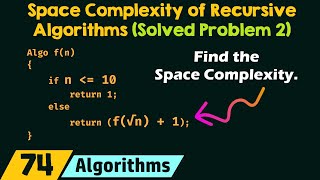
Space Complexity of Recursive Algorithms - Solved Problem 2
Analyze space complexity of recursive algorithms through a solved problem, enhancing understanding of memory usage in algorithmic design.
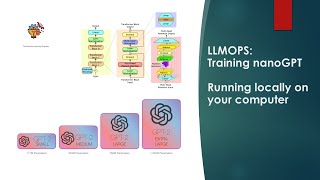
LLMOPS: Training a Small LLM (GPT-2) - Machine Learning and Data Science
Explore training a small LLM (GPT2) locally, understanding challenges and limitations of LLM development for individuals and small teams.
The Mathematics of Scaling Laws and Model Collapse in AI
Explore the mathematics behind AI scaling laws and model collapse, focusing on the shift from linear to flattened performance relationships in large language models.
The Price of Implicit Bias in Robust Machine Learning
Explore the impact of implicit bias on robust machine learning, examining challenges in neural network performance and generalization gaps in worst-case scenarios.

Approximate Polymorphisms in Boolean Functions
Explore approximate polymorphisms in theoretical computer science, focusing on stability results for functions satisfying certain properties and their implications.
A Framework for Designing Non-Diagonal Adaptive Training Methods
Explore a framework for designing non-diagonal adaptive training methods in deep learning optimization, leveraging Fisher-Rao geometry and quasi-Newton approaches for large-scale neural networks.
Neural Network Scaling Limits
Explore neural network scaling limits and their impact on learning models, focusing on depth, width, and training data parameters in deep learning theory.

Loop Guard in STP Toolkit - CCNA 200-301 Day 21 Part 4
Explore Loop Guard in STP Toolkit for CCNA 200-301. Learn about unidirectional links, problem-solving, CLI demonstration, and comparison with Root Guard.
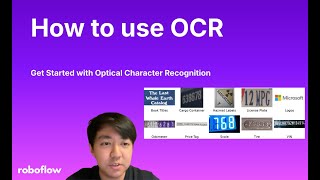
How to Use OCR: Getting Started with Optical Character Recognition
Explore OCR models, benchmark performance, and follow a step-by-step guide to implement Optical Character Recognition in your projects.
ParadeDB - Postgres for Search and Analytics
Explore ParadeDB's integration of search and analytics capabilities into PostgreSQL, enhancing database functionality for modern applications.
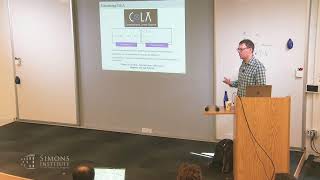
Re-thinking Transformers: Searching for Efficient Linear Layers over a Continuous Space
Explore efficient alternatives to dense linear layers in neural networks, examining structured matrices and their compute-optimal scaling laws for improved performance in large language models.

Building Confidently in Julia with Interface Driven Design
Explore interface-driven design in Julia to build robust, composable systems. Learn to leverage tools, implement functional code styles, and create uniform testing structures for improved productivity and reliability.
Herb.jl: Teaching Programs How to Program with Program Synthesis
Explore Herb.jl, a Julia library for program synthesis, unifying various approaches and providing tools for developing new synthesizers and solving complex problems.
Forecasting Mental Wellness of Students Using Julia
Explore forecasting techniques for student mental wellness using Julia. Learn to analyze academic, social, and environmental factors impacting mental health through data-driven approaches and predictive modeling.
Critical Decisions - Live Services, Generative AI, and Game Infrastructure Architecture
Explore integrating generative AI in games, architect for scalability, and future-proof development with insights from Google Cloud's product manager.
Boosting Game Performance with Unity 6 Profiling Tools
Discover Unity 6's profiling workflow to optimize game performance, identify slow frames, and enhance memory usage with expert techniques.

Living off Microsoft Copilot - Exploiting AI for Red Team Operations
Explore how Microsoft Copilot can be exploited for covert data theft, exfiltration, and AI-based social engineering. Learn about LOLCopilot tool and recommended protective measures against Copilot abuse.
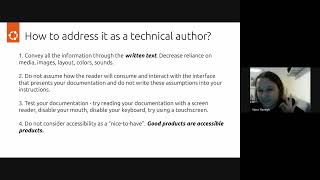
Accessibility and Documentation Best Practices - ODH-031
Explore accessibility best practices for technical documentation, covering color, fonts, contrast, links, media, and language. Learn to create inclusive content for diverse audiences.
Regular Types: From Stepanov to C++ Concepts
Explore the evolution of regular types from Stepanov's principles to C++ concepts. Learn their importance in STL design and everyday programming for intuitive, well-constrained code.
Scaling Live Service Games on the Cloud with Google Kubernetes Engine
Build dedicated game server environments with Google Kubernetes Engine for fully managed, resilient, cost-effective, and flexible next-generation servers.