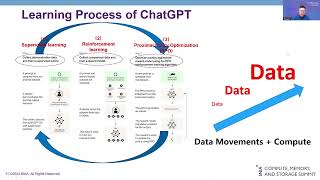
Overcoming Real-World Challenges Between Data and AI Infrastructure
Explore infrastructure innovations for managing AI workloads, optimizing data processing, and achieving lower latency in real-time analytics and predictive modeling across industries.
ENERGY STAR Version 1.1 Storage Program Updates - 2018
Discover key updates and requirements for ENERGY STAR Version 1.1 storage certification, including testing procedures and compliance guidelines for storage system manufacturers.
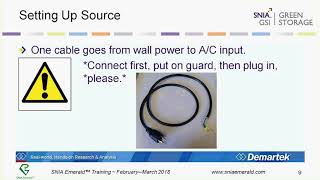
Power Source Setup for SNIA Emerald Testing - February-March 2018
Learn essential procedures for proper power source configuration and setup in storage systems, focusing on SNIA Emerald testing requirements and best practices.
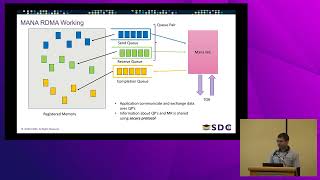
Enhancing Network Performance with RDMA on Microsoft Azure Network Adapter
Discover how to optimize network performance using RDMA technology on Azure Network Adapter, covering deployment strategies, security protocols, and real-world applications for improved throughput and reduced latency.
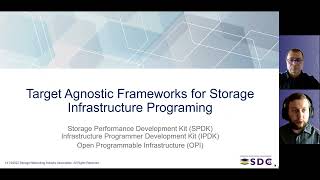
Infrastructure Programming with IPU for Storage Orchestration and Management
Discover how Infrastructure Programming Units (IPUs) simplify storage orchestration by offloading complex workloads from compute nodes, improving efficiency and scalability in cloud environments.
A New Adapter for Zoned Namespace SSD - Performance Improvements and Implementation
Discover how xZTL adapter enhances ZNS SSD performance, improving transaction processing by up to 90% and reducing latency by up to 47% compared to conventional SSDs through practical benchmarking insights.
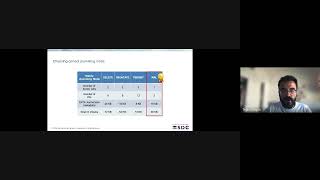
Improving Flash Storage Performance and Lifespan on Android Phones
Discover techniques for optimizing Android flash storage through I/O conversion, compression, and database modifications to enhance device performance and extend storage lifespan.
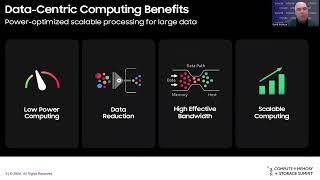
Compute, Memory, and Storage: Optimized Configurations for a New Era of Workloads
Explore modern infrastructure optimization strategies for cloud-to-edge applications, covering UCIe compute, CXL memory pooling, and advanced storage configurations for real-time decision-making requirements.
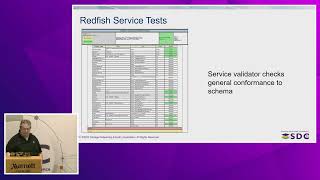
Accelerate Your SNIA Swordfish Implementation Through Open-source Tools and Testing
Discover how to accelerate Swordfish implementation using open-source tools, testing frameworks, and SMI Lab integration. Learn validation techniques and conformance testing for successful deployment.
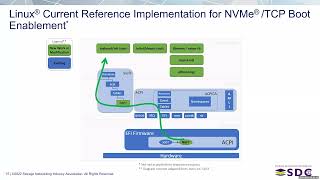
NVMe over Fabrics Boot Standardization and Implementation
Discover how NVMe over Fabrics Boot technology enables network-based OS booting, standardization efforts, and implementation strategies for large-scale deployments.
Accelerating PMEM Device Operations in Ceph with Hardware-based Memory Offloading
Discover how hardware-based memory offloading devices can enhance PMEM operations in Ceph, reducing CPU pressure and improving performance through IOAT and DSA implementation.
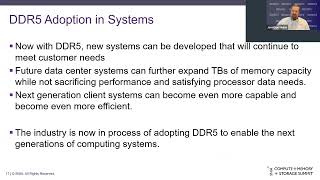
The Key Foundations and Future of Memory Industry Standards
Gain insights into memory industry standards, exploring DDR5 adoption, LPDDR architectures, and future developments in datacenter memory technologies and specifications.
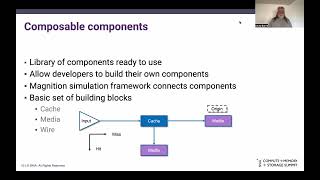
Optimizing Complex Memory and Storage Systems Using Simulations - A Modular Approach
Discover how to optimize complex storage systems through modular simulations, enabling rapid testing of variables and components while significantly reducing development time and resources.

Modern GPU Drivers: Shifting Responsibilities from Kernel to Firmware and Usermode
Explore modern GPU driver architecture evolution, focusing on shifting responsibilities from kernel to firmware and usermode, with insights from Panthor and PowerVR implementations.

Linux DRM Bridge: A Potential Replacement for DRM Encoders in Display Solutions
Explore the evolution of Linux DRM subsystem's display drivers, focusing on the transition from encoders to bridges and its impact on modern display solutions in the Linux kernel.
Xen-based GPU Virtualization: VirtIO and Passthrough Implementation
Explore AMD's advancements in GPU virtualization for Xen platforms, covering VirtIO GPU implementation, passthrough capabilities, and performance improvements for enhanced graphics support in virtual environments.
Wine and Windowing: Challenges in Windows API Integration with Linux - XDC 2023
Explore the technical challenges and solutions for running Windows applications on Linux through Wine, focusing on windowing system compatibility and user experience improvements.

Wayland Driver for Wine: Development Journey and Implementation Challenges
Explore the development journey of Wine's Wayland driver, from experimental beginnings to full GPU acceleration support, including technical challenges and solutions for Windows-Wayland compatibility.
Kata Containers 4.0 - Full Lifecycle GPU Management for AI/ML Workloads
Discover how Kata Containers 4.0 revolutionizes GPU management for AI/ML workloads through CDI framework integration, enhanced security features, and streamlined resource allocation in Kubernetes environments.
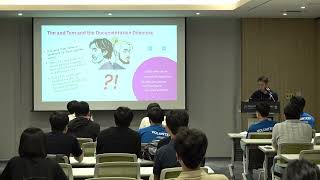
Automating Documentation Workflows with Sphinx, Zuul, and OpenStack - A GitOps Approach
Discover how to transform legacy documentation systems into an automated setup using Sphinx, Zuul, and OpenStack, focusing on building, evaluating, and rendering documentation in multiple formats.
Implementing a Kubernetes Engine with Cluster-API and OpenStack
Discover how to implement and manage Kubernetes clusters using Cluster-API and OpenStack, focusing on automated deployment, controller patterns, and practical solutions for public cloud service development.