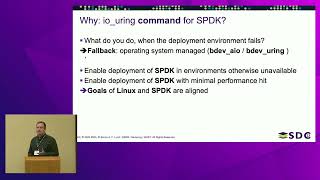
xNVMe and io_uring NVMe Passthrough: Comparing SPDK and Linux NVMe Drivers
Explore the evolution of NVMe drivers, comparing SPDK's userspace approach with Linux's io_uring and xNVMe implementations, focusing on performance benchmarks and system architecture differences.

Establishing Endurance and Data Retention Metrics in DNA Data Storage Systems
Explore the standardization of DNA data storage systems, focusing on metrics for endurance, reliability, and data retention, including preservation methods and labeling systems for optimal sequencing solutions.

NVMe Technology State of the Union - 2023 Annual Update
Discover the latest NVMe 2.0 technologies, including Computational Storage, Flexible Data Placement, and Live Migration. Explore the technology roadmap and standardization initiatives shaping high-performance storage solutions.

Programming with Computational Storage - Overview and APIs
Discover how to leverage Computational Storage APIs for near-data processing, optimizing resource usage and overcoming traditional CPU architecture limitations in cloud and edge computing applications.

Disaggregated Storage Using OPI and Marvell Octeon DPUs - Storage Developer Conference 2023
Explore how Marvell Octeon DPUs enable efficient disaggregated storage through NVMe-oF TCP, providing streamlined infrastructure control and storage offload capabilities for virtual machines and containers.

Long-Term Preservation and Archive Storage - Project Silica Technology
Explore Project Silica, a groundbreaking optical storage technology for long-term data preservation, offering durability, sustainability, and near-zero storage costs while ensuring true airgap protection and EMF resistance.

libvfn: A Low-level NVMe Application and VFIO Driver Framework
Dive into the implementation of libvfn, an open-source library for PCIe-based NVMe devices, exploring VFIO-based user-space drivers, NVMe driver implementation, and performance optimization techniques.

Open Programmable Infrastructure Project: Standardizing APIs for SmartNICs, DPUs and IPUs
Discover how the Open Programmable Infrastructure project standardizes SmartNIC, DPU, and IPU management through unified APIs, enabling easier device implementation and orchestration across different vendors and use cases.

Ceramic Nano Memory - Data Storage for the Yottabyte Era
Discover groundbreaking ceramic nano layer technology for next-generation data storage, offering unprecedented capacity scaling, longevity, and sustainability through laser and particle beam data writing for the future of cold storage solutions.

Leveraging Computational Storage for Simulation Science Storage System Design
Explore how computational storage innovations at Los Alamos National Laboratory overcome bottlenecks in simulation science, featuring implementations with ZFS offloads, flash key-value storage, and SQL-like processing.
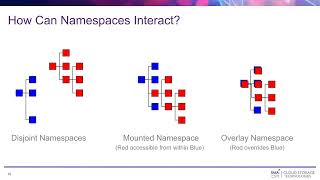
Simplified Namespace Management Using CDMI and Open Standards
Discover how to simplify complex namespace management using SNIA's CDMI open standard, covering discovery, introspection, exports, and imports across distributed systems and multiple protocols.
Persistent Memory and CXL Memory Programming Workshop
Dive into advanced programming techniques for Persistent Memory and CXL mem through hands-on instruction and practical implementation strategies for storage development.
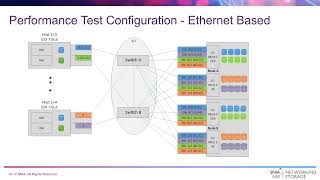
NVMe/TCP - Performance, Deployment and Automation in Enterprise Storage Networks
Explore NVMe/TCP protocol's enterprise features, performance characteristics, deployment strategies, and automation capabilities for modern storage networks and infrastructure management.
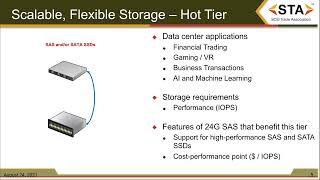
Tiered Storage Deployments with 24G SAS - Managing Enterprise Storage Infrastructure
Discover how 24G SAS technology enables efficient tiered storage solutions for large-scale data infrastructures, optimizing performance, cost, and capacity across different storage media types.
Hardware-accelerated Data Integrity Check on Computational Storage Devices
Discover how hardware-accelerated data integrity checks on Computational Storage Devices enhance performance, reduce data transfer overhead, and enable scalable storage solutions through practical demonstrations.
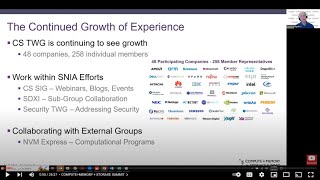
Standardizing Computational Storage - Architecture, APIs, and Standards Alignment
Delve into computational storage standards development, exploring architecture, programming models, and API alignments between SNIA and NVMe specifications, with focus on terminology and compatibility.
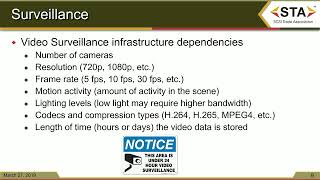
Applications Driving 24G SAS in the Data Center - Storage Technology Evolution and Implementation
Discover how 24G SAS technology revolutionizes data center storage with enhanced bandwidth, backward compatibility, and optimized performance for both SSDs and HDDs, supporting modern business applications and storage demands.
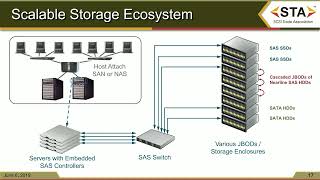
SAS 101 - Understanding Serial Attached SCSI Storage Interface
Explore the fundamentals of Serial Attached SCSI (SAS) technology, its ecosystem, and deployment benefits while comparing it with other storage protocols and understanding its future roadmap.
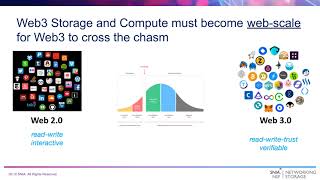
Why Web 3.0 is Important to Enterprise Storage - Decentralized Networks and Blockchain Technology
Explore the evolution of enterprise storage through Web 3.0, focusing on decentralized systems, blockchain integration, and practical applications in data privacy and security.
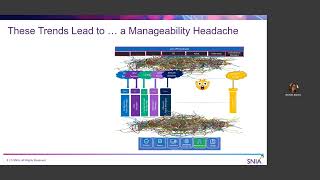
Scaling Management of Storage and Fabrics in Composable Disaggregated Infrastructures
Explore standards-based solutions for managing composable infrastructures, focusing on DMTF, SNIA, OFA, and CXL™ collaboration for efficient storage and fabric management at scale.
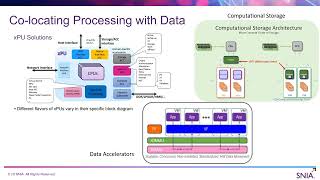
Storage Management Standards in Virtualized Environments - Managing Complexity Through Standards-Based Solutions
Explore modern storage management standards and their crucial role in navigating complex virtualized environments, from fabric technologies to open-source frameworks and RESTful interfaces.